
Yellow-dust amanita
Amanita flavoconia
Description
Pathogen
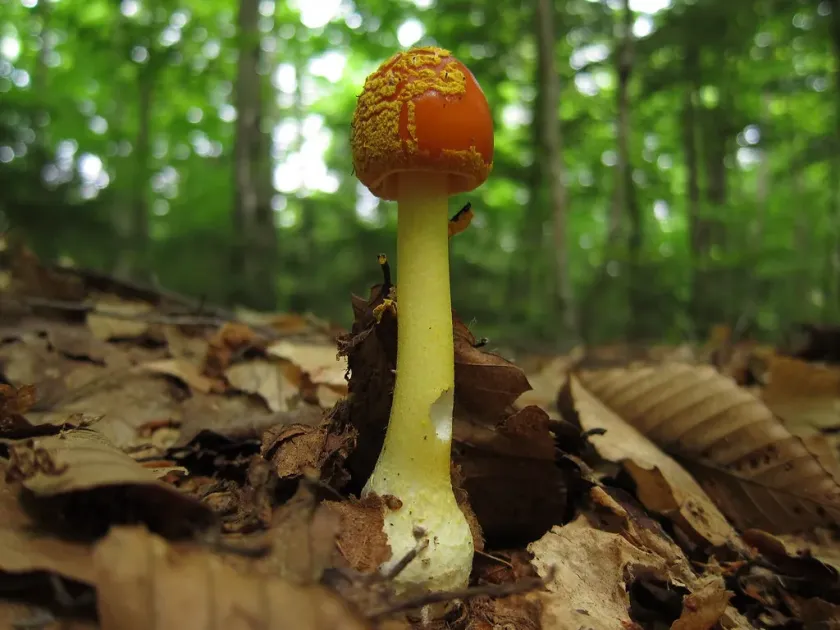
The yellow-dust amanita (Latin: Amanita flavoconia) is a species of mushroom in the Amanitaceae family. It is crucial to clarify that this fungus is not a plant disease and does not act as a pathogen for agricultural or horticultural crops.
In biological terms, this species functions primarily as a mycorrhizal partner for various tree species. It lives in a symbiotic relationship with plant roots rather than attacking them, making it a beneficial organism in forest ecosystems.
Agronomists do not consider Amanita flavoconia to be a threat to food crops. It lacks the mechanisms to infect plants, cause rot, or lead to physiological disorders in garden vegetables, fruit trees, or grain crops.
The fungal mycelium spreads through the forest floor and soil horizons, interacting with the root hairs of trees to exchange minerals and sugars. This process is essential for the healthy growth of trees in their natural habitat.
Since the species is not a plant parasite, there is no biological pathway for it to cause disease in agricultural settings. It remains a wild fungus that is ecologically significant but agriculturally inert in terms of pathogenicity.
Conditions for development
Development of the fruit bodies of the yellow-dust amanita typically occurs in deciduous and mixed forests. It favors habitats with rich organic matter and deep leaf litter, which provides a stable microclimate for the mycelium.
The presence of host trees, such as maples, oaks, or beeches, is essential for its lifecycle. Through ectomycorrhizal associations, the fungus establishes a network that supports the ecological health of the forest soil.
High levels of soil moisture and moderate temperatures during the summer and autumn months are the primary environmental drivers for the emergence of the mushroom's fruiting bodies.
The soil structure must remain undisturbed for the mycelium to flourish. Tillage, heavy chemical application, and soil compaction often inhibit the growth of this species, as it is sensitive to intense human intervention.
Shaded environments are preferred, as direct exposure to harsh sunlight can dehydrate the mycelium and the fruit bodies. Moist, cool pockets within forested or wooded areas provide the ideal environment for its propagation.
Discussion
No discussions yet — be the first.