
Amanita eliae
Amanita eliae
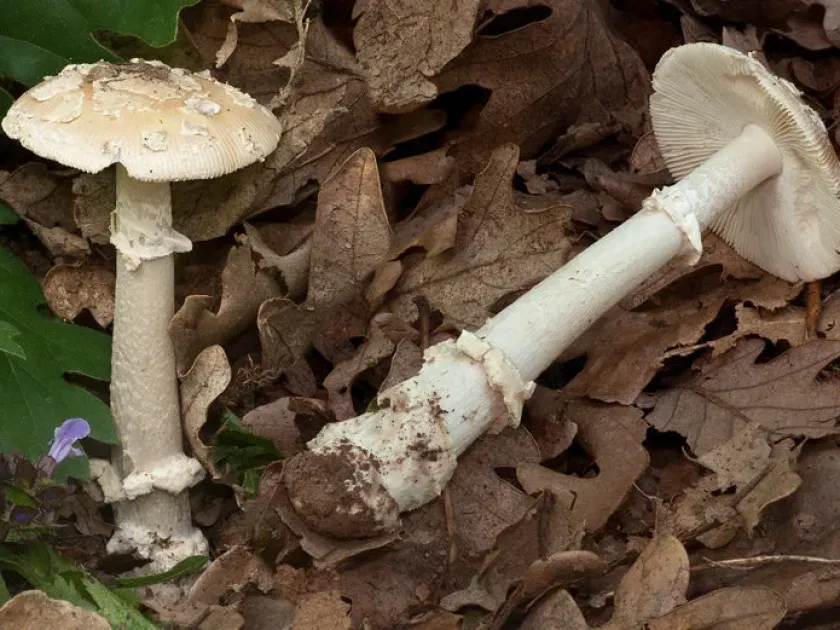
Description
Pathogen
Amanita eliae is not a plant disease, but a basidiomycete fungus belonging to the Amanitaceae family. It acts as a mycorrhizal symbiont in forest environments rather than a plant pathogen.
The fungus forms a symbiotic relationship with the root systems of various tree species. This interaction is beneficial, assisting in nutrient and water uptake, and is essential for the healthy functioning of forest ecosystems.
Biological identification is based on the specific structure of the cap, the color of the gills, and the remnants of the universal veil at the base of the stipe. It does not possess any phytotoxic properties.
Research confirms that Amanita eliae thrives in balanced soil environments. It is completely independent of typical infectious cycles that cause agricultural crop diseases.
Mycological classifications place this species as a beneficial component of forest biota. It is not capable of attacking or damaging living plant tissues under any conditions.
Conditions for development
The development of Amanita eliae fruiting bodies occurs primarily in deciduous and mixed forests. It shows a preference for symbiotic associations with trees such as oaks and beeches.
Favorable conditions include high soil humidity and moderate temperatures, typically observed during late summer and autumn. The mycelium requires stable ecological conditions to sustain growth.
The distribution of this species is highly sensitive to soil quality. It prefers areas with well-aerated, humus-rich soil and avoids regions with excessive compaction or chemical treatment.
Environmental factors such as forest canopy cover play a crucial role. The fungus relies on the specific microclimate created by mature trees to initiate its reproductive stage.
Continuous monitoring of its habitat shows that Amanita eliae is a bio-indicator of clean forest areas, as it does not tolerate significant pollution or habitat disruption.
Why it matters
Amanita eliae causes no harm to agricultural or forest crops. It does not induce any pathologies, necrosis, or growth suppression in host plants or neighboring vegetation.
It is strictly a beneficial organism that contributes to forest productivity through nutrient cycling. There is no biological basis for considering this mushroom a pest or a source of infection.
Control measures are not necessary for this species. Any attempt to eliminate it from forest areas would disrupt the mycorrhizal balance and could negatively affect tree health.
It is important to differentiate this fungus from parasitic agents that destroy wood. Amanita eliae does not decompose living tissues or cause any form of plant decay.
The only risk associated with this mushroom is the accidental ingestion by humans, as it is generally considered inedible or potentially toxic, requiring standard caution during forest foraging.
Discussion
No discussions yet — be the first.