
Amanita chlorinosma
Amanita chlorinosma
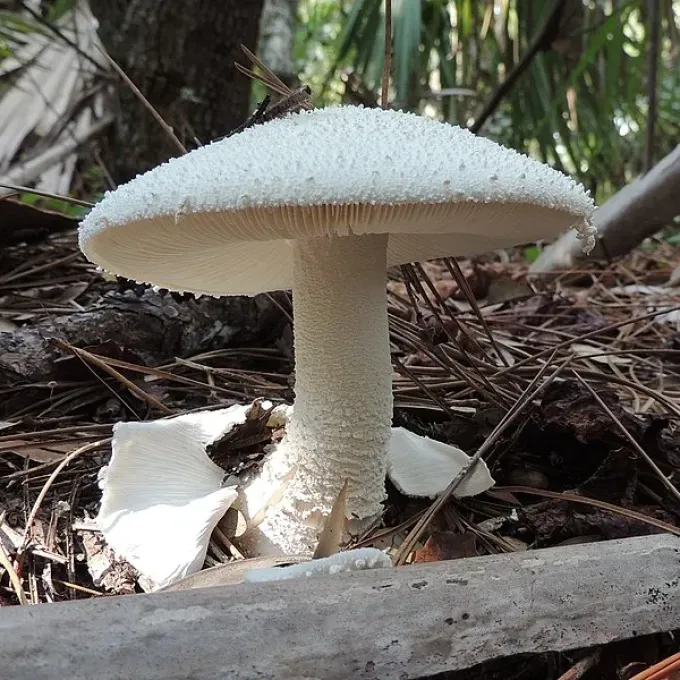
Description
Pathogen
Amanita chlorinosma is a species of agaric fungus belonging to the Amanitaceae family. It is crucial to note that this fungus is not a plant disease or a pathogen of agricultural crops.
The organism functions primarily as an ectomycorrhizal symbiont. It forms a mutualistic relationship with forest tree roots, particularly species of the Quercus genus.
Mycelial development occurs within the soil and leaf litter. The fungus extracts sugars from the tree host and provides mineral nutrients and water in return.
The characteristic pungent odor, often described as smelling like bleach or chlorine, is a unique metabolic trait of this specific species and does not indicate infection.
From an agronomical perspective, this fungus should be categorized as a natural component of woodland ecosystems, rather than an agricultural threat.
Conditions for development
Growth requirements for this fungus are strictly linked to the presence of compatible host trees that facilitate the mycorrhizal connection.
Amanita chlorinosma thrives in well-drained, acidic soils that are rich in organic matter, typically found in established hardwood forests.
Optimal environmental conditions for the emergence of fruiting bodies include periods of high humidity and moderate temperatures, typically in late summer.
Spore dispersal is facilitated by wind currents and forest fauna, ensuring the fungus propagates effectively within its native range.
The microclimate of the forest floor, characterized by consistent moisture and protection from direct sunlight, is essential for the longevity of the mycelium.
Why it matters
The fungus is completely harmless to agricultural crops, including vegetables, fruits, and cereals, as it possesses no pathogenic mechanisms.
Because it acts as a symbiont, it does not attack living plant tissues and cannot cause rot, wilt, or other plant diseases known in agronomy.
The main concern regarding this species is its potential toxicity if ingested, necessitating caution in areas frequented by humans or livestock.
The presence of Amanita chlorinosma in soil can be seen as an indicator of good soil biological activity and a healthy forest-adjacent environment.
There is no need for control measures or protective treatments against this fungus, as it does not compete with cultivated plants for resources.
Discussion
No discussions yet — be the first.