
Alternaria leaf spot
Alternaria japonica
Description
Symptoms
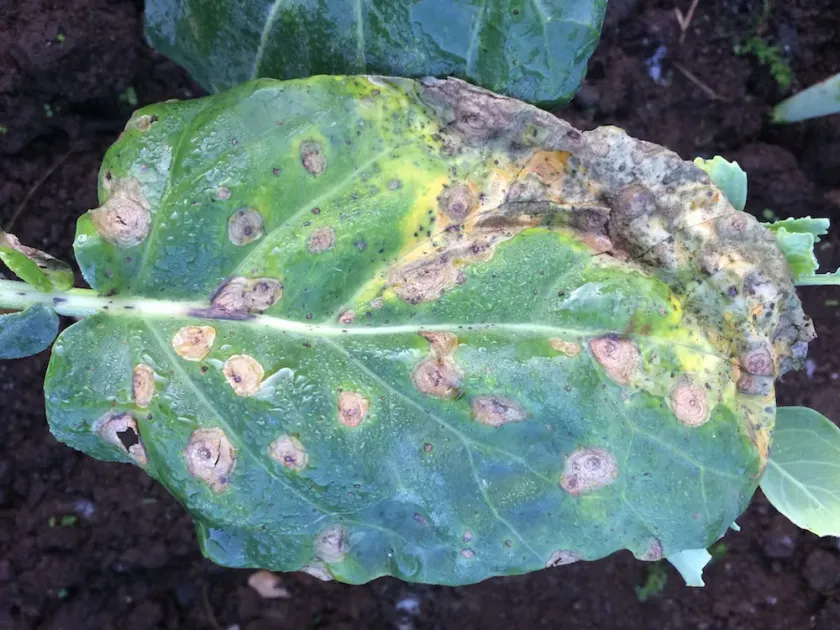
The primary clinical sign is the appearance of small, dark brown spots that often exhibit concentric zonation, resulting in a characteristic "target" pattern.
Under conditions of high humidity, a dense, velvety black or dark olive-colored mass of conidia and conidiophores develops on the surface of these lesions.
In seedlings, the infection manifests as "damping-off," where the lower stem becomes thin, blackened, and necrotic, leading to rapid wilting and plant death.
On adult plants, spots expand over time and may coalesce, causing significant yellowing, necrosis, and premature abscission of the affected leaves.
When the pathogen infects cabbage heads, it can penetrate deep into the interior, causing internal tissue rot that renders the produce unfit for long-term storage.
Pathogen
The causal agent of this disease is the fungus Alternaria japonica, which is a member of the Deuteromycetes group. It acts as a specialized pathogen that primarily targets plants belonging to the Brassicaceae family.
The fungus overwinters as mycelium and conidia on crop residues left in the soil, as well as on seeds and various cruciferous weeds that serve as alternative hosts between seasons.
The infection spreads through air currents and water splashes, which transport conidia from infected tissues to healthy leaves or adjacent plants in the field.
The pathogen is highly aggressive, capable of penetrating plant tissues through natural openings like stomata or through mechanical wounds caused by insects or field machinery.
The biological lifecycle of the fungus is rapid under optimal conditions, allowing it to produce several successive generations of spores within a single growing season.
Conditions for development
The most favorable environmental conditions for disease progression are temperatures ranging from +18°C to +25°C and high relative humidity levels, ideally exceeding 80%.
Frequent rainfall, persistent morning fogs, and dew provide the necessary surface moisture for conidia germination and subsequent infection of healthy plant tissues.
Planting in high-density schemes, especially without proper ventilation, creates a microclimate inside the canopy that is highly conducive to fungal outbreaks.
Excessive application of nitrogen fertilizers promotes lush, succulent vegetative growth, which is significantly more susceptible to Alternaria japonica penetration.
The presence of cruciferous weeds, such as shepherd's purse or field pennycress, acts as an inoculum reservoir, increasing the risk of disease spread to commercial crops.
Why it matters
Alternaria leaf spot causes significant economic losses by reducing both the total crop yield and the marketability of the harvested vegetables.
Infected produce loses its aesthetic value, making it unacceptable for retail in supermarkets or fresh markets due to the unsightly brown spotting.
Plants affected during the early growth stages suffer from stunted development, often failing to form dense heads or resulting in significantly lower tonnage at harvest.
Contaminated cabbage heads are prone to secondary infections by soft-rot bacteria during storage, which can lead to the total loss of entire stored batches.
The requirement for frequent fungicide applications to suppress the disease adds significant costs to the production budget, thereby increasing the unit cost of the crop.
Protection
The foundation of effective management is a robust crop rotation strategy, where cruciferous crops are not planted in the same field for at least 3 to 4 years.
Deep plowing following the harvest helps bury crop residues, accelerating the decomposition process and reducing the fungal inoculum remaining in the soil.
Using certified, disease-free seed and applying preventive fungicide seed treatments are critical steps to ensure healthy seedling establishment and initial crop vigor.
Timely foliar application of fungicides, such as those containing azoxystrobin or difenoconazole, is necessary when the first disease symptoms appear to arrest spread.
Integrated pest management (IPM) is essential to control chewing insects, as their feeding damage creates entry points that significantly facilitate fungal infection.
Discussion
No discussions yet — be the first.