
Alternaria leaf spot
Alternaria caespitosa
Description
Symptoms
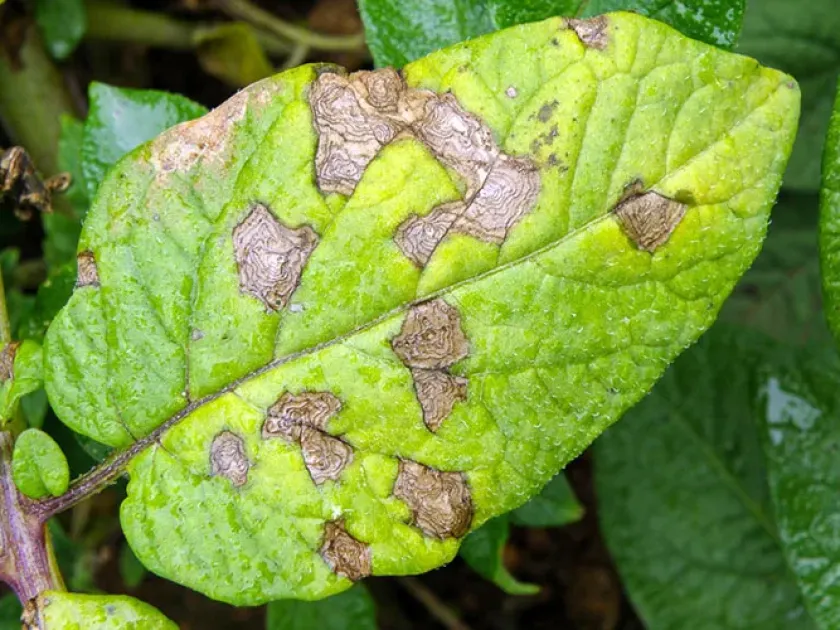
Initial signs of Alternaria leaf spot typically appear as small, circular or irregular chlorotic spots on the foliage. Over time, these spots darken, transitioning into brown or black necrotic lesions as the tissue dies.
A distinctive feature of the disease is the presence of concentric zones within the lesions. These "target-like" rings are caused by the periodic growth of the fungus in response to fluctuations in day and night humidity levels.
In humid conditions, the lesions become covered with a velvety, olive-to-black fungal mat, representing the massive production of spores. This fungal layer gives the infected area a dusty appearance and serves as a source of secondary spread via wind and rain splash.
As the infection advances, the lesions merge, causing widespread blighting of leaves. The foliage eventually curls, withers, and turns brittle, significantly reducing the plant's capacity for photosynthesis and overall metabolic function.
In severe cases, the pathogen affects stems, petioles, and flower heads. When the reproductive parts are damaged, it leads to stunted fruit development, poor grain fill, or total flower abortion, impacting total crop output.
Pathogen
The causative agent of this disease is the microscopic fungus Alternaria caespitosa, which belongs to the Alternaria genus. This pathogen is a well-known facultative parasite that thrives in diverse environments, specializing in colonizing stressed plant tissues.
The life cycle of the pathogen involves the production of characteristic dark conidia, which act as primary inocula. These spores are highly resistant to environmental stress and can persist in soil, plant debris, and even on seeds for extended periods, waiting for favorable conditions.
Infection occurs when conidia land on plant surfaces and, under sufficient moisture, germinate to form germ tubes. These tubes penetrate the plant's epidermis through stomata or directly via enzymatic degradation of the cuticle, establishing the infection site.
Once inside the host tissue, the fungus secretes host-specific toxins that trigger necrosis. As the mycelium spreads, it feeds on the plant's resources, effectively turning healthy tissue into dead, colonized substrate for further spore production.
The biology of Alternaria caespitosa is characterized by its rapid multiplication rate. Under optimal conditions, the fungus can complete a full generation cycle in just a few days, leading to exponential growth of the infection throughout a field.
Conditions for development
The development of Alternaria caespitosa is heavily favored by warm temperatures, typically ranging from 20°C to 28°C. These temperatures coincide with the active growth phase of many crops, making them highly vulnerable during key development stages.
Leaf wetness is the most critical environmental factor for infection. Frequent rainfall, heavy morning dew, and high atmospheric humidity provide the necessary water film for spore germination and successful fungal colonization.
Agronomic practices, such as high planting density, often create a closed canopy environment. This reduces airflow, keeps the lower foliage humid for longer periods, and creates a localized microclimate that accelerates the progression of the disease.
The presence of overwintering inoculum in field debris is a primary driver of initial outbreaks. Without proper sanitation, these resting structures provide a continuous reservoir of spores that reinfect susceptible crops every season.
Plants under physiological stress—due to drought, nutrient deficiency, or pest damage—are significantly more prone to infection. Once stressed, their natural defenses are lowered, allowing the fungus to invade tissues with minimal resistance.
Why it matters
The primary economic impact of Alternaria leaf spot is the severe reduction in leaf area, which limits the plant's energy production. This shortage of photosynthates directly results in lower yields and poor quality of harvested products.
In cereal crops, the disease impacts grain filling, leading to shriveled or lightweight grains that fail to meet market standards. In vegetable crops, the spotting renders produce visually unappealing and prone to rotting during transport and storage.
There is also a concern regarding mycotoxin production. Some species of Alternaria produce toxins that can contaminate grain or fruit, posing potential food safety risks and limiting the commercial use of the crop.
The disease can lead to premature senescence, shortening the vegetative cycle and depriving the crop of valuable maturation time. This forces farmers to harvest earlier than intended, further reducing the overall potential of the harvest.
Over several seasons, unchecked Alternaria infections can severely degrade the soil quality by continuously contributing to the pathogen load. This necessitates increasingly intensive and costly management strategies to maintain farm profitability.
Protection
Effective management begins with strict crop rotation to disrupt the pathogen's life cycle. Avoiding susceptible hosts for several years helps deplete the population of fungal spores in the soil environment.
Sanitation is paramount. After harvest, thoroughly burying or removing plant debris eliminates the primary survival niche for Alternaria caespitosa. Reducing the initial inoculum density is the most effective way to prevent early season infections.
Implementing a balanced fertilization program is essential, as excessive nitrogen can lead to overly lush growth that is susceptible to attack. Ensuring adequate potassium levels can help strengthen plant cell walls and improve overall disease resistance.
When the environment favors disease development, prophylactic application of fungicides is required. Using a mix of contact and systemic chemicals provides both immediate protection and long-lasting curative effects for growing tissues.
- Use certified, disease-free seed stocks to prevent introduction.
- Improve field airflow through wider plant spacing and proper pruning.
- Monitor crops regularly to intervene at the earliest appearance of symptoms.
- Employ biological control agents to reinforce the plant's natural immune response.
Discussion
No discussions yet — be the first.