
Alternaria leaf spot of brassica
Alternaria brassicae
Description
Symptoms
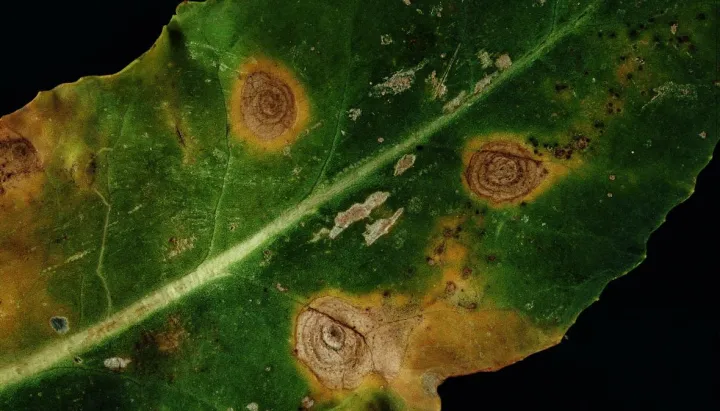
Initial symptoms include the appearance of small dark or black spots on the cotyledons, leaves, and petioles of the cabbage plants.
A diagnostic feature is the presence of concentric rings within the spots, giving them a target-like appearance, often accompanied by a velvety olive-black mold.
On stems and siliques (seed pods), the lesions are often elongated and necrotic, which can lead to premature pod shattering and significant reduction in seed quality.
In mature cabbage heads, infection can penetrate deeper into the leaves during storage, often creating favorable conditions for secondary bacterial soft rot.
Severe infestations lead to yellowing and premature dropping of the lower leaves, significantly reducing the plant's overall photosynthetic surface area.
Pathogen
The disease is caused by the fungus Alternaria brassicae (Berk.) Sacc., a pathogenic organism that primarily targets cruciferous crops, including cabbage, broccoli, and canola.
The fungus survives as mycelium and conidia in infected plant debris left in the field and can also be seed-borne, allowing the disease to persist between cropping seasons.
The life cycle involves the production of conidia that are easily dispersed by wind, splashing rain, and insect vectors, facilitating rapid spread within the field.
The pathogen can attack plants at any stage, from seedling emergence in the nursery to the maturation of heads and seed pods, making it a persistent threat.
The fungus is characterized by the production of dark, olive-black conidia chains, which serve as the primary source of infection for neighboring healthy plants.
Conditions for development
Alternaria brassicae thrives in warm weather (temperatures between +20°C and +25°C) combined with high humidity levels or frequent rainfall.
Prolonged leaf wetness, such as that caused by morning dew or high humidity in dense canopy structures, is essential for conidial germination and host penetration.
Plants under physiological stress, whether due to nutrient deficiency, insect damage, or adverse weather conditions, are significantly more susceptible to infection.
Poor aeration in dense plantings creates a micro-environment with trapped moisture, which acts as an incubator for the rapid development of the fungus.
Failure to implement strict crop rotation cycles allows the fungus to accumulate in the soil, ensuring a high inoculum pressure for subsequent seasons.
Why it matters
The disease significantly degrades the market quality of cabbage heads, making them visually unappealing and highly susceptible to rot during storage and transport.
Yield losses are primarily driven by the reduction in leaf area and the overall decline in plant vigor, which limits the size and weight of the harvestable head.
Seed production is particularly hard-hit, as infected pods produce shriveled, low-vigor seeds that may carry the pathogen to the next generation.
In severe outbreaks, farmers may face yield losses of 30-50% or more, depending on the climatic conditions and the timeliness of the intervention.
Seedling mortality in greenhouses can result in significant financial losses, requiring costly replanting or leading to poor stand establishment in the field.
Protection
Cultural control is the first line of defense, focusing on the destruction of crop residues through deep plowing to break the pathogen's life cycle.
Maintaining a crop rotation of at least three to four years without cruciferous crops is essential to minimize the soil-borne inoculum pressure.
Chemical control using systemic fungicides from the triazole or strobilurin classes is effective when applied during the early onset of disease symptoms.
- Using certified, fungicide-treated seeds to ensure disease-free starts.
- Effective insect control to prevent mechanical wounding and stress.
- Balanced fertilization to improve natural host plant resistance.
Discussion
No discussions yet — be the first.