
Alternaria and grey mold
Alternaria botrytis
Description
Symptoms
Alternaria infections are characterized by the appearance of dark, circular spots on leaves, often displaying a classic "target-spot" appearance with concentric rings. As the lesions expand and coalesce, they lead to premature yellowing, necrosis, and leaf senescence.
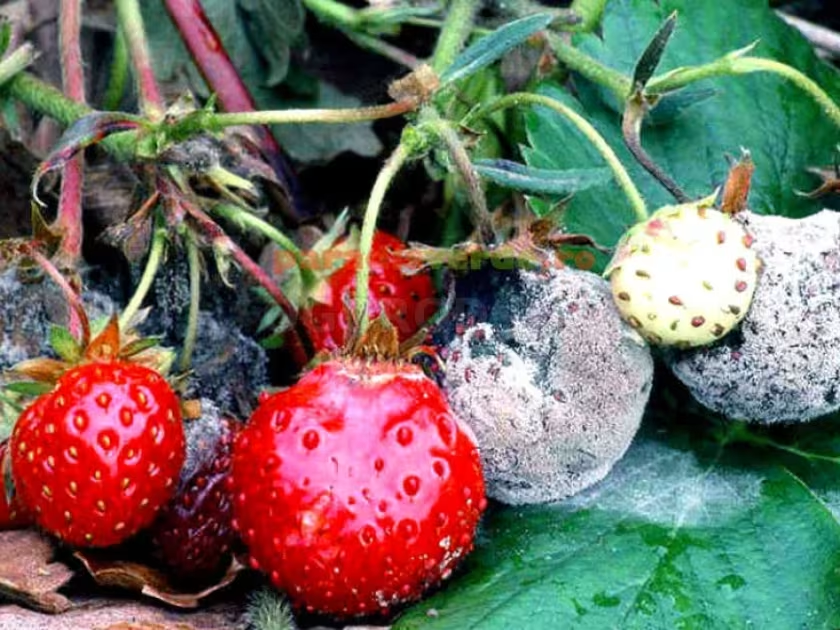
Grey mold, or Botrytis infection, presents as soft, watery rot on stems, leaves, and fruits. Under humid conditions, the characteristic fuzzy, grey-to-ash-colored fungal sporulation appears on the surface, which is a definitive diagnostic sign of the disease.
On fruits, Alternaria causes sunken, dark-colored lesions that often develop a velvety black layer of spores at their center. These infections render the fruit unmarketable and make it highly susceptible to secondary bacterial infections that lead to complete fruit collapse.
Stem infection, often resulting in cankers or lesions, can girdle the plant, causing wilting or stem breakage above the point of infection. This is particularly devastating in high-value vegetable crops, where early stem damage can kill an entire plant before fruit harvest.
- Target-shaped spots on foliage.
- Fuzzy grey sporulation on fruit surfaces.
- Soft, watery rotting of tissues.
- Stem lesions and girdling.
- Premature dropping of blossoms and fruit.
Pathogen
The pathogens responsible for these diseases are Alternaria spp., which causes Alternaria leaf spot or blight, and Botrytis cinerea, the fungus responsible for grey mold. These are highly versatile pathogens that thrive as both saprophytes on dead matter and parasites on living host tissues.
These fungi persist in the environment through resistant structures such as mycelium, conidia, and sclerotia. Sclerotia are particularly durable, allowing the pathogens to survive in the soil or crop debris for long periods, effectively waiting for suitable environmental conditions to germinate.
Dissemination primarily occurs through wind-borne spores, splashing rain, contaminated irrigation water, and insect vectors. Because these fungi produce massive quantities of spores, they can spread rapidly across a field or greenhouse, leading to severe outbreaks if left unmanaged.
They affect a wide range of hosts, including essential vegetable crops like tomatoes, potatoes, and peppers, as well as soft fruits like strawberries and grapes. Greenhouse crops are particularly susceptible due to the high-humidity environments typically maintained for production.
The ability of these pathogens to penetrate both through natural openings and mechanical wounds makes them persistent threats. Their biological success is tied to their plasticity, allowing them to remain active across a broad temperature range and under various management regimes.
Conditions for development
Alternaria development is favored by warm temperatures, typically between 20°C and 25°C, coupled with high humidity or intermittent rainfall. Leaf wetness is critical, as spores require a film of moisture to germinate and penetrate the host tissue.
Grey mold thrives in cool to moderate temperatures (15°C to 20°C) and high humidity. It is a classic "wet weather" disease, often peaking in frequency during periods of prolonged overcast skies, fog, or consistent morning dew in the field or greenhouse.
Poor ventilation and high plant density are significant risk factors. In enclosed spaces like greenhouses, the lack of air movement leads to condensation on plant surfaces, providing the perfect moisture regime for Botrytis spore germination.
Nitrogen over-fertilization results in succulent, thin-walled plant tissue that is easily invaded by fungal mycelium. Furthermore, plants under stress from poor irrigation, lack of light, or nutrient imbalances show weakened immune responses, making them more susceptible.
Mechanical injuries, such as those caused by pruning, training, harvesting, or pest feeding, serve as prime entry points. Once a wound is created, the fungus can colonize the tissue much faster than it could by attempting to penetrate the healthy cuticle.
Why it matters
The primary economic impact is the loss of harvestable yields and the post-harvest deterioration of produce. Fruit infected with gray mold can turn into a rotting mess during transport or storage, causing losses that extend far beyond the field.
Alternaria blight reduces the overall photosynthetic capacity of the plant by killing off leaf area. This reduction in energy production limits fruit development, resulting in smaller, lower-quality yields and reduced sugar accumulation in fruiting crops.
Grey mold can lead to total crop failure by attacking blossoms and fruit sets. In berry crops, this can result in the loss of nearly the entire season's production if the weather remains favorable for the pathogen during the flowering period.
The presence of mycotoxins in crops infected by certain Alternaria species is a food safety concern. These toxins can persist through processing, posing risks to both animal feed quality and potential human health standards depending on the crop and usage.
Management costs are significantly inflated by the need for repeated fungicide applications. Additionally, the labor involved in sanitation and the removal of infected plant parts increases production costs while simultaneously reducing the total quantity of marketable goods.
Protection
Effective management begins with strict sanitation: removing and destroying infected plant debris is essential to reduce the primary inoculum load for the following season. Composting or burying debris correctly helps break the lifecycle of these pathogens.
Crop rotation is a vital strategy, as it prevents the buildup of pathogen populations in the soil. Avoiding continuous cropping of highly susceptible species allows the natural decline of sclerotia and mycelial remnants in the field.
Chemical control involving fungicides should be integrated into a program that alternates modes of action. This strategy minimizes the risk of the pathogens developing resistance to common active ingredients, thereby maintaining the efficacy of the chemical defense.
Improving cultural practices, such as optimizing plant spacing, pruning for better airflow, and using drip irrigation instead of overhead watering, drastically reduces the micro-climatic conditions that favor these diseases, making the environment inhospitable for fungi.
Biological control agents, including Bacillus subtilis and Trichoderma species, are increasingly used to suppress these fungi. These agents act by competing with pathogens for space and nutrients or by producing antifungal metabolites that protect the plant surfaces.
Discussion
No discussions yet — be the first.