
Alternaria leaf spot
Alternaria atra
Description
Symptoms
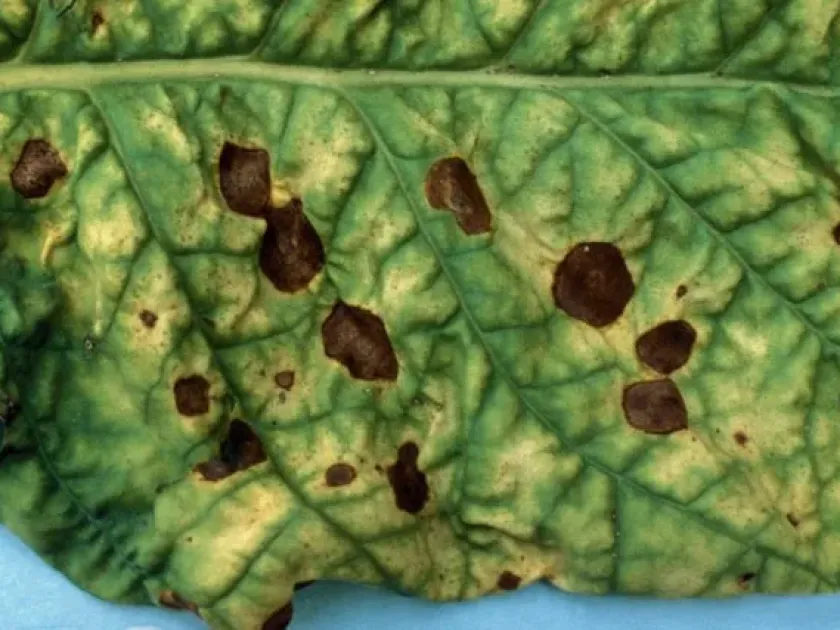
The primary symptom of Alternaria is the development of small, dark brown or black lesions on foliage. These spots often exhibit a distinct concentric ring pattern, which provides a target-like appearance characteristic of the pathogen.
As the infection progresses, lesions enlarge and coalesce, leading to significant tissue necrosis. Infected leaves typically turn yellow, wilt, and eventually drop prematurely, resulting in severe defoliation of the crop.
On stems and petioles, the disease manifests as elongated, dark-colored cankers that can girdle the structure. This causes the collapse of distal portions of the plant, often leading to total shoot death.
Fruit infections appear as sunken, dark, leathery lesions. Under high humidity, these spots are often covered with a velvety, olive-black mass of fungal conidia, rendering the produce unmarketable and prone to rapid decay.
- Target-shaped dark lesions
- Premature yellowing and leaf drop
- Velvety black fungal growth
- Stem girdling and collapse
- Sunken rot on fruits
Pathogen
The disease is caused by various species of the Alternaria genus, including Alternaria atra, which are necrotrophic fungi. These pathogens are widely distributed and can affect a vast range of vegetable, fruit, and ornamental plants.
The fungus produces conidia, which are multicellular, pigmented spores that form in characteristic chains. These spores are highly resistant to dehydration and UV radiation, allowing them to survive for long periods in soil or debris.
This pathogen acts as a facultative saprophyte, meaning it can survive on dead organic matter while waiting for a suitable host. This biological adaptability makes the pathogen a persistent challenge in agricultural fields.
Upon germination, the fungus enters the host through natural openings like stomata or through mechanical wounds. It secretes toxins that cause cellular death, creating the hallmark necrotic lesions seen on infected plant tissues.
The lifecycle is continuous in favorable conditions, with conidia being dispersed by wind, splashing rain, and irrigation water, facilitating the rapid spread of the disease throughout the cropping area.
Conditions for development
The development of Alternaria leaf spot is highly dependent on moisture. Prolonged leaf wetness, humidity above 85%, and temperatures ranging from 20 to 27 degrees Celsius provide the perfect environment for spore germination.
Dew formation during the night, followed by warm daytime temperatures, is a common driver for disease outbreaks. The pathogen thrives when the plant canopy is dense, which restricts airflow and maintains a high-humidity microclimate.
Plant stress is a major predisposing factor. Crops suffering from nutrient deficiencies, especially nitrogen or potassium, are significantly more susceptible to infection compared to well-nourished plants.
Mechanical damage to plants, whether from insect feeding, tools, or weather events, provides entry points for the fungus. Once the pathogen gains a foothold, it spreads rapidly across the field via wind-driven spores.
The presence of overwintering inoculum in crop residues is the primary source of early infection. If the field is not properly sanitized, the disease will likely re-emerge as soon as the host crops are planted in the spring.
Why it matters
The economic impact of Alternaria is substantial, often leading to yield losses ranging from 20% to over 50% in untreated fields. Reduced photosynthetic capacity due to defoliation directly limits fruit size and quality.
Infected produce often enters post-harvest decay. Since the pathogen can persist during storage, a few infected fruits can lead to the loss of an entire storage crate through secondary infection.
The disease forces growers to increase inputs for chemical management, which raises production costs. In organic farming, the lack of effective fungicides can make the control of this disease extremely difficult.
Long-term harm includes the build-up of the fungal population in the soil. Over several seasons, this creates a soil-borne pressure that necessitates longer rotation cycles and more intensive crop management strategies.
Defoliation late in the season reduces the plant's ability to store energy for the next year in perennial crops, leading to overall weakness and increased vulnerability to winter damage.
Protection
Effective management begins with cultural practices, such as selecting resistant cultivars and maintaining a strict crop rotation of 3 to 4 years to break the infection cycle of the pathogen.
Sanitation is critical; all infected plant debris must be removed and destroyed or buried deeply after harvest to eliminate the primary sources of inoculum for the upcoming growing season.
Fungicide application is standard in commercial agriculture. Protective sprays should be applied before or at the first signs of disease, using a mix of contact and systemic chemicals to provide broad coverage.
Good field hygiene, including weed control and spacing, helps manage the canopy microclimate. Proper irrigation methods, such as drip irrigation, prevent the foliage from staying wet for extended periods.
Balanced fertilization, particularly adequate potassium levels, helps maintain plant health. Strong, resilient plants can resist initial infection better than plants that are stressed or improperly managed.
Discussion
No discussions yet — be the first.