
Description
Symptoms
The most reliable diagnostic sign is a distinct brown, necrotic line that develops at the graft union. This feature becomes clearly visible only when the bark is removed from the union area during inspection.
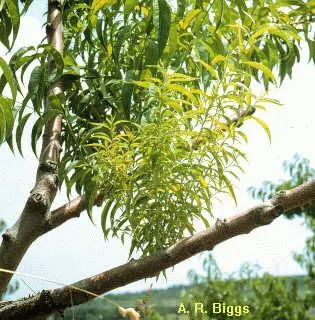
Above-ground symptoms include progressive yellowing and leaf curling, which mimic the appearance of water stress. As the disease advances, trees exhibit significant dieback and premature leaf drop.
Stunted growth is a common observation in infected trees. The internodes become shortened, and the overall vigor of the tree declines, resulting in a sparse canopy and an unhealthy appearance throughout the growing season.
Fruit production is severely impacted, with yields decreasing significantly year over year. The nuts often become malformed, smaller in size, and may drop prematurely, rendering the crop commercially unviable.
- Dark necrotic band at the graft union.
- Progressive leaf yellowing and curling.
- Reduced vigor and stunted shoots.
- Premature fruit drop and deformation.
- General decline and eventual tree death.
Pathogen
Almond Brown Line is a serious viral disease caused by the Almond brown line virus, a member of the nepovirus group. This systemic pathogen specifically targets stone fruit trees, with a primary emphasis on almond orchards.
The virus is primarily transmitted through contaminated budding or grafting material. Furthermore, it can be spread in orchards via soil-borne nematodes belonging to the genus Xiphinema, which feed on the roots of infected trees.
Once inside the plant, the virus moves through the phloem, causing significant disruption in the transport of nutrients. This interference leads to severe physiological stress and the formation of a characteristic necrosis at the graft union.
The interaction between the rootstock and the scion is often where the virus manifests most aggressively. Due to the systemic nature of the pathogen, infected trees serve as a continuous reservoir for further contamination within the orchard.
It is classified as a significant threat to almond production globally, as it can cause sudden decline and death of young, otherwise productive trees, leading to major orchard losses.
Conditions for development
High summer temperatures exacerbate the symptoms of Almond Brown Line, placing additional stress on the already compromised vascular system of the tree. This often leads to a rapid decline in the mid-summer period.
The presence of nematode populations in the soil is a critical factor for the disease's spread. These pests effectively move the virus from the root zone of an infected tree to the roots of nearby healthy trees.
Poor orchard hygiene and dense planting patterns facilitate the rapid transmission of the virus. In such environments, the interaction between root systems makes containment significantly more difficult.
Stressors such as improper irrigation, nutrient deficiencies, or soil compaction weaken the tree's natural defenses, making it more susceptible to the systemic effects of the virus and hastening the onset of visible symptoms.
The use of uncertified nursery stock is the single most important environmental and management factor contributing to the establishment of this disease in new almond orchards.
Why it matters
The primary harm caused by this disease is the premature death of almond trees, which leads to total loss of investment. There is currently no cure for infected trees, requiring immediate removal.
Orchard profitability is severely compromised due to diminished yields and poor fruit quality. Infected orchards often fail to reach their full productive potential, leading to sustained economic losses for growers.
The presence of the virus in the soil poses a long-term risk for the land. Repurposing infected soil for future stone fruit plantings is restricted until the soil is thoroughly decontaminated from vectors.
The spread of the virus to adjacent orchards can create regional phytosanitary crises, leading to trade restrictions and mandatory quarantine measures imposed by local agricultural authorities.
Management costs increase significantly due to the necessity of constant monitoring, the expense of tree removal, and the implementation of rigorous nematode control programs.
Protection
The most effective strategy is the exclusive use of virus-free, certified nursery stock. Purchasing trees from reputable sources that employ strict testing protocols is vital for long-term orchard health.
Regular orchard inspections are essential. Any tree displaying symptoms of brown line necrosis must be promptly rogue (removed and destroyed) to eliminate the local reservoir of the virus.
Implementing effective nematode management programs is crucial. Pre-plant soil fumigation or the use of nematode-resistant rootstock can significantly reduce the risk of secondary infections in the orchard.
Strict hygiene practices are required during pruning and grafting. All tools should be sanitized between trees using appropriate disinfectants to prevent the mechanical transmission of the virus.
Monitoring the health of young orchards is paramount. Early detection of symptoms allows for swift action, preventing the virus from establishing itself deeply within the orchard and protecting surrounding healthy blocks.
Pathogens and affected parts
Affects crops · 1
Discussion
No discussions yet — be the first.