
Allantophomopsiella pseudotsugae
Allantophomopsiella pseudotsugae
Description
Symptoms
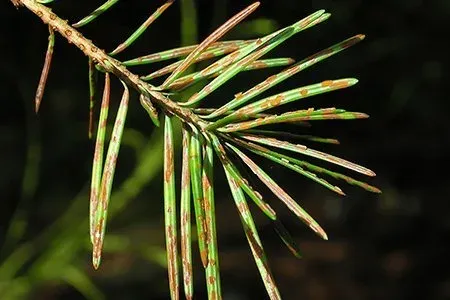
The most prominent symptom is the yellowing and subsequent browning of needles on young shoots. As the infection progresses, needles begin to drop prematurely, leaving segments of the branches completely bare.
Necrotic lesions develop on the bark of infected branches. These lesions often form small, dark spots which correspond to the location of fungal pycnidia, where the fungus produces its spores to infect surrounding tissue.
In highly humid environments, one might observe slimy, cream-colored spore masses exuding from the pycnidia. This is a critical indicator of active sporulation and high risk of spreading the disease to nearby healthy tissues.
Dieback of the shoots is a common outcome of the infection. When the pathogen encircles a branch, the parts distal to the infection point will wither and die, leading to significant deformation of the tree crown.
Cross-sections of infected branches often reveal a distinct color change in the wood and cambium, indicating that the fungus has successfully penetrated the conductive tissues of the plant.
Pathogen
The causative agent of this disease is the fungus Allantophomopsiella pseudotsugae. It is a highly specialized pathogen that primarily targets plants within the Pseudotsuga genus, most notably the Douglas fir (Pseudotsuga menziesii).
The fungus produces small fruiting bodies called pycnidia, which are embedded within the host tissue. Inside these structures, conidia are generated and released under humid conditions to facilitate the spread of the infection to healthy shoots and branches.
The pathogen thrives by colonizing the bark and needle tissues. It can persist for long periods in necrotic tissues of dead branches, making it a recurring source of infection within stands or nurseries throughout the growing season.
Allantophomopsiella pseudotsugae often switches between saprotrophic growth on decaying wood and pathogenic colonization of living tissue. This versatility allows it to remain present in the environment even when host susceptibility is low.
The biology of this fungus is closely tied to the host's physiological state. It is particularly effective at invading trees that are under environmental stress, as the tree's natural defense mechanisms are weakened, allowing for easier penetration of the fungal mycelium.
Conditions for development
High relative humidity and moderate temperatures are the most favorable conditions for the development of Allantophomopsiella pseudotsugae. Prolonged rainfall periods provide the water necessary for spore germination and dispersal.
Densely planted stands or those with poor ventilation are particularly vulnerable. The lack of air movement allows moisture to linger on the needles and bark, creating the ideal microclimate for the pathogen to thrive.
Trees growing in shaded or sheltered locations with low light intensity often exhibit weakened defenses, making them prime targets for fungal colonization. The disease pressure is significantly higher in these less optimal growing environments.
The temperature range optimal for fungal mycelial growth is between +15°C and +22°C. While the fungus is resilient, these moderate temperatures in spring and autumn facilitate the fastest rates of disease progression.
Presence of water droplets on the surface of needles is crucial for the infection process. Once the conidia land on a susceptible surface, the moisture allows them to penetrate the plant epidermis efficiently.
Why it matters
The primary damage caused by this fungus is the aesthetic degradation of trees and the significant loss of foliage in nurseries. For ornamental and forest planting, this results in stunted growth and a loss of economic value.
In forest management, repeated infections lead to crown thinning and overall reduction in tree vitality. Severely infected trees may show reduced growth rates and become increasingly susceptible to secondary pests and pathogens.
In nursery settings, the pathogen can cause high mortality rates among young seedlings, potentially leading to total loss of specific batches if not contained. The rapid spread of spores makes it a management priority.
The disease forces foresters and nursery managers to invest heavily in sanitation and chemical applications. These costs, combined with the loss of plant material, represent a significant financial burden on the cultivation of Douglas fir.
If left unmanaged, the cumulative effect of the disease can cause branch breakage and permanent structural damage, rendering the trees unfit for their intended commercial or landscape purposes.
Protection
Sanitation is the cornerstone of control. Regularly pruning and destroying infected branches and dead twigs is essential to lower the inoculum level within the immediate vicinity of the trees.
Preventive chemical treatments using copper-based fungicides are highly effective. Applying these treatments in early spring, during bud break, and in the autumn can protect the susceptible tissues from infection.
Improving the growing environment is vital for long-term health. Ensuring proper spacing during planting helps maximize air circulation, reducing the humidity levels that favor the growth of the fungus.
Maintaining a balanced fertilization regime helps the trees sustain a strong immune system, making them more resilient to the initial colonization by the pathogen.
- Regularly monitor the stand for early signs of needle discoloration.
- Sanitize all pruning tools with alcohol to prevent cross-contamination.
- Remove and destroy fallen needles beneath the canopy of infected trees.
- Use certified, healthy planting stock to avoid introducing the pathogen into the site.
Discussion
No discussions yet — be the first.