
Alexandrium catenella
Alexandrium catenella
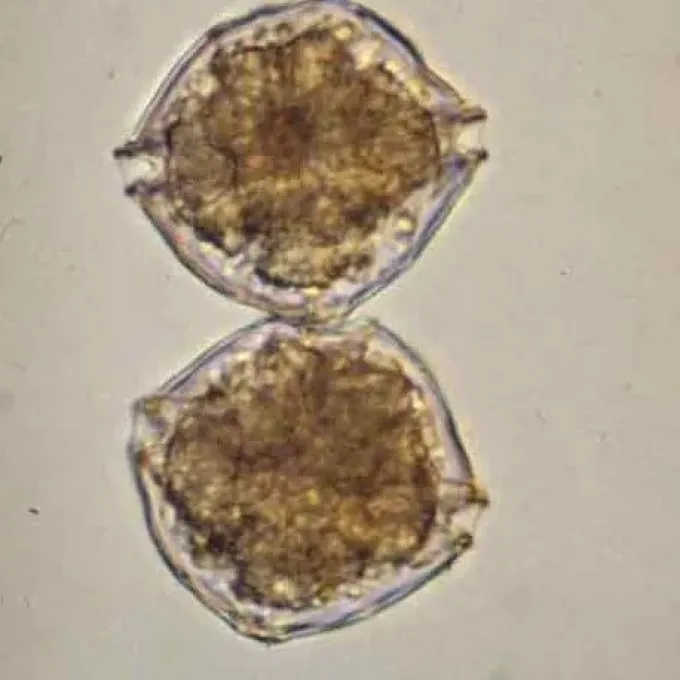
Description
Symptoms
The most visible sign of an Alexandrium catenella bloom is the discoloration of water, frequently described as a "red tide." This occurs when cell densities reach millions of cells per liter.
A major indirect sign is the presence of toxicity in filter-feeding organisms, such as mussels, oysters, and scallops, which accumulate the toxins without suffering themselves, making them vectors for poisoning.
Microscopic identification is the standard procedure for detecting the presence of this organism. Technicians look for specific cell morphology and the characteristic chain formation under high magnification.
Water quality changes, including localized oxygen depletion due to the high density of biomass, can serve as a diagnostic indicator of a severe bloom event.
Modern diagnostic tools, such as qPCR (quantitative PCR), are increasingly used to detect the presence of Alexandrium DNA in water samples even at low, early-stage concentrations.
Pathogen
Alexandrium catenella is a prominent species of marine dinoflagellates known for its ability to produce potent neurotoxins. It is a microscopic unicellular organism that often exists in chains, a morphological feature that distinguishes it from other species.
The organism belongs to the class Dinophyceae. It is primarily recognized as a causative agent of harmful algal blooms (HABs), which have significant implications for both marine ecology and human health.
The primary concern regarding this pathogen is its production of saxitoxins. These compounds are heat-stable and responsible for Paralytic Shellfish Poisoning (PSP), which poses a severe risk to consumers of contaminated seafood.
Biologically, Alexandrium catenella utilizes a complex life cycle involving both motile cells in the water column and dormant cysts in benthic sediments. These cysts can persist for years, acting as a "seed bank" for future blooms.
While not a plant disease in the traditional agricultural sense, it is treated as a major biological hazard in the field of mariculture and coastal resource management.
Conditions for development
The development of Alexandrium catenella blooms is highly dependent on environmental variables. Water temperature is a primary driver, with active growth typically occurring in the range of 12 to 20 degrees Celsius.
Nutrient enrichment (eutrophication) significantly promotes bloom intensity. Excessive inputs of nitrogen and phosphorus from agricultural runoff and sewage provide the necessary resources for rapid cell proliferation.
Stable water stratification is essential for bloom maintenance. Calm sea conditions allow cells to concentrate in the sunlit upper layer (euphotic zone), facilitating maximum photosynthetic activity.
Salinity levels play a regulatory role, with the species preferring typical marine conditions (25–35 PSU). Significant shifts in salinity or high freshwater inflow can inhibit the bloom development.
Seasonal light availability dictates the timing of blooms. Increased solar insolation in spring and early summer triggers the excystment of dormant cells from the seabed, initiating the seasonal bloom cycle.
Why it matters
The foremost harm caused by Alexandrium catenella is the contamination of seafood, leading to cases of Paralytic Shellfish Poisoning (PSP). Symptoms include numbness, muscle paralysis, and potential respiratory failure in humans.
Aquaculture industries face catastrophic financial losses due to mandatory harvest closures imposed by food safety authorities during bloom events to protect public health.
The ecological impact includes the disruption of food webs. Toxins produced by the algae can lead to mortality in fish, marine mammals, and seabirds that feed on affected organisms.
Blooms often cause secondary impacts, such as hypoxia (oxygen deficiency), resulting from the microbial decomposition of high organic matter concentrations following the bloom's collapse.
Market reputation for regional seafood products can suffer long-term damage due to repeated bloom events, necessitating expensive and recurring safety testing programs.
Protection
Effective control is achieved through robust monitoring and surveillance programs. Regular sampling of water and shellfish is the primary defense against commercial distribution of toxic products.
Implementing a "Red Tide" early warning system allows managers to restrict fishing and harvesting activities before toxins accumulate to dangerous levels in local shellfish stocks.
Preventive measures focus on managing nutrient runoff from coastal regions to minimize the eutrophication that fuels algal growth.
Public awareness campaigns are critical to inform local populations and tourists about the risks of harvesting or eating shellfish during bloom warnings.
Research into biological controls and the physical manipulation of water environments continues, although currently, strict safety testing and regulation remain the gold standard for managing the risk.
Discussion
No discussions yet — be the first.