
Aleurodiscus aurantius
Aleurodiscus aurantius
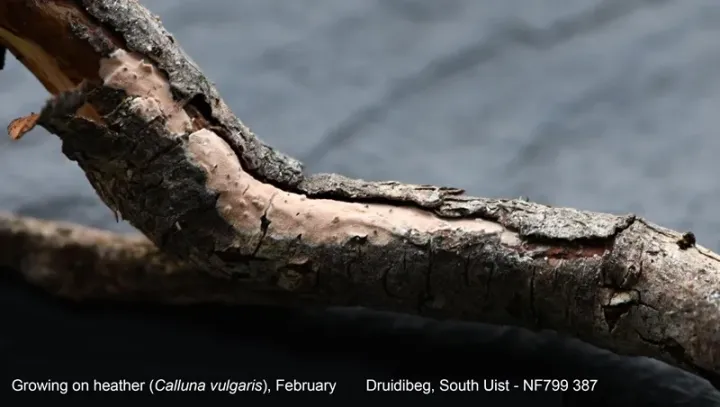
Description
Symptoms
The primary symptom of Aleurodiscus aurantius is the emergence of fruit bodies on the bark surface. These appear as flattened or slightly raised patches that adhere tightly to the substrate.
The color of these fruit bodies ranges from deep orange to bright red. As they dehydrate, they may fade to a pale or brownish hue. The surface is often velvety due to the hymenial layer development.
Infected areas often exhibit necrotic bark, which may crack or peel away from the stem. Upon close inspection, a white or creamy mycelial mat can be found between the bark and the wood.
The wood beneath the infected area typically changes color and loses density, becoming soft and spongy over time. In advanced cases, the infection covers extensive areas, signaling progressive necrosis.
Differentiating this species from other corticioid fungi is essential for accurate identification, as many exhibit similar morphology, often requiring microscopic spore analysis for confirmation.
Pathogen
Aleurodiscus aurantius is a basidiomycetous fungus within the Stereaceae family. While primarily recognized as a saprotroph, it can act as a pathogen under specific conditions, affecting the living tissues of weakened trees.
This fungus belongs to the group of wood-decay pathogens that trigger the degradation of woody structure. Its life cycle involves the development of characteristic orange or reddish-orange fruit bodies, which are key diagnostic features.
The mycelium penetrates deep into the bark and cambium, breaking down lignin and cellulose components. This process compromises the integrity of the tree's internal structure and creates pathways for other opportunistic infections.
Spores are dispersed via air currents, allowing the pathogen to colonize new hosts rapidly. These spores are highly resistant to temperature fluctuations, ensuring the fungus thrives across diverse climatic zones.
In forest pathology, this organism is studied as an agent that contributes to the decay of stressed trees, leading to a gradual decline in their overall vigor and eventual structural instability.
Conditions for development
The development of Aleurodiscus aurantius is highly dependent on humidity levels. It prefers shaded, moist environments where direct sunlight is limited, as UV exposure hinders mycelial growth.
Peak growth activity occurs during periods with moderate temperatures and frequent precipitation, typically during autumn or spring. These conditions maximize spore production and host colonization success.
The pathogen frequently targets trees already stressed by drought, mechanical injury, pest infestations, or other diseases. Healthy trees generally maintain enough immunity to resist initial colonization.
Inadequate agricultural practices, such as overcrowding in plantations, reduce ventilation and create a favorable microclimate for fungal proliferation. High humidity remains the critical factor for its spread.
Cold winters do not kill the fungus but induce a state of dormancy, allowing it to resume colonization as soon as temperatures rise. Old, damaged trees often act as natural reservoirs for this disease.
Why it matters
The primary damage caused by this fungus is the destruction of the tree's protective bark layer. This vulnerability allows secondary pests, such as wood-boring insects, to enter the xylem.
The disruption of cambial activity stunts tree growth and reduces the plant's overall vitality. Affected trees become increasingly susceptible to environmental stressors, such as windthrow or frost damage.
In forestry, the presence of the pathogen significantly decreases the commercial value of the timber. Wood damaged by this fungus is generally unsuitable for construction or high-quality woodcraft.
Severe infestations can lead to premature tree death, especially when compounded by nutrient deficiencies. This results in significant economic losses for plantation owners and forest managers.
Beyond direct damage, the fungus serves as an indicator of ecosystem stress. Its proliferation signals that the trees are weakened and require immediate sanitary assessment and intervention.
Protection
Maintaining high standards of forest hygiene is the best preventive measure. Regular sanitary pruning to remove dead or infected wood helps significantly reduce the fungal spore load in the area.
If infection is detected, all fruit bodies must be removed, and affected bark should be excised down to healthy tissue. The wound should then be treated with appropriate sealants or fungicides.
Thinning out overcrowded plantations is crucial to improve air circulation and sunlight exposure. Increasing the light reaching the bark creates a drier environment that is unfavorable for the fungus.
Early spring applications of copper-based fungicides can act as a prophylactic barrier, preventing spores from establishing themselves on the bark of susceptible trees.
Regular health monitoring is vital for early detection. Timely intervention prevents the infection from penetrating deeply into the heartwood, preserving the longevity of the trees.
Discussion
No discussions yet — be the first.