
Aleurodiscus amorphus
Aleurodiscus amorphus
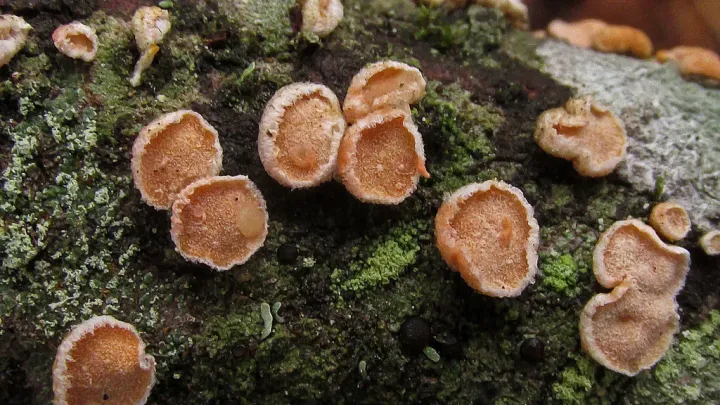
Description
Symptoms
The most distinctive symptom is the emergence of fungal fruiting bodies on the surface of the bark. These appear as small, flat, or cup-shaped discs, often ranging from a few millimeters to a centimeter in diameter.
Initially, these fruiting bodies are creamy or white in appearance, eventually turning to orange or reddish hues as they mature. In dry conditions, they may become brittle and shriveled.
Infected bark often exhibits cracking, flaking, or localized necrotic lesions. Underneath the loose bark, a white mycelial mat is frequently visible, indicating deep penetration of the fungus into the cambium and phloem layers.
Systemic symptoms include the yellowing and premature shedding of needles. As the infection progresses and potentially encircles the stem or branches, the entire tree may show signs of decline, including crown thinning and branch dieback.
These signs are most prominent during wet and humid weather, as moisture is essential for the development and visibility of the fungal fruiting bodies on the tree trunks.
Pathogen
The causative agent of the disease is the fungus Aleurodiscus amorphus, a member of the order Russulales. It is a specialized pathogen that primarily targets the bark of coniferous trees, particularly those within the Abies (fir) genus.
This fungus exhibits a saprotrophic lifestyle but frequently behaves as a parasite, infecting living or moribund bark tissues. It forms characteristic basidiocarps, which serve as the primary diagnostic feature for identifying the presence of the pathogen in forest stands.
The biological cycle of the fungus relies on colonizing weakened trees. Once the fungus infiltrates the bark, it utilizes a mycelial network to spread through the phloem and cortical tissues, gradually leading to cell necrosis.
The spread of Aleurodiscus amorphus occurs via airborne basidiospores that are released during humid conditions. These spores can travel significant distances, colonizing new hosts through natural fissures or mechanical damage.
In forest ecosystems, this fungus is often categorized as a secondary pathogen, as it predominantly colonizes trees already stressed by environmental factors, insect infestations, or drought.
Conditions for development
The development of Aleurodiscus amorphus is heavily dependent on moisture. Prolonged periods of high humidity, frequent rain, and fog create ideal conditions for spore germination and rapid mycelial colonization of the bark.
Dense forest stands with poor airflow and low light penetration are particularly susceptible. These conditions maintain high humidity levels on the bark surface, facilitating the spread of the pathogen between adjacent trees.
Mechanical injuries represent the most common entry point for infection. Damage caused by heavy snowfall, wind, or forestry operations provides the necessary breach for the fungus to bypass the tree's natural protective barriers.
The fungus is highly adapted to temperate climates and remains active during the cool, wet periods of spring and autumn, allowing it to continue its lifecycle even when other biological activity is reduced.
Accumulation of deadwood and infected debris in the forest creates a significant inoculum reservoir. Without proper sanitation, this continuous source of spores leads to a higher incidence of the disease across the stand.
Why it matters
The primary damage caused by Aleurodiscus amorphus involves the necrotic degradation of tree bark, which compromises the tree's vascular health. This leads to reduced vigor and, in severe cases, the eventual death of the tree.
The fungus degrades the structural integrity of the bark, rendering the tree more susceptible to secondary attacks by wood-boring insects and other opportunistic fungal pathogens that further accelerate tree mortality.
In commercial forestry, the disease causes significant economic loss by degrading timber quality. Trees scarred or weakened by the fungus may become unsuitable for industrial processing or structural use.
For ornamental firs, the fungus acts as a severe aesthetic blight. Persistent infections lead to crown dieback, which ruins the tree's decorative value and often necessitates the removal of the specimen.
In nursery environments, the pathogen can result in heavy losses of young seedlings. Rapid transmission in high-density nursery beds requires intensive management to prevent widespread damage to the inventory.
Protection
The most effective management strategy is rigorous forest sanitation. Prompt identification and removal of infected trees or deadwood significantly reduce the spore load and prevent the spread of the fungus to healthy neighbors.
Preventative measures should focus on minimizing mechanical damage to trunks. Care during thinning operations and silvicultural activities is crucial to avoid creating entry points for fungal infection.
Improving stand management through proper spacing ensures adequate airflow and light penetration, which helps lower humidity levels and creates a less favorable environment for Aleurodiscus amorphus to establish.
For high-value ornamental trees, localized pruning of infected branches can curb the spread of the fungus. All pruning tools must be disinfected after use to prevent cross-contamination.
While chemical control is rarely feasible at a forest scale, copper-based fungicides may be applied to protect wounds or treat localized infections in garden or nursery settings as part of an integrated disease management program.
Discussion
No discussions yet — be the first.