
Aleurodiscus
Aleurodiscus
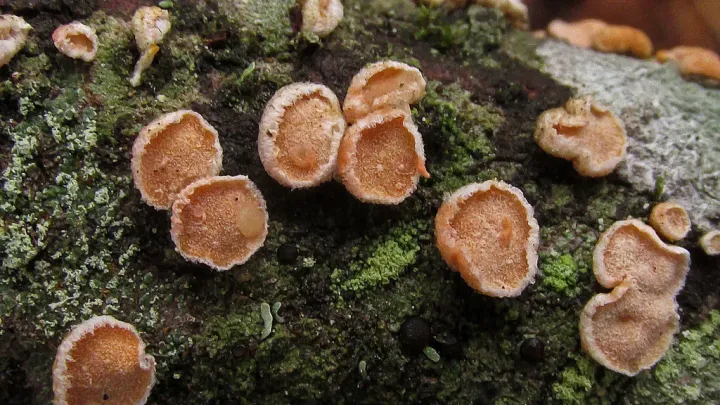
Description
Symptoms
The most visible sign of an Aleurodiscus infection is the presence of disk-shaped or crustose fruiting bodies on branches and trunks. These appear as off-white, grayish, or yellowish patches firmly attached to the bark.
Affected bark may show signs of abnormal texture, often appearing rough or flaky. As the mycelium colonizes the living tissue, it leads to the necrosis of the bark, which becomes brittle and starts to peel away from the wood.
Localized cankers or cracks often form in the infected areas. These lesions interrupt the transport of nutrients and water, leading to noticeable stress symptoms in the tree's foliage or needles.
Advanced stages of the disease are characterized by the dieback of terminal branches or the upper canopy. This occurs when the fungal infection successfully disrupts the tree's cambium layer around the circumference of a branch or trunk.
- Leather-like crusts growing on the bark
- Cracking and peeling of the infected bark surface
- Localized necrotic lesions or cankers
- Reduced vigor and thinning of the canopy
- Visible patches of grayish or whitish mycelial mats
Pathogen
The disease is caused by fungi belonging to the genus Aleurodiscus, which are members of the order Corticiales. These are basidiomycetes that predominantly thrive as saprotrophs or weak parasites on various woody species.
The fungus develops mycelia within the bark and cambium layers of the host plant. Over time, it penetrates deeper into the wood structure, potentially weakening the integrity of the tree's vascular system.
A distinctive feature of this pathogen is the formation of characteristic basidiocarps, which typically appear as leathery, crust-like structures on the surface of the bark. These structures serve as the primary reproductive organs.
Reproduction is facilitated by the release of basidiospores into the atmosphere, which are then dispersed by wind currents. These spores gain entry into healthy host tissues primarily through mechanical wounds, frost cracks, or decaying areas.
The biological life cycle of Aleurodiscus is closely linked to the decomposition of organic matter, meaning it is most frequently encountered on trees that are already suffering from stress or mechanical damage.
Conditions for development
High humidity and moisture are the most critical environmental drivers for the development of Aleurodiscus. The fungus thrives in habitats such as dense forests or shaded gardens where air circulation is limited and bark remains damp.
Prolonged periods of rainfall, fog, or heavy dew provide the necessary conditions for spore germination and the expansion of the fruiting bodies. Therefore, the disease is more prevalent in humid geographical regions.
Trees with pre-existing injuries are significantly more vulnerable. Mechanical damage, sunscald, and frost damage create entry points that the fungus exploits to establish a foothold in the tree's vascular tissues.
Crowded planting conditions often exacerbate the issue by creating a microclimate that prevents bark from drying out after rainfall. This persistent moisture supports the continuous growth of the fungal colony.
The absence of proper maintenance, such as leaving deadwood and fallen branches near healthy trees, increases the overall spore load in the environment, heightening the risk of cross-infection.
Why it matters
The impact of Aleurodiscus is particularly concerning for conifers and some hardwood species, as it significantly degrades their vitality. By compromising the bark, it leaves the tree susceptible to secondary pests like wood-boring insects.
The physiological stress caused by the disruption of the cambium leads to reduced growth rates. Over time, this cumulative stress can lead to the slow decline and eventual death of the affected tree.
For ornamental trees, the primary harm is aesthetic degradation. The presence of fungal crusts and the resulting dieback of branches ruin the visual appeal of landscape plantings and park trees.
In forestry, infections can lead to wood quality reduction, making the lumber less suitable for industrial processing. The infected areas often serve as entry points for more aggressive wood-decaying fungi.
If left unmanaged, Aleurodiscus can lead to the loss of individual trees, which, in a closed canopy or garden setting, can create openings that further disrupt the local ecological or aesthetic balance.
Protection
Management begins with rigorous sanitation practices. Removing and destroying infected branches prevents the further spread of spores, effectively reducing the inoculum potential within the immediate area.
Maintaining tree vigor is the best natural defense. Ensuring trees are correctly watered, mulched, and fertilized improves their immune response, making it more difficult for the pathogen to establish itself.
For identified infections, surgical removal of the fungal fruiting bodies and the underlying diseased bark is recommended. The exposed area should be treated with fungicides or wound paint to prevent reinfection.
Preventative spraying with copper-based fungicides during the dormant season can help protect trees that are located in high-risk areas or near previously infected specimens.
Strategic thinning of branches to improve airflow through the canopy is a vital preventative measure. By allowing the bark to dry out more quickly after rain, the conditions become hostile to the establishment of the fungus.
Discussion
No discussions yet — be the first.