
Orange peel fungus
Aleuria aurantia
Description
Symptoms
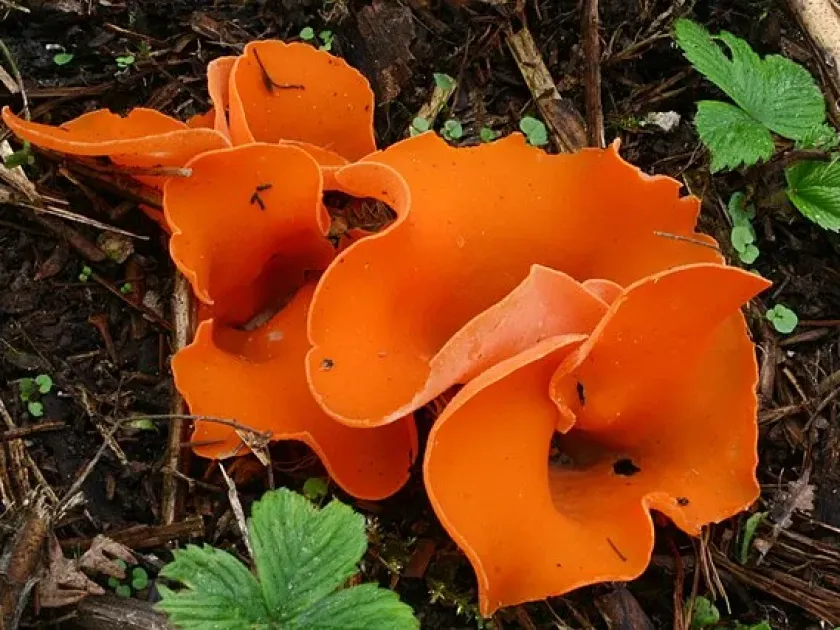
The orange peel fungus (Aleuria aurantia) is easily recognizable by its bright orange, cup-shaped fruiting bodies that appear scattered on the ground. These bodies typically range from 2 to 10 centimeters in diameter.
Young specimens have edges curled inward, but as they mature, they flatten out and often become wavy or irregular. The surface is smooth or slightly powdery, showcasing a vibrant orange color.
These fungi often grow in clusters, forming noticeable patches on bare soil, mossy areas, or disturbed woodland edges. Their intense color makes them stand out against the background vegetation.
The flesh of the fungus is fragile, thin, and lacks a distinct odor or taste. When handled or subjected to pressure, the fruiting bodies shatter easily, a common trait for this type of discomycete.
Unlike parasitic plant diseases, the presence of this fungus is not associated with necrosis, wilting, or any degradation of plant tissues.
Pathogen
The orange peel fungus is not a plant pathogen and does not cause diseases in agricultural crops. It is a saprophytic fungus that lives on organic matter in the soil.
Biologically, the species belongs to the phylum Ascomycota and the family Pyronemataceae. Its life cycle is exclusively tied to the decomposition of plant debris, not the consumption of living plant tissues.
The mycelium grows in the upper soil layers or leaf litter without invading the vascular systems of cultivated or wild plants. Therefore, it poses no threat to the phytosanitary status of a garden.
Studying this species is relevant in the context of soil ecology, as it participates in the mineralization of organic matter, contributing to a healthy soil ecosystem.
Agricultural literature does not classify this species as a pest or pathogen, as it is physiologically incapable of causing infectious diseases in plants.
Conditions for development
The fungus prefers moist, organic-rich soils. It is frequently found in shaded areas, along woodland trails, in parks, and in gardens that maintain high soil moisture levels.
Optimal conditions for fruiting occur during periods of high humidity and moderate temperatures. The peak season for observing these fungi is late summer and autumn.
Disturbed soil, such as areas near new paths or cleared land, often triggers abundant fruiting, as the fungus is well-adapted to colonizing exposed or altered surfaces.
The fungus is tolerant of various soil compositions but is most common on loamy substrates that retain moisture effectively. Severe drought conditions inhibit its fruiting.
Spore dispersal is facilitated by wind and rain droplets that mechanically dislodge the spores from the cups, allowing them to spread across new areas.
Why it matters
The orange peel fungus causes no harm to agricultural or garden crops, as it lacks parasitic properties. It does not attack roots, stems, or leaves of living plants.
The economic impact of this fungus is neutral. It is not an agent of disease and does not require the implementation of any protective chemical measures.
In rare instances, dense growth might be aesthetically undesirable to some gardeners, but this has no impact on the physiological development of nearby plants.
Its lack of harmfulness is confirmed by its ecological role as a decomposer. It actively contributes to the breakdown of woody debris and organic mulch.
Concerns regarding the potential for this fungus to damage plants are unfounded and based on a misunderstanding of fungal biology.
Protection
No specific control measures are necessary for the orange peel fungus. Applying fungicides to combat this saprophyte is both unnecessary and ecologically detrimental.
If the presence of fruiting bodies is aesthetically unwanted in a garden, simply removing them by hand or clearing the upper layer of soil containing the mycelium is sufficient.
Maintaining proper soil drainage and removing excessive organic debris can help limit its appearance, though this is primarily an aesthetic maintenance practice.
Since the fungus is not a pathogen, there are no agronomic protocols or chemical control regulations for this species in plant protection guidelines.
For long-term soil health, it is better to focus on agricultural practices that foster a balanced soil microflora, which will naturally compete with any saprophytic growth.
Discussion
No discussions yet — be the first.