
Alectoria ochroleuca
Alectoria ochroleuca
Description
Symptoms
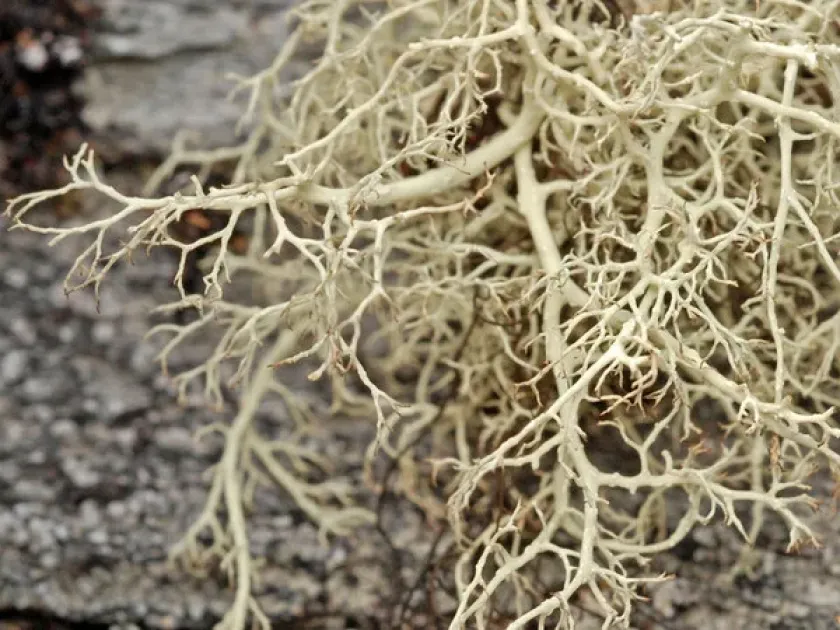
The visual appearance of Alectoria ochroleuca is characterized by a shrubby, multi-branched thallus that forms dense, cushion-like mats on the substrate.
The lichen exhibits a distinct pale yellow or straw-like coloration, which often turns into a deep ochre yellow in high-light, open tundra environments.
It typically grows to heights of 10–15 cm, featuring a complex network of rigid, thread-like branches that distinguish it from crustose or leafy lichen forms.
Unlike disease symptoms, the presence of this lichen does not induce necrosis, chlorosis, lesions, or any form of decay in neighboring vegetation.
The structure is highly stable and does not show the typical signs of pathogen-induced deformations or erratic growth patterns seen in plant infections.
Pathogen
It is important to clarify that Alectoria ochroleuca is not a plant pathogen or a disease; it is a species of fruticose lichen belonging to the Parmeliaceae family.
In agronomic terms, this organism does not infect agricultural crops and does not possess the biological mechanisms required to act as a parasitic plant disease.
Alectoria ochroleuca represents a symbiotic relationship between a fungus and an alga, functioning as an independent organism within the ecosystem.
It does not feed on host plant tissues, nor does it secrete toxins that could damage the health or yield of cultivated species in any agricultural setting.
Classifying it as a plant disease is biologically incorrect, as it is a standard component of natural flora in cold climates, not a crop pathogen.
Conditions for development
Alectoria ochroleuca thrives in cold, windswept environments such as arctic tundra, subarctic regions, and high-altitude alpine zones.
It requires clean air and high exposure to light, making it a valuable bioindicator for low levels of environmental pollution in its native habitats.
The lichen is adapted to withstand extreme temperature fluctuations and short growing seasons, which are characteristic of its geographic range.
Propagation occurs primarily through vegetative fragmentation, where pieces of the thallus are dispersed by wind or animals to new suitable locations.
It prefers habitats with low vegetative competition, such as rocky barrens, sandy soils, or lichen-rich tundra heaths, where it can firmly establish itself.
Why it matters
Alectoria ochroleuca poses no threat to agriculture or crop productivity, as its distribution is limited to ecosystems that do not intersect with industrial farmland.
It is entirely harmless to higher plants, lacking the enzymes or parasitic structures required to penetrate living plant tissues or disrupt their development.
On the contrary, the lichen is an ecologically beneficial organism, serving as a primary food source for reindeer in the Arctic and subarctic regions.
There is no economic damage associated with this organism, as it does not compete with crops and does not impact harvest quality or storage stability.
Given its lack of interaction with domesticated plant species, it is recognized exclusively as a natural component of northern biodiversity.
Protection
Since Alectoria ochroleuca is not a pest or a disease, there are no control, protection, or management protocols developed for this species in agriculture.
The use of pesticides or fungicides is strictly prohibited in areas where this lichen grows, as it would destroy the sensitive ecological balance of the region.
Agronomic management in relevant areas focuses on the preservation of these habitats to maintain the integrity of natural pasture systems for livestock.
No preventative measures are needed, as the lichen is not an invasive species in agricultural contexts and does not require active eradication.
Management guidelines for farmers do not address this species, as it is viewed as a beneficial natural resource rather than a biological threat.
Discussion
No discussions yet — be the first.