
Alectoria
Alectoria
Description
Symptoms
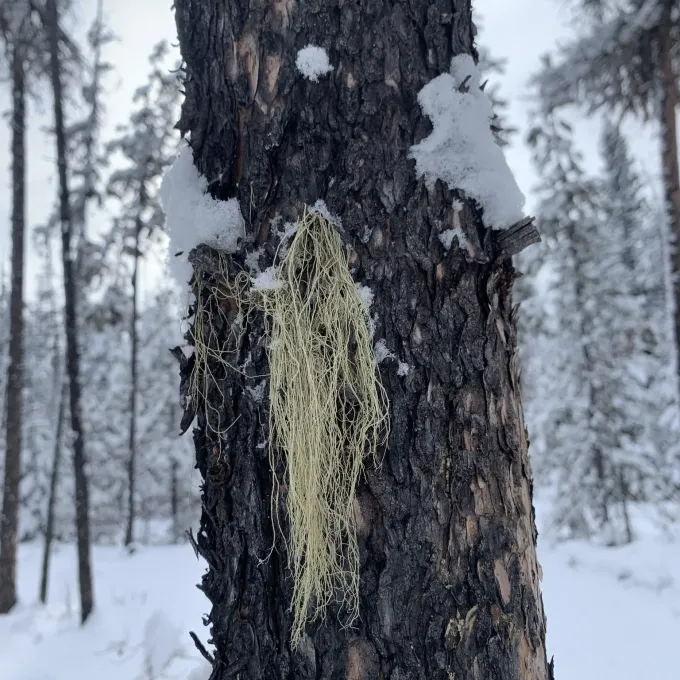
Alectoria is a genus of fruticose lichens that often resembles long, hanging threads or «beards» on tree branches. While frequently mistaken for a disease, it is a complex symbiotic organism growing on the exterior of the plant.
The thallus color usually ranges from greyish-green to brown or yellow. These structures can cover significant portions of tree bark, especially in older or neglected orchard trees, creating a dense, tangled appearance.
A key visual characteristic is that the lichen sits on top of the bark without penetrating deep into the xylem or phloem. Unlike pathogens, it does not cause necrotic lesions or decay directly beneath its attachment point.
It is most commonly found in the upper canopy or on shaded, humid parts of the tree. The presence of Alectoria is often more visible on trees that are dormant or have stopped growing vigorously.
Distinguishing it from genuine plant diseases is crucial; if the underlying bark remains firm and healthy beneath the lichen, the organism itself is likely acting as an epiphyte rather than a primary parasite.
Pathogen
Alectoria is not a plant pathogen; it is a symbiotic association between a fungus and algae. It does not extract sap or nutrients from the host tree, making it an epiphyte rather than a parasitic infection.
The lichen relies entirely on atmospheric moisture, dust, and gases for its nutrition. Because it is highly sensitive to air quality, its presence often indicates a clean environment rather than a diseased one.
While not a disease agent, Alectoria is considered a sign of low tree vigor or stagnant growth. It flourishes on rough, aged bark where organic matter has accumulated over several seasons.
The biological impact on the host is minimal in terms of nutrient theft, but the organism can colonize large surfaces if the tree is not actively expanding its trunk girth. This explains why it is more common on older, slower-growing trees.
Reproduction occurs via fragmentation, where small pieces of the lichen are dispersed by wind or water. This method allows the lichen to establish colonies on nearby susceptible branches quite rapidly.
Conditions for development
High humidity and poor air circulation are the primary drivers for the development of Alectoria. Trees located in foggy regions or dense, crowded groves are significantly more likely to host this lichen.
Shade plays a critical role in its spread. The lichen prefers the cooler, damper sides of tree trunks where sunlight does not reach, allowing the bark to remain wet for extended periods.
Older trees with weathered, cracked bark provide an ideal anchor for the lichen. The physical texture of aged bark helps trap moisture and fungal spores, facilitating the growth of these organisms.
Poor orchard management, specifically the lack of regular pruning, creates a stable microclimate that encourages lichen buildup. A dense canopy prevents airflow, keeping the humidity levels constantly high.
Low growth rates in the tree host allow the lichen to gain a firm hold. If a tree is stressed or nutrient-deficient, its bark development slows, allowing the lichen to colonize large surface areas without being disrupted by the natural expansion of the bark.
Why it matters
The primary concern with Alectoria is its ability to physically cover the bark, which can impede gas exchange. This reduced access to air can theoretically affect the plant's long-term vitality if allowed to cover large surface areas.
Lichens can serve as a refuge for various tree pests. During the winter, the dense, fibrous structure of Alectoria provides an excellent habitat for mites, aphids, and scale insects to overwinter on the host tree.
The organism can hold moisture against the bark for too long, which may lead to localized rot or create an environment suitable for opportunistic fungal pathogens to infect the tree.
Aesthetically, heavy colonization is often seen as a sign of neglect. While it does not kill the tree directly, it can be a red flag that the tree requires improved cultural practices and better maintenance.
In commercial orchards, its presence is usually an indication that the tree is in decline or that the surrounding environment is not being managed to encourage vigorous, healthy growth.
Protection
Proper pruning is the most effective preventative measure. By thinning the canopy, you improve air circulation and sunlight exposure, which desiccates the bark and prevents the lichen from establishing.
Mechanical removal is the standard control method. Using a stiff brush or a specialized tool to scrape the lichen off the bark during wet weather effectively clears the host surface without damaging the wood.
Sanitizing the cleaned bark with copper-based fungicides or similar treatments helps kill remaining spores and prevents regrowth. This also provides additional protection against secondary fungal issues.
Whitewashing tree trunks with a lime-based solution is a traditional and effective way to manage lichens. The alkaline nature of lime alters the surface pH, making it hostile to lichen growth.
- Perform regular canopy thinning and sanitation pruning
- Manually remove lichen with a scrub brush
- Apply copper sulfate to sanitized surfaces
- Use lime whitewash on trunks
- Improve tree vigor through proper fertilization and watering
Discussion
No discussions yet — be the first.