
Alder yellows
Alder yellows phytoplasma
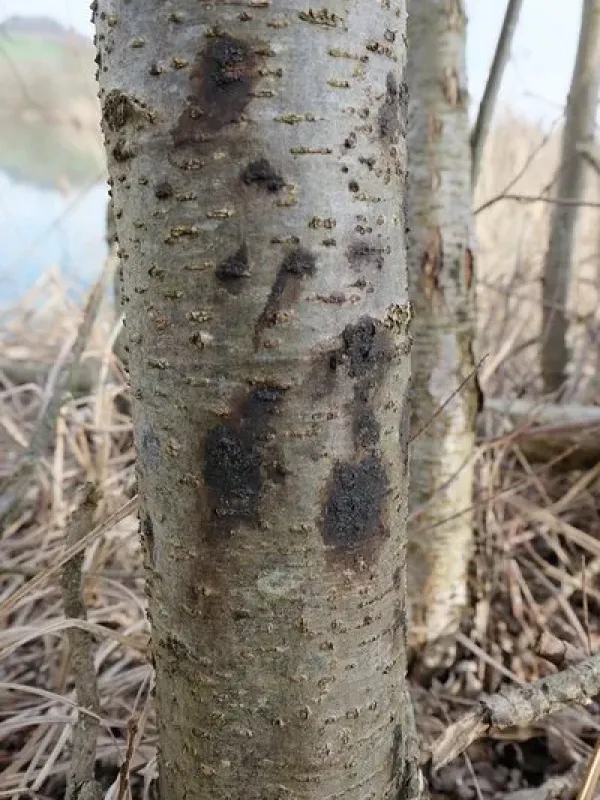
Description
Symptoms
The most prominent symptom of Alder yellows is leaf chlorosis, where leaves turn a pale, yellowish color. This condition often results in smaller-than-normal leaves, giving the tree an unhealthy and sparse appearance throughout the growing season.
A classic diagnostic feature is the development of witches' brooms, which are dense clusters of thin, stunted shoots. This growth abnormality occurs due to the phytoplasma interfering with the plant's hormonal signaling and apical dominance.
Affected trees frequently experience premature leaf drop, often occurring mid-summer. This early defoliation stresses the tree, leading to a significant reduction in photosynthetic capacity and overall nutrient accumulation.
As the disease progresses, tip dieback becomes visible, where terminal shoots begin to wither and die. This process gradually moves downward through the canopy, leading to the decline of major branches.
The root system of an infected alder tree gradually deteriorates, showing reduced root hair density. This compromises water and mineral uptake, eventually resulting in the irreversible decline and death of the tree.
Pathogen
The disease is caused by a phytoplasma, an obligate parasite of the plant's phloem tissue. These prokaryotes lack a cell wall and are restricted to the sieve tubes of the host, where they multiply and disrupt nutrient transport.
The primary vector for the transmission of this pathogen is sap-sucking insects, specifically leafhoppers. These insects ingest the phytoplasma while feeding and subsequently transmit it to healthy trees during future feeding events.
Conditions for development
The spread of Alder yellows is strongly correlated with the population dynamics of its insect vectors. Warm and dry weather conditions generally favor higher leafhopper activity, which accelerates the rate of infection in a stand.
High-density plantings and proximity to infected vegetation significantly increase the risk of rapid disease transmission. Environmental stress, such as drought or poor soil conditions, can make alder trees more susceptible to the phytoplasma's effects.
Why it matters
Alder yellows is considered a highly destructive disease as there are no chemical cures for infected mature trees. The disease poses a severe threat to ecological stability in riparian zones and forest plantations.
The economic impact involves the loss of timber value and the degradation of nursery stock. Furthermore, the loss of these trees disrupts forest biodiversity and affects the ecological services provided by healthy alder stands.
Protection
Effective management relies heavily on early detection and the complete removal of symptomatic trees. Grubbing out infected trees, including roots, is essential to eliminate local sources of the pathogen.
Targeted pest management focusing on leafhopper control can mitigate further spread. This involves using insecticides in critical areas or encouraging natural predators to regulate insect populations.
Prevention includes strictly using certified, healthy nursery stock and maintaining healthy site conditions to enhance tree vigor. Regularly monitoring stands for early symptoms remains the best practice for protecting healthy alder forests.
Discussion
No discussions yet — be the first.