
White blister rust
Albuginaceae
Description
Symptoms
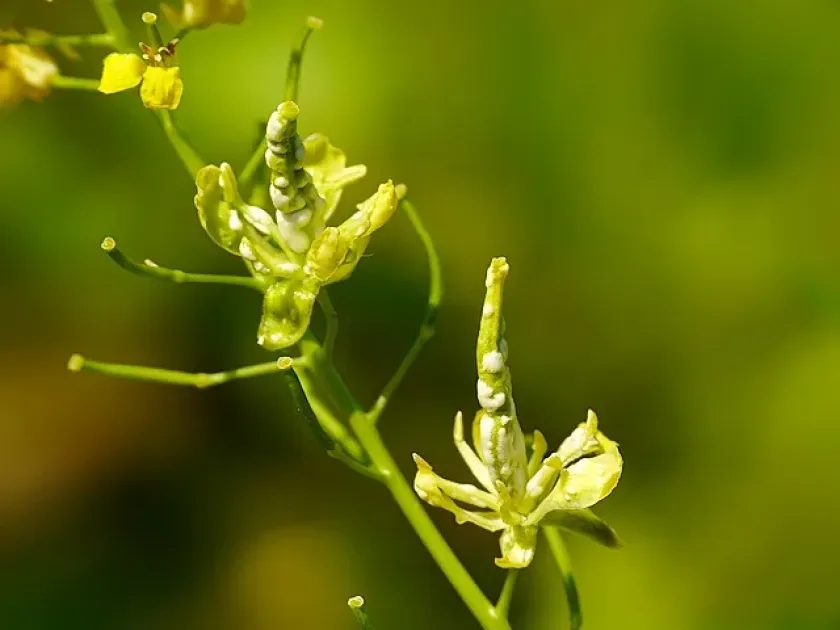
The hallmark symptom of white blister rust is the formation of white, powdery, or waxy pustules that appear on the undersides of leaves, stems, and flower stalks.
These pustules eventually rupture the host epidermis, exposing the mass of sporangia, which creates a distinct blister-like or creamy-white crusty appearance.
Affected plant parts often display severe physiological distortion, including swollen stems, twisted petioles, and hyperplastic growth of floral tissues.
In many cases, systemic infection leads to leaf yellowing, stunting, and an overall lack of vigor in the crop, reducing the plant's photosynthetic capacity.
- white, raised, blister-like pustules;
- distortion and swelling of stems and stalks;
- chlorotic spots on leaf surfaces;
- premature leaf senescence and death;
- stunted growth of the entire plant.
Pathogen
White blister rust is caused by the obligate parasitic oomycetes belonging to the family Albuginaceae, with Albugo candida being the most common species.
These pathogens function similarly to fungi but are phylogenetically distinct, requiring living host tissue to complete their life cycle and thrive.
The pathogen persists in the environment primarily as oospores, which are thick-walled resting spores capable of surviving harsh soil conditions for several years.
Under favorable conditions, these spores germinate and produce sporangia, which are disseminated by wind, water splashes, or insects to new susceptible host plants.
Once settled, the pathogen sends hyphae into the plant cells, forming haustoria that extract nutrients, leading to the characteristic visual symptoms of the infection.
Conditions for development
Cool and humid weather conditions are the primary drivers for the rapid development and spread of white blister rust in agricultural fields.
Temperature ranges between 15°C and 20°C combined with high moisture levels from rain, dew, or fog are optimal for sporangia germination.
Poor field hygiene and high-density planting lead to reduced air circulation, maintaining a microclimate that remains moist for long periods, favoring the pathogen.
Excessive overhead irrigation can mimic rainfall, facilitating the splash dispersal of spores from diseased plants to healthy neighbors within the crop row.
The presence of susceptible weed species in or near the field acts as a continuous source of inoculum, fueling recurrent infections throughout the season.
Why it matters
White blister rust causes significant economic impact by reducing both the yield quality and the overall quantity of marketable produce for farmers.
In cruciferous crops, systemic infection of the inflorescences often results in flower sterility, preventing the formation of pods and viable seeds.
The tissue damage caused by the pathogen creates entry points for secondary bacterial and fungal pathogens, further complicating the health of the crop.
Plants affected early in their development may suffer from stunted growth, leading to smaller bulbs, roots, or heads, which fail to meet commercial standards.
The cosmetic degradation caused by the white pustules makes produce unacceptable for fresh market sale, leading to significant post-harvest losses.
Protection
Effective management begins with strict crop rotation, ensuring that susceptible Brassicaceae species are not planted in the same soil for at least three years.
Sanitation is critical; all infected crop residues must be removed and destroyed or buried deeply to eliminate the primary reservoir of resting spores.
Farmers should prioritize the use of certified, disease-free seed and select resistant or tolerant varieties whenever they are available on the market.
Weed management, specifically targeting wild crucifers, is essential to remove alternative hosts that allow the pathogen to survive during off-seasons.
When necessary, the strategic application of protective fungicides can suppress the spread of the disease, provided they are applied during early infection stages.
Discussion
No discussions yet — be the first.