
Albonectria rigidiuscula
Albonectria rigidiuscula
Description
Symptoms
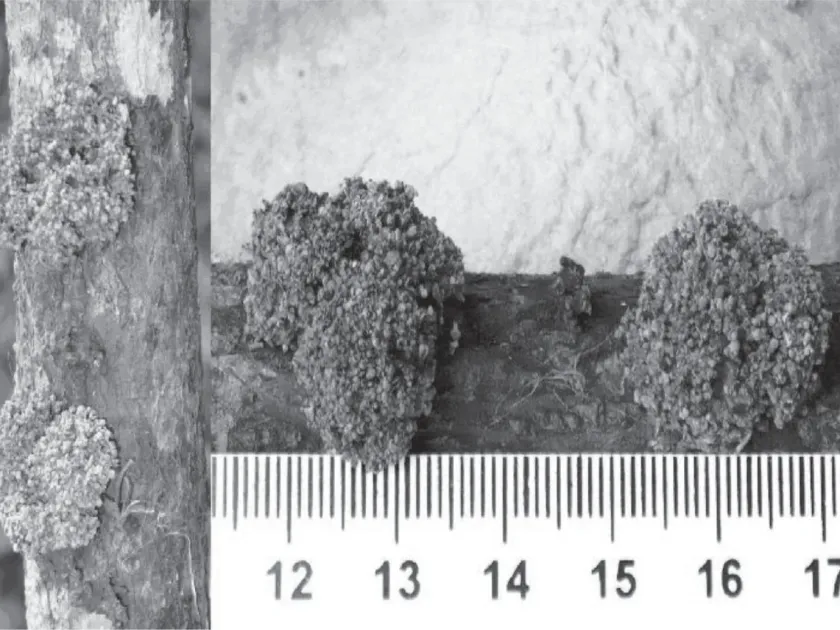
The most visible symptom is the development of cushion-like growths on the bark, which can range in color from white to pinkish-yellow. These cushions are actually dense clusters of fungal spore-producing structures.
Bark necrosis often follows, resulting in open lesions or cankers. The infected bark splits and may peel off, exposing the underlying wood to further decay and allowing the fungus to progress deeper into the tree's vascular system.
Dieback is a common clinical sign, where branches begin to wither and dry up from the tip downwards. Leaves on the affected branches lose their vigor, turn yellow, and ultimately abscise, leading to thinning of the tree canopy.
Infection of the pods (specifically in cocoa) manifests as darkened, decaying areas. These spots expand rapidly, turning the pod into a soft, mushy mass covered in a layer of fungal conidia, which then serves as a source for further spread.
- Characteristic white or pink spore cushions on bark.
- Development of cankers, cracks, and deep ulcers.
- Progressive dieback of twigs and main branches.
- Yellowing and premature shedding of foliage.
- Rotting of fruit with visible fungal sporulation.
Pathogen
Albonectria rigidiuscula is a fungus from the Ascomycota phylum, historically recognized as Fusarium rigidiusculum. It is a major pathogen causing severe damage to woody perennial crops in tropical climates, most notably cocoa and coffee plants.
The pathogen exists in both anamorph (conidial) and teleomorph (perithecial) states. This dual reproductive capacity allows the fungus to survive under various conditions and spread rapidly across host plantations.
It survives as a parasite or saprophyte on dead bark and plant debris. This versatility makes the fungus extremely persistent, as it can harbor in pruning waste or fallen branches if they are not disposed of correctly.
Dissemination occurs via airborne spores and water splashing, as well as through mechanical transport. Insects, particularly those that feed on bark or tunnel into stems, act as primary vectors by creating entry points for the fungal infection.
Biological research on this pathogen emphasizes its ability to mutate and form complex interactions with the host tree, making it a persistent challenge for plant pathologists working in humid tropical agricultural zones.
Conditions for development
High humidity and consistent warm temperatures are the primary environmental drivers for the development of Albonectria rigidiuscula. These conditions stimulate spore germination and accelerate the growth of the fungal mycelium.
Heavy rainfall periods are particularly conducive to the spread of the disease. Rain droplets carry spores from infected branches to healthy parts of the plant, significantly increasing the infection rate within a plantation.
Mechanical injuries represent the most common entry points. Damage sustained during harvesting, pruning, or due to insect feeding provides the necessary openings for the fungal hyphae to colonize the host tissues.
Poor orchard management, such as overly dense planting, creates a humid, stagnant microclimate. When trees are crowded, airflow is restricted, keeping the bark wet for longer periods and promoting fungal proliferation.
Tree stress, whether from nutrient deficiencies, waterlogging, or other biotic factors, compromises the plant's natural defense systems. Weakened trees are significantly more susceptible to successful colonization by the fungus.
Why it matters
The disease causes substantial economic losses by destroying the reproductive output of the trees. Infected fruits or pods are often completely lost, directly reducing the marketable harvest per hectare.
Gradual dieback severely limits the productive lifespan of the plantation. As primary branches die, the tree requires more energy for recovery rather than production, leading to a long-term decline in yield stability.
Control costs are a major burden. Frequent labor-intensive tasks like pruning and the need for fungicide applications increase production costs, squeezing profit margins for growers.
In cases of severe infestation, the physical integrity of the trees is compromised. Infected branches become brittle and are more likely to break during tropical storms, leading to permanent structural damage.
The presence of the pathogen on a farm acts as a reservoir, posing a constant threat to nearby healthy crops. If not contained, the disease can wipe out large sections of a plantation in a relatively short time.
Protection
Sanitary pruning is the cornerstone of management. All infected material must be systematically pruned, removed from the plantation, and destroyed by burning to break the pathogen's life cycle.
Strict tool sanitation is mandatory. Pruning shears and saws must be sterilized with appropriate disinfectants after working on each individual tree to avoid cross-contamination of healthy tissue.
Proactive chemical management involves using copper-based fungicides. These act as protective barriers on pruning wounds and bark, preventing spores from establishing new infections during wet weather.
Integrated Pest Management (IPM) is essential to control insect vectors. By maintaining a healthy orchard and managing insect populations, growers can minimize the number of open wounds that invite the fungus.
Good agricultural practices, such as proper tree spacing and balanced fertilization, are crucial for long-term health. These practices improve light penetration and airflow, which naturally suppresses fungal growth.
Discussion
No discussions yet — be the first.