
Akanthomyces lecanii
Akanthomyces lecanii
Description
Symptoms
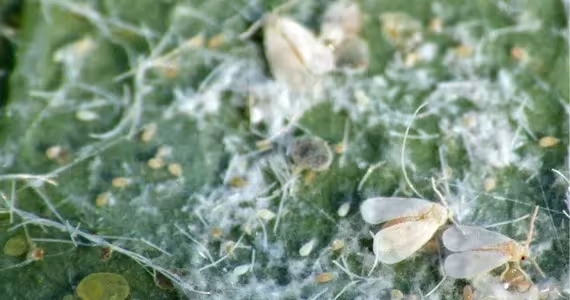
The primary visual indicator of the fungus's activity is the emergence of a white or cream-colored mycelial growth on the surface of the infected insect.
As the infection progresses, the insect's body becomes rigid and mummified, a diagnostic feature often referred to as "white muscardine" in entomology.
Microscopic examination reveals the development of characteristic branched conidiophores, which produce abundant spores to facilitate the rapid spread of the fungus among pest colonies.
While the crop itself remains healthy, the presence of these fungal-covered, dead insects on leaves and stems is a clear sign that the biological treatment is working effectively.
Mass infestation of pests by this fungus leads to a rapid collapse of pest populations, often stopping damage to the crop within a short timeframe.
Pathogen
Akanthomyces lecanii (formerly known as Lecanicillium lecanii) is a specialized entomopathogenic fungus widely recognized as a key biological agent for managing pest populations.
Classified within the Sordariomycetes class, this fungus acts as a natural pathogen that infects insects by penetrating their cuticle, subsequently consuming the host's internal tissues.
It is extensively used in the production of microbial insecticides, offering an environmentally friendly alternative to traditional synthetic chemical treatments.
Importantly, this fungus is not a plant pathogen; it poses no risk to crop health and serves exclusively as a beneficial ally for farmers in controlling harmful arthropods.
The high specificity of various strains allows for targeted applications, ensuring maximum efficiency against particular species of pests in professional agricultural settings.
Conditions for development
The efficacy of Akanthomyces lecanii is highly dependent on environmental conditions, particularly the presence of high relative humidity, ideally above 80–90%.
The fungus thrives within a temperature range of +20°C to +25°C, making it an ideal choice for controlled environments like greenhouses and polytunnels.
Direct exposure to sunlight, specifically UV radiation, can significantly reduce spore viability, necessitating application during dusk or periods of overcast weather.
Surface moisture on plant foliage is crucial for the germination of fungal spores, providing the necessary environment for them to breach the host insect's cuticle.
In drier conditions, the activity of the fungus is severely limited, which requires careful management of irrigation and microclimate to ensure successful pest control outcomes.
Why it matters
This organism is strictly an entomopathogen, meaning it does not cause disease in plants, nor does it impact crop yields in any negative way.
Its "harmful" effects are reserved for pests like aphids, whiteflies, thrips, and certain mite species, making it an essential component of integrated pest management (IPM).
Utilizing this fungus helps producers meet strict safety standards by minimizing reliance on toxic pesticides and preventing the development of chemical resistance.
Furthermore, it helps maintain the ecological balance within the greenhouse, as it generally does not harm beneficial predatory insects when applied correctly.
The adoption of this biological agent enhances the overall sustainability and marketability of agricultural produce by reducing chemical residues.
Protection
Successful management of pests using Akanthomyces lecanii involves optimizing greenhouse conditions to favor the fungal life cycle and spore dispersal.
- Maintaining consistent humidity levels through misting or fogging systems.
- Adhering strictly to application protocols and recommended dosages.
- Avoiding the use of broad-spectrum chemical fungicides that could inhibit fungal development.
- Integrating with other biological controls to create a multi-layered defense system.
- Performing routine monitoring of pest density to determine the optimal timing for repeated applications.
Preventative strategies focus on early introduction of the fungus before pest populations reach critical damage thresholds.
Storage of the biological product requires cool and dark conditions to maintain spore potency until the time of field application.
By implementing these biotechnological methods, growers can maintain effective control over challenging pests while ensuring safe and responsible crop production.
Discussion
No discussions yet — be the first.