
Citrus sooty mold
Aithaloderma clavatisporum
Description
Symptoms
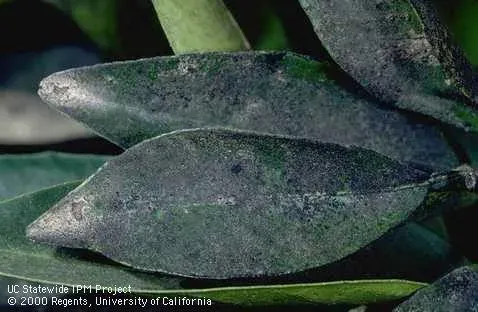
The most visible sign of citrus sooty mold is a black, velvety, or powdery coating covering the surface of leaves and branches. It looks exactly like soot or grime deposited on the plant.
In early stages, the black spots may be patchy, appearing around areas where insects have been feeding. As the colony grows, it can cover the entire leaf surface, severely hindering the plant's health.
Leaves covered by the fungal layer often appear dull and lose their luster. If touched, the black coating can often be wiped off, revealing intact, although sometimes sticky, plant tissue underneath.
Presence of this mold is almost always a diagnostic indicator of a hidden pest infestation. If you see sooty mold, you should immediately inspect the underside of the leaves for aphids or scales.
If the infection persists, the leaves may become yellow, brittle, and eventually drop prematurely, leading to a visible decline in the tree's vigor and overall growth rate.
Pathogen
The disease is caused by the fungus Aithaloderma clavatisporum, which belongs to the sooty mold group. It is an epiphytic fungus that grows strictly on the surface of plant parts rather than invading internal plant tissues.
This fungus acts as a secondary colonizer, thriving on the honeydew excreted by sap-sucking insects. It does not derive nutrients directly from the citrus plant, making it a commensal organism dependent on pests like aphids, scale insects, and whiteflies.
The mycelium of the fungus is dark brown to black, which gives the infected leaves, twigs, and fruits a characteristic soot-like appearance. It spreads primarily through airborne spores, which germinate rapidly in suitable environmental conditions.
Its life cycle is inherently tied to the presence of honeydew-producing insects. If the pest population is successfully controlled, the fungal colony will cease to thrive and eventually die off.
The fungus can survive on debris or bark, waiting for the return of high moisture and insect activity to resume its growth, which is why hygiene is crucial in orchard management.
Conditions for development
High humidity and warm temperatures are the primary environmental drivers for the development of Aithaloderma clavatisporum. It flourishes in areas with poor airflow and frequent stagnant air.
Orchards with dense canopies provide the perfect microclimate for the fungus to expand. Lack of sunlight penetration to the inner branches creates a humid environment where spores can germinate effectively.
The abundance of honeydew is the most critical condition. Without this sugary byproduct of sap-sucking insects, the fungus cannot establish itself on the citrus leaves.
Seasonal weather, such as heavy rains followed by humid days, can accelerate the spread of spores throughout the orchard. Irrigation practices that keep the foliage wet for extended periods also contribute to the spread.
Poorly maintained trees with weak defenses are more prone to pest colonization, which indirectly makes them more susceptible to severe sooty mold outbreaks.
Why it matters
The primary damage is caused by the reduction of photosynthesis. The black layer acts as a physical barrier that prevents sunlight from reaching the chlorophyll, causing the tree to starve for energy.
By blocking the stomata, the mold restricts the plant's ability to "breathe" or exchange gases, which disrupts physiological processes and lowers the plant's general immunity to other diseases.
Fruit quality is significantly impacted, as the black coating ruins the appearance of the citrus. This requires extra labor and cleaning before fruit can be marketed, reducing profitability.
Severe infestations lead to stunted growth and lower fruit yields. The stress caused by the mold and the underlying pest pressure can also lead to branch dieback.
Long-term infestation drains the resources of the tree, making it less resilient to environmental stressors like temperature fluctuations or drought conditions.
Protection
The most effective strategy is the integrated management of sap-sucking insects. Controlling pests like scale, aphids, and mealybugs will naturally eliminate the source of food for the sooty mold.
Regular pruning is essential to increase sunlight penetration and air circulation. Proper canopy management makes the tree environment less hospitable for fungal growth.
Cleaning affected foliage with a mild soap solution or horticultural oils can help remove the mold and restore the leaf's ability to photosynthesize effectively.
In cases of heavy infestations, systemic insecticides or horticultural soaps can be used to treat both the insects and the fungal residue, though targeting the pest is always the first priority.
- Monitor trees frequently for the presence of honeydew.
- Apply timely pest control measures.
- Prune branches to improve canopy aeration.
- Wash off excess mold with a high-pressure water stream if possible.
- Maintain proper soil fertility to ensure strong tree vigor.
Discussion
No discussions yet — be the first.