
Agrocybe vervacti
Agrocybe vervacti
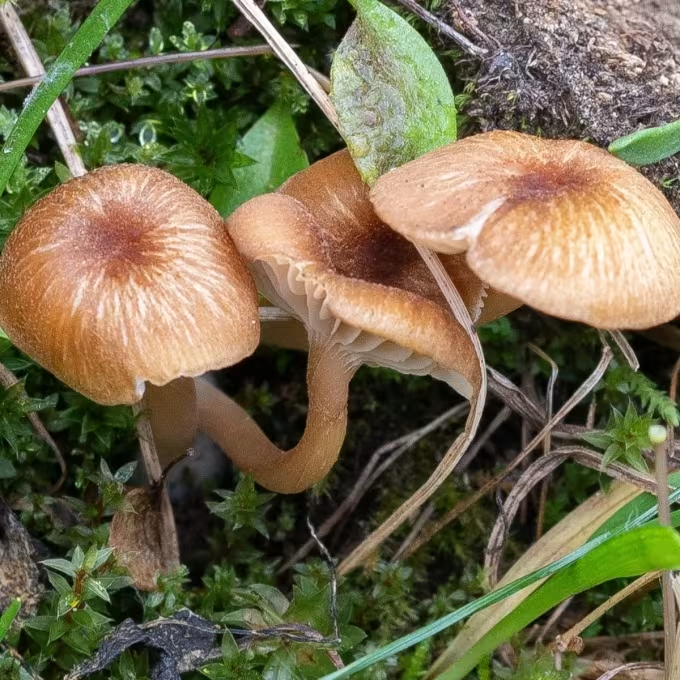
Description
Symptoms
The most visible sign of the fungus's presence is the emergence of small, light-yellow to brownish caps on the soil surface, especially following heavy rainfall.
In lawns or pastures, the growth of the fungus can manifest as fairy rings, where the grass inside or outside the circle shows altered growth patterns or coloration.
The presence of dense, white fungal threads (mycelium) in the top layer of the soil is a primary indicator of colonization.
Stunted growth or chlorosis of cultivated plants in specific patches of a field often points to competitive nutrient uptake by the fungal colony.
Physical changes in soil structure, such as increased hydrophobicity or clogging of pore spaces by the mycelium, are additional indicators of its activity.
Pathogen
Agrocybe vervacti is a soil-dwelling saprotrophic fungus belonging to the family Strophariaceae. In agricultural settings, it is recognized as a fungus capable of colonizing organic matter in the soil, which can indirectly affect the root zone of cultivated plants.
The fungus produces small fruiting bodies that emerge from an extensive underground mycelial network, which spreads throughout the upper layers of the soil.
As a basidiomycete, it is highly efficient at decomposing organic compounds, including lignin and cellulose, playing a role in soil nutrient cycling.
The mycelium grows rapidly under favorable conditions, often creating dense mats that can compete with the rhizosphere of nearby crops.
Identification of the fungus is performed by analyzing the morphological characteristics of its fruiting bodies, particularly the color of the cap and the spore print, which is typically brown.
Conditions for development
Agrocybe vervacti thrives in moist soil conditions with moderate temperatures, typically ranging from 15 to 22 degrees Celsius.
The fungus prefers environments rich in partially decomposed plant material or uncomposted organic matter, which provides the necessary nutrients for its development.
Poor soil drainage and waterlogging significantly increase the likelihood of fungal outbreaks, as the mycelium requires consistent moisture to thrive.
Extended periods of wet, mild weather are the primary triggers for the mass production of fruiting bodies on the soil surface.
Over-application of raw organic fertilizers without proper incorporation or decomposition time can create localized hotspots for the growth of this fungus.
Why it matters
The primary impact of Agrocybe vervacti is the disruption of nutrient availability, as the fungus competes directly with crop roots for nitrogen and other essential elements.
Secretions from the fungal mycelium may have phytotoxic effects, potentially inhibiting the germination and early root development of sensitive crops.
The density of the mycelium can interfere with the physical movement of water and air through the soil, leading to localized drought or suffocation of the root system.
In high-intensity agriculture, significant infestation can lead to yield losses and patchy plant stands, requiring intervention to restore soil balance.
Prolonged activity of the fungus reflects an imbalance in the soil ecosystem, which may diminish the soil's natural suppression of other harmful pathogens.
Protection
Effective management begins with sound agronomic practices, such as deep tillage to ensure proper incorporation and decomposition of plant residues.
Improving soil drainage through physical interventions or land leveling prevents the waterlogged conditions that favor fungal colonization.
Adjusting soil pH through liming can create a less favorable environment for the growth and reproduction of this specific fungus.
- Application of soil-applied fungicides where severe infestation threatens crop viability.
- Implementing diverse crop rotations to break the fungal growth cycle.
- Regular soil aeration to enhance oxygen levels, which inhibits excessive fungal mycelium expansion.
Regular monitoring of fields and the prompt removal of fruiting bodies can help prevent the spread of spores to adjacent unaffected areas.
Discussion
No discussions yet — be the first.