
Agrocybe splendidoides
Agrocybe splendidoides
Description
Symptoms
The most visible diagnostic sign is the emergence of fungal fruiting bodies (mushrooms) at the base of the infected trunk or on the root collar.
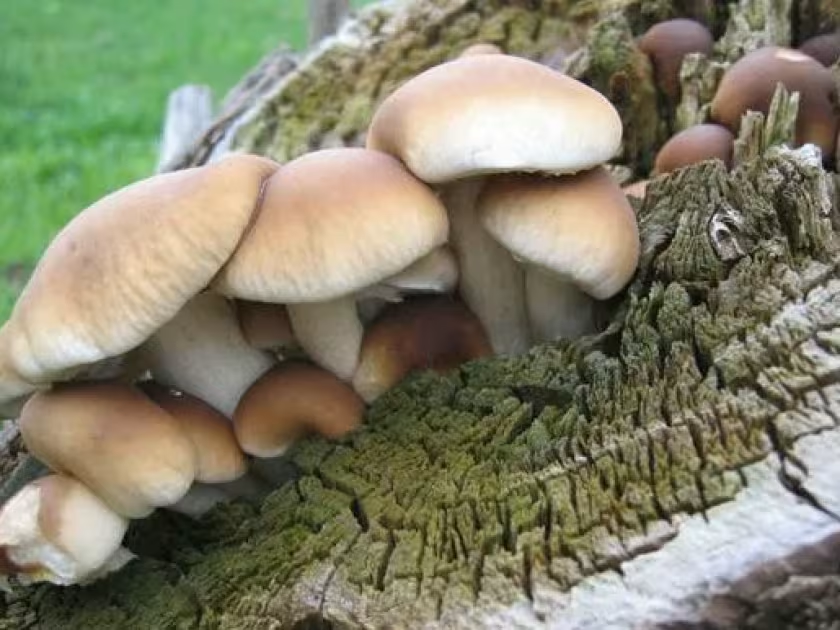
These fruiting bodies typically exhibit a yellow-to-brown coloration with a convex cap and well-developed gills, appearing during warm, moist weather.
Upon removing the bark, the wood tissue shows signs of bleaching and softening, often becoming stringy or fibrous due to the action of the fungal mycelium.
Externally, infected trees may display stunted growth, premature yellowing of the leaves, and eventual dieback of branches due to disrupted nutrient transport.
A persistent smell of decay or the presence of fungal rhizomorphs near the roots can also indicate a severe, advanced stage of the disease.
Pathogen
Agrocybe splendidoides is a species of fungus in the Strophariaceae family that, under specific environmental circumstances, acts as a wood-decay pathogen.
Primarily classified as a saprotroph, it often colonizes decaying organic matter but can become a facultative parasite in weakened woody plants.
The organism functions by invading the structural tissues of trees, specifically targeting the root system and the lower portions of the trunk.
Infection usually occurs via mechanical wounds, cracks in the bark, or through root grafts with other infected vegetation nearby.
The disease mechanism involves the degradation of lignin and cellulose, leading to a condition known as white rot, which weakens the tree's internal structure.
Conditions for development
The development of Agrocybe splendidoides is highly dependent on high moisture levels in the soil and the presence of decaying organic debris.
Prolonged periods of rain, combined with moderate temperatures, create ideal conditions for the rapid spread of spores and the colonization of new hosts.
Trees are more susceptible when they have sustained damage from frost, sunscald, or improper pruning, which provides an entry point for the fungus.
Poor soil drainage and low aeration in crowded plantations increase the humidity around the trunk, significantly favoring the spread of the pathogen.
Overall lack of vigor in the host tree, caused by nutrient deficiencies or pests, further lowers its natural resistance to fungal invasion.
Why it matters
The primary damage caused by this fungus is the structural compromise of the tree's base, which often leads to windthrow and sudden tree collapse.
In orchards and plantations, the presence of the fungus causes gradual economic decline as tree health and productivity deteriorate over time.
Once the root system is compromised, the tree loses its ability to absorb water and essential nutrients, leading to death regardless of further treatment efforts.
The pathogen is difficult to eradicate once it has established itself in the woody tissue, often serving as a long-term reservoir for future infections in the area.
The potential for spore dispersal by wind means that one infected tree can quickly pose a threat to the entire surrounding population.
Protection
Management strategies begin with rigorous sanitation, including the prompt removal and destruction of infected wood and the associated fruiting bodies.
Protecting the bark from mechanical injury during gardening and forestry operations is essential to prevent entry sites for fungal spores.
Improving site drainage to prevent water accumulation near the root zones is a critical preventative step for long-term tree health.
Regular inspection and early detection of decay signs allow for timely intervention, such as localized surgery on small wounds to remove affected tissue.
- Sterilizing pruning tools to prevent the cross-contamination of healthy trees.
- Applying protective wound dressings to all cuts and mechanical injuries.
- Maintaining soil fertility to ensure the tree has the vigor to resist infections.
Discussion
No discussions yet — be the first.