
Agrocybe semiorbicularis
Agrocybe semiorbicularis
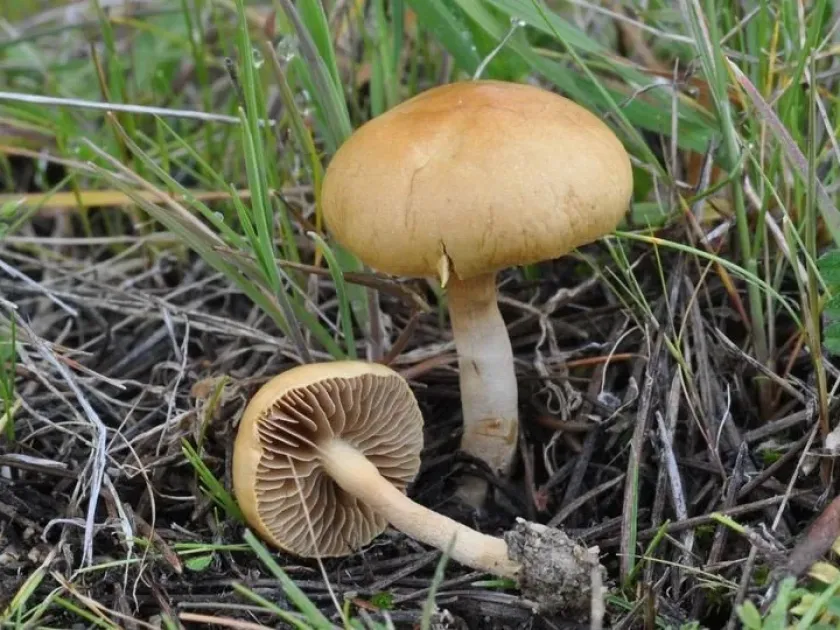
Description
Symptoms
The most distinctive sign is the appearance of small, semi-orbicular brownish mushrooms in the fields, particularly after periods of prolonged rainfall or in moist areas.
Affected plants typically show signs of stunting and chlorosis. The lower leaves often turn yellow prematurely, indicating that the roots are no longer functioning correctly.
Close inspection of the plant base reveals white, cottony mycelial mats wrapping around the stem and roots. In advanced stages, the root tissue becomes discolored and soft.
Patches of dead or wilted plants are common in infested fields. This patchiness is a result of the localized spread of the mycelium through the soil layer.
Stems of severely infected plants are often brittle and detach easily from the root ball, often emitting a distinct fungal odor from the decaying tissue.
Pathogen
Agrocybe semiorbicularis is a saprophytic fungus that, under specific conditions, acts as a facultative plant pathogen. It belongs to the Strophariaceae family and is commonly found in organic-rich soils.
The pathogen spreads through its mycelium, which colonizes soil and organic matter. While it primarily feeds on decaying plant debris, it can opportunistically invade the root systems of weakened crops.
This fungus is classified as a cause of root and collar rot. By breaking down plant tissues, it interferes with nutrient uptake, leading to systemic physiological stress in the host plant.
The fungus is highly resilient due to its ability to form sclerotia or persistent mycelial masses in the soil, allowing it to survive for extended periods without a host.
Biologically, Agrocybe semiorbicularis exploits high moisture environments, rapidly producing enzymes that degrade cellulose and lignin, further stressing the plant’s defense mechanisms.
Conditions for development
High soil moisture is the primary driver for this fungus. Persistent rainy weather creates a favorable microclimate for the development of both the mycelium and the fruit bodies.
Optimal temperatures for growth range between 18 and 24 degrees Celsius. These conditions often coincide with early spring or late autumn growing periods.
Accumulation of surface crop residues provides an ideal substrate for the fungus. Minimum tillage practices that leave residues on the soil surface can increase inoculum levels.
Poor soil structure and waterlogging inhibit oxygen circulation, which creates an anaerobic environment that favors fungal infection over healthy root development.
The pathogen is disseminated via airborne spores or through the physical movement of infested soil particles by heavy machinery during field cultivation.
Why it matters
The economic impact of Agrocybe semiorbicularis includes significant yield losses due to reduced plant vigor and premature senescence of the crops.
Uniformity of the field is compromised by uneven crop growth and patchiness. This makes mechanized harvesting difficult and can result in significant produce loss.
Infected plants are significantly more susceptible to secondary pathogens, including various bacteria, which further degrade the quality of the harvested product.
In cases of severe infestation, the storage quality of root crops or grains is diminished, and there is a risk of mycotoxin contamination in some agricultural contexts.
Long-term infestation degrades soil health and requires costly remedial actions, such as deep tillage or long-term crop rotation shifts to manage the pathogen population.
Protection
Deep plowing remains the most effective mechanical control measure, as it buries the organic matter and isolates the pathogen deep in the soil profile.
Crop rotation is essential. Rotating away from highly susceptible species helps break the fungal life cycle by starving it of its preferred host substrate.
Biological control methods, such as applying beneficial fungal strains like Trichoderma, can help suppress the growth of the pathogen in the soil environment.
Effective water management, including installing proper field drainage, helps mitigate the risk by ensuring the soil does not stay excessively moist for extended periods.
- Regular removal and burning or composting of infected plant debris.
- Use of fungicide-treated seeds to prevent early-stage root infection.
- Regular soil analysis to monitor for buildup of pathogenic spores.
- Maintaining optimal plant spacing to promote airflow and soil drying.
- Liming to adjust soil pH levels if they become overly favorable for the fungus.
Discussion
No discussions yet — be the first.