
Agrocybe elatella
Agrocybe elatella
Description
Symptoms
Agrocybe elatella is a gilled mushroom that typically emerges in highly moist areas containing an abundance of decaying organic matter.
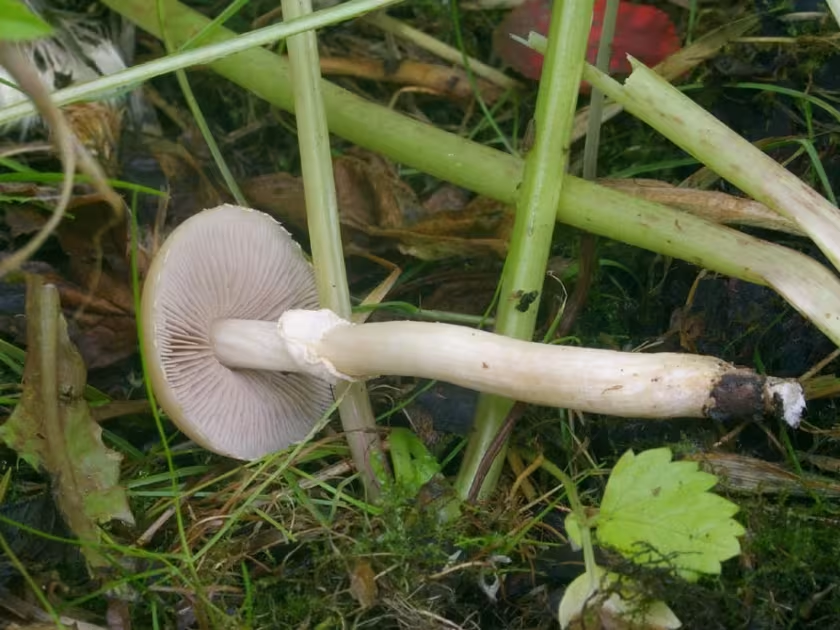
The fruiting bodies display a convex cap, with colors shifting from creamy to ochre-brown, depending on the maturity of the specimen.
The stem is generally lighter in color compared to the cap, exhibiting a fibrous texture, sometimes with remnants of a ring at the top.
While often confused with other edible mushroom species, its presence is a diagnostic marker for specific soil conditions and high organic content.
Mycelial presence in the soil can be detected through a distinct earthy or decaying odor, which becomes particularly noticeable following heavy rains.
Pathogen
The causative agent for this fungal activity is the fungus Agrocybe elatella, which is classified under the division Basidiomycota.
It acts as a typical saprotroph, playing a significant role in the mineralization process of soil organic materials, including cellulose and lignin.
The mycelium expands actively within the root zone of plants, which, under specific environmental conditions, can suppress healthy root growth.
While it is not considered an obligate parasite, its mass development indicates an accumulation of excessive un-decomposed plant residues in the soil.
The fungus reproduces via spores, which are disseminated over long distances by wind, water, or agricultural equipment during cultivation.
Conditions for development
Optimal development of this fungus requires high soil moisture levels and the presence of abundant plant organic matter in the top layer.
The most favorable temperature range for the formation of its fruiting bodies is between 15 and 22 degrees Celsius.
Poorly drained fields, where water remains stagnant after rainfall, provide an ideal environment for the expansion of this saprotrophic colony.
Lack of proper crop rotation and the accumulation of straw or stubble residues often triggers outbreaks in soil-based fungal populations.
High soil acidity also favors the dominance of Agrocybe elatella over beneficial soil microflora and competing microorganisms.
Why it matters
The primary danger lies not in direct parasitism, but in the creation of a toxic micro-environment around plant roots during the decomposition process.
Extensive mycelial growth can lead to soil compaction and disrupt essential gas exchange required by the plant's root system.
Harm manifests as stunted growth in seedlings, chlorosis in leaves, and a measurable decrease in overall agricultural crop productivity.
In greenhouse settings, its rapid growth may disrupt the microbiological balance, potentially hindering the development of beneficial plant symbionts.
The emergence of fungal patches necessitates additional soil sanitation efforts to protect the overall vitality of the planting area.
Protection
The fundamental control strategy is adherence to sound agricultural practices, such as precise shredding and deep incorporation of stubble residues.
Establishing an efficient drainage system is crucial to eliminate water stagnation and prevent the proliferation of basidiomycete fungi.
Regular liming of the soil is highly recommended, as most Agrocybe species prefer slightly acidic conditions for rapid expansion.
Fruiting bodies should be manually removed prior to spore maturity to mitigate further spread across the treated land.
The application of biological fungicides containing antagonistic Trichoderma species is an effective method for suppressing Agrocybe elatella activity.
Discussion
No discussions yet — be the first.