
Agrocybe arvalis
Agrocybe arvalis
Description
Symptoms
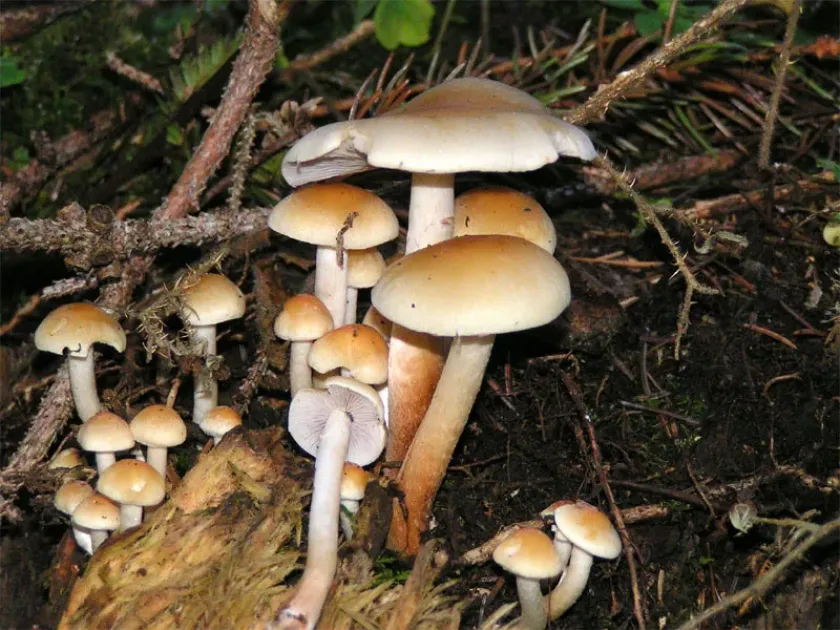
The fruiting bodies of Agrocybe arvalis appear as small gilled mushrooms found on the soil surface or among plant debris. They are visually identifiable by their characteristic yellowish-brown caps, which are typically convex and become lighter as they dry out.
A key diagnostic feature is the presence of a slender stalk, often featuring remnants of a ring. The fungus is closely associated with the organic substrate it inhabits, making its presence often correlated with the accumulation of undecomposed plant residues in the topsoil.
The appearance of this fungus in fields is sometimes mistaken for a symptom of active pathogenesis; however, it generally acts as a saprophyte, utilizing dead plant tissues. Nonetheless, its massive occurrence indicates an imbalance in soil microbiology.
The fungal mycelium actively penetrates soil aggregates, forming light-colored strands that can be observed when digging in the root zone of cultivated plants. This feature indicates active organic decomposition by the fungal network.
The fungus is often spotted in fields where conservation tillage or minimal soil disturbance has been practiced for a long time without adequate management of fungal populations.
Pathogen
The causative agent is Agrocybe arvalis, a fungus belonging to the Basidiomycota division. It is a typical soil-borne saprophyte that specializes in breaking down lignin and cellulose within plant residues.
Unlike highly specialized pathogens, this fungus is not an obligate parasite; however, its ability to compete with root microflora creates stressful conditions for seedlings.
The biology of the fungus involves the development of a complex mycelium capable of surviving in the soil for long periods under unfavorable conditions by forming sclerotia-like structures.
Reproduction occurs via spores, which are spread by wind and water, easily settling on moist plant debris, which facilitates rapid colonization of new areas.
The life cycle of the fungus is closely linked to soil temperature and moisture, reaching its peak activity during periods of moderate temperatures and sufficient soil moisture.
Conditions for development
Optimal conditions for the development of Agrocybe arvalis occur during periods of high soil moisture, often observed after prolonged rainfall or excessive irrigation.
The fungus prefers acidic or slightly acidic soils rich in non-decomposed organic matter, including cereal straw and stubble left after harvest.
The temperature optimum for the fungus to produce fruiting bodies ranges from 15 to 22 degrees Celsius, which often coincides with the active growth stages of many field crops.
The absence of proper crop rotation and deep plowing promotes the accumulation of spores in the soil horizon, creating a favorable environment for the annual regeneration of the mycelium.
The presence of compacted soil layers, which limit aeration, also triggers the development of fungal flora that can displace beneficial soil biota.
Why it matters
The primary concern regarding the presence of Agrocybe arvalis is its competition with crops for nutrients within the rhizosphere.
Active organic decomposition by the fungus can lead to temporary nitrogen starvation for plants, as the fungus consumes significant nitrogen resources for its metabolism.
Damage to root hairs by the fungal mycelium, while not a direct aggressive attack, creates entry points for secondary infections that cause root rot.
Massive development of the fungus physically hinders normal seed germination, forming a sort of "soil crust" made of mycelium, which is critical for small-seeded crops.
Under intensive farming conditions, the presence of this organism highlights the need to re-evaluate tillage technology to prevent the degradation of the local biocenosis.
Protection
A primary protection measure is deep autumn plowing, which facilitates the burial of plant residues and their accelerated mineralization by beneficial microorganisms.
Adherence to scientifically based crop rotation is essential, as it disrupts the accumulation cycle of soil fungi by alternating crops with different root system architectures.
Applying stubble decomposers based on beneficial bacteria (e.g., Bacillus subtilis) allows for the displacement of Agrocybe arvalis from the ecosystem through biological competition.
Regulating the soil pH level through liming helps limit the development of most saprophytic fungal species, which prefer lower pH values.
- Optimization of soil moisture and aeration
- Improving soil structure through deep loosening
- Application of balanced mineral fertilizers
- Use of biological fungicides for soil remediation
Discussion
No discussions yet — be the first.