
Yellow-staining mushroom
Agaricus xanthodermulus
Description
Symptoms
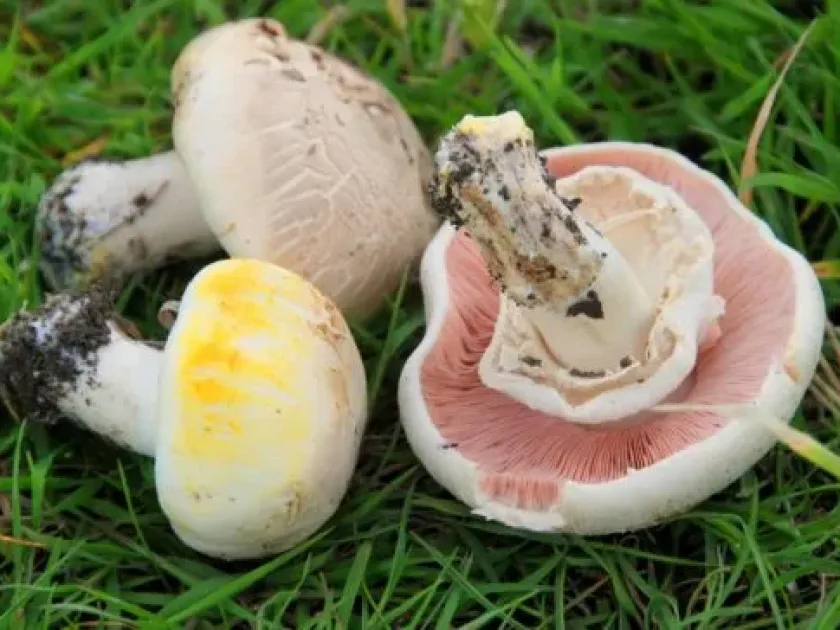
The most reliable identification feature is the immediate bright yellow staining on the cap and especially at the base of the stem when bruised or cut.
It emits a characteristic chemical, ink-like, or phenol smell, which is particularly strong when the mushroom is heated, serving as a key distinction from pleasant-smelling edible mushrooms.
The cap is initially white or greyish, turning brownish with age. The gills start as pinkish and eventually transition to a deep chocolate brown as the spores mature.
The stem features a prominent, often floppy ring, and the base is slightly bulbous; any damage to the base triggers the intense yellow reaction.
Due to its deceptive appearance, which mimics edible field mushrooms in their young stages, thorough inspection is essential to avoid accidental harvesting.
Pathogen
The yellow-staining mushroom (Agaricus xanthodermus) is a toxic fungus that is frequently mistaken for edible field mushrooms. In agricultural settings, it is recognized as a biological contaminant.
While it is not a direct plant pathogen, its presence indicates an accumulation of organic matter and specific soil conditions that can interfere with standard crop management.
The primary concern is its toxicity. Ingesting this fungus leads to severe gastrointestinal distress, posing a risk to workers or household members if mistaken for edible species.
Biologically, it behaves as a saprotroph, decomposing organic material. Its widespread mycelial network can compete for resources with cultivated crops in nutrient-rich soils.
The fungus is a common inhabitant of gardens, lawns, and agricultural fields, particularly where organic enrichment is practiced regularly.
Conditions for development
This mushroom favors humus-rich soils and is frequently found in gardens, hedgerows, and well-manured areas where organic content is high.
The mycelium thrives in environments with an abundance of partially decomposed organic matter, often spreading rapidly across compost-enriched soil.
High soil moisture and moderate temperatures provide the ideal trigger for the mass production of fruiting bodies during the late summer and autumn months.
The mycelial network can persist in the soil for several seasons if organic sources remain available and conditions favor its growth.
Wind-dispersed spores allow the fungus to colonize new areas, making it a persistent challenge in managed landscapes and cultivated plots.
Why it matters
The main harm is toxicological. Accidental ingestion causes significant health issues, which can impact labor safety on farms where such fungi are common.
Presence of the fungal network in the soil can potentially alter the microbial balance, negatively impacting the root zone of susceptible vegetable or ornamental crops.
In professional mushroom-growing facilities, this species acts as an invasive competitor, potentially carrying spores or diseases that disrupt production.
The constant appearance of fruiting bodies can damage the aesthetic value of lawns and recreational areas on agricultural estates.
While it does not attack the plants themselves, the labor-intensive removal of these mushrooms is a burden on general farm maintenance.
Protection
The most effective management strategy is the mechanical removal of fruiting bodies before they reach maturity to prevent further spore distribution.
Improving soil drainage and avoiding the application of raw, non-composted manure helps reduce the suitability of the environment for this fungus.
Deep cultivation of the soil can help break up the mycelial network, slowing its expansion across affected plots.
In cases of severe infestation, targeted soil treatment may be necessary, provided that products used are compatible with subsequent crop requirements.
- Regular inspection and manual removal.
- Rigorous composting practices for all organic waste.
- Monitoring soil pH and nutrient levels.
- Isolation of heavily colonized areas.
Discussion
No discussions yet — be the first.