
Yellow stainer
Agaricus xanthoderma
Description
Symptoms
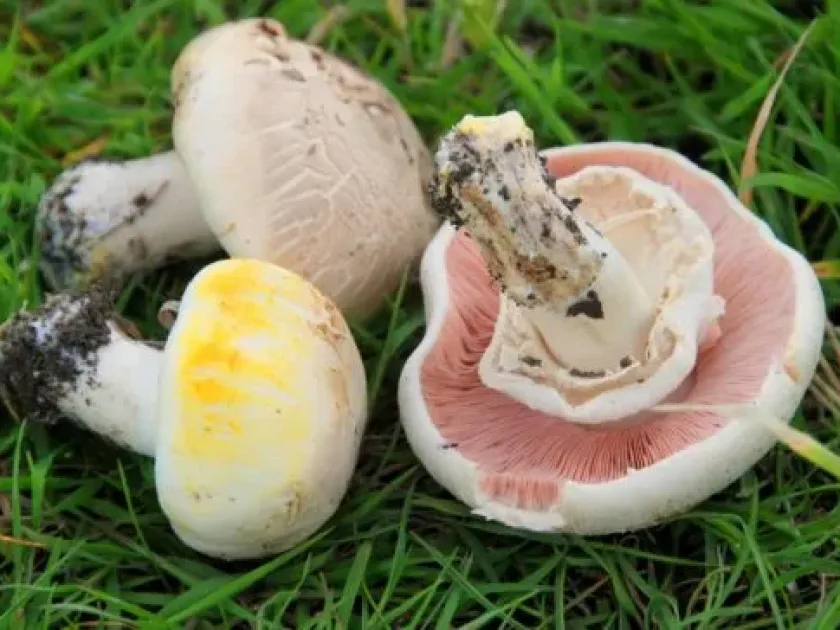
The most reliable identifying feature of Agaricus xanthoderma is the rapid yellow staining of the flesh when it is bruised or cut.
This characteristic color change is most intense at the base of the stem, often turning a bright, distinct yellow within seconds of handling.
The fungus emits a strong, unpleasant chemical odor, often described as carbolic or medicinal, which becomes even more pronounced when the mushroom is cooked.
The cap typically has a white or greyish appearance, sometimes becoming brownish in the center as the mushroom matures and the skin begins to crack.
Unlike the common cultivated mushroom, the gills of this species remain pale or pinkish for a long time rather than turning dark brown quickly.
Pathogen
The pathogen is Agaricus xanthoderma, a saprotrophic fungus that functions as a competitor within the mushroom cultivation environment.
It is not a plant pathogen in the traditional sense, but a weed fungus that competes directly for space and nutrients in the growth substrate.
The mycelium of the yellow stainer is highly aggressive and can easily overtake the mycelium of the cultivated white button mushroom.
The fungus produces spores that can be easily transported via air currents, contaminated equipment, or improperly treated casing soil.
Its biological resilience allows it to persist in organic matter, making it a difficult adversary to eliminate once it is established in a growing facility.
Conditions for development
Outbreaks often occur when the substrate pasteurization process is incomplete or when hygiene standards in the mushroom house are neglected.
Warm and humid conditions, typical of mushroom cultivation, are ideal for the rapid growth and spread of the yellow stainer.
The use of contaminated casing material is one of the most frequent vectors for introducing this undesirable species into a controlled environment.
Poor ventilation or stagnant air in the growing rooms can facilitate the concentration of spores, leading to widespread infection across growing blocks.
Insufficient management of waste from previous growing cycles leaves organic residues that serve as a breeding ground for Agaricus xanthoderma.
Why it matters
The primary harm caused by the yellow stainer is the significant reduction in yield due to the displacement of the desired mushroom mycelium.
Because the fungus is mildly toxic, the presence of even a few yellow stainers in a batch can lead to the condemnation of the entire harvest.
It degrades the substrate, rendering it nutritionally exhausted and incapable of supporting a successful second or third flush of mushrooms.
The strong chemical smell produced by the fungus can affect the sensory quality of the entire harvest, reducing its commercial value.
Operational losses are compounded by the need for labor-intensive removal, sanitation, and disposal of entire affected growing units.
Protection
Stringent adherence to substrate pasteurization protocols is the most effective preventative measure against the establishment of yellow stainer.
Only sterilized and high-quality casing materials should be used to avoid introducing foreign fungal spores into the cultivation house.
Regular inspection and immediate manual removal of any suspected specimens are necessary to prevent the spores from being released.
Rigorous sanitation of equipment and the use of chemical disinfectants between crop cycles help to minimize the pathogen load in the facility.
- Maintain consistent temperature and humidity levels.
- Use HEPA filtration for incoming air in the growing facility.
- Train staff to recognize and report the yellow stainer early.
Discussion
No discussions yet — be the first.