
Yellow stainer
Agaricus urinascens
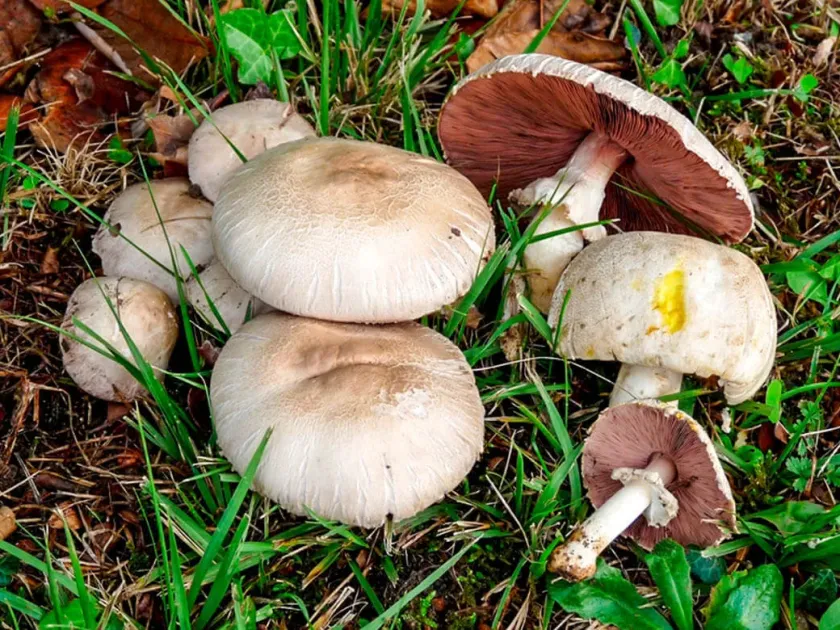
Description
Symptoms
The Yellow Stainer, scientifically known as Agaricus urinascens (or Agaricus xanthoderma), is a common toxic mushroom that poses significant risks due to its resemblance to edible species.
A distinctive feature of this fungus is the bright yellow staining of the flesh that appears instantly when the cap or the base of the stem is bruised or cut.
The mushroom emits a strong, unpleasant chemical smell, often described as carbolic acid, phenol, or ink, which becomes especially pungent during cooking.
Young mushrooms exhibit a rounded, boxy cap that later flattens, often showing brownish scales in the center as the fungus matures.
The gills of the specimen are initially pale or pinkish, transitioning to a deep chocolate-brown as the spores reach maturity.
Pathogen
The pathogen responsible is the basidiomycete fungus Agaricus urinascens, which acts as a saprotrophic organism within the soil ecosystem.
It maintains a widespread underground mycelial network that efficiently decomposes organic matter, enabling the fungus to thrive in nutrient-rich environments.
Reproduction is facilitated through the release of basidiospores, which are easily carried by wind and water to colonize new, suitable habitats.
The fungal growth is biologically adapted to varied environments, from woodlands to manicured garden lawns, where organic residues are present.
Its persistence in the soil allows it to reappear year after year once the mycelium is firmly established in a nutrient-dense substrate.
Conditions for development
Yellow Stainers prefer moist, nutrient-rich soils and are commonly found in gardens, parks, and disturbed areas with high organic content.
The emergence of fruit bodies typically coincides with the late summer and autumn seasons, particularly after heavy or frequent rainfall events.
High humidity and mild temperatures are the primary environmental factors that trigger the development of the fungal reproductive organs.
Well-fertilized lawns and compost-rich garden beds provide the perfect substrate for the rapid expansion of the mycelium.
Regular irrigation in landscaping can unintentionally create an ideal microclimate for this species to flourish alongside decorative plants.
Why it matters
The mushroom is toxic and causes severe gastrointestinal distress, including nausea, abdominal pain, and vomiting, if ingested by humans.
The heat-stable phenolic toxins are not destroyed by standard cooking methods, making even well-cooked specimens hazardous to consume.
In a gardening context, the presence of these fungi can be detrimental as they may compete with lawn grasses or ornamental plants for essential soil resources.
The rapid growth of the fungus can disrupt the appearance of lawns and potentially interfere with the healthy development of other garden species.
For mushroom cultivators, the accidental introduction of this species into a growing area can lead to the contamination and loss of entire crop batches.
Protection
The primary control strategy involves the early identification and physical removal of the fruit bodies before they release their spores into the environment.
Deep cultivation of the soil and the removal of the underlying mycelium are effective methods to eradicate a colony from a specific location.
Maintaining a clean garden by removing excessive organic debris can significantly reduce the potential for the fungus to establish itself.
Proper drainage and avoiding excessive surface moisture on lawns can create less hospitable conditions for the fungus to thrive.
In cases of severe infestation, specialized soil fungicides may be applied, ensuring that all safety protocols are followed to protect other garden flora.
Discussion
No discussions yet — be the first.