
Wood mushroom
Agaricus sylvicola
Description
Symptoms
The wood mushroom, Agaricus sylvicola, is an edible fungus characterized by a distinct appearance that changes significantly during its development stages.
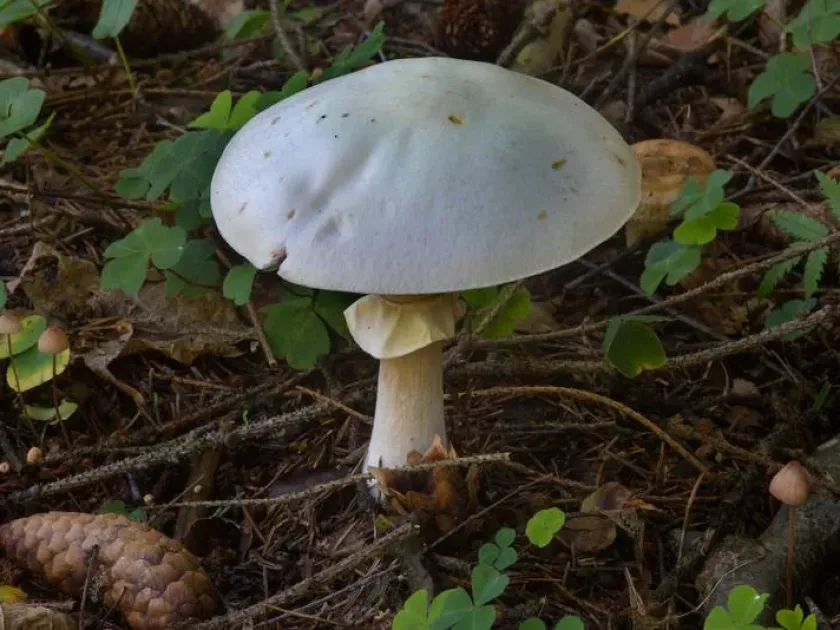
Its cap is initially bell-shaped, then expands to a flat convex shape, typically measuring between 5 to 10 centimeters in diameter, with a smooth, whitish to cream-colored skin.
The gills are free from the stem, showing a whitish color in young specimens that turns pinkish and eventually chocolate brown as the spores reach maturity.
The stem is central and cylindrical, often featuring a bulbous base and a thin, white, delicate ring that may quickly deteriorate or droop.
A notable diagnostic feature is the yellow staining that appears when the flesh is bruised or cut, particularly near the base of the stem, accompanied by a pleasant anise scent.
Pathogen
Agaricus sylvicola is classified as a saprotrophic fungus, which means it feeds on decaying organic matter rather than infecting living plants or crops.
It acts as an essential decomposer within forest ecosystems, breaking down complex cellulose and lignin in leaf litter into simpler, nutrient-rich soil components.
The fungal mycelium spreads through the upper soil layers and organic debris without invading the roots or tissues of trees and shrubs.
Due to its biological nature, it is not a phytopathogen and does not cause diseases in agricultural or horticultural plantings.
Its life cycle revolves around the recycling of forest waste, making it a beneficial organism for soil health rather than a target for plant disease control programs.
Conditions for development
The development of Agaricus sylvicola is highly dependent on moist, shaded environments, and it is most commonly found in coniferous and mixed forest areas.
It thrives in locations with deep layers of pine needles or leaf litter, which provide the necessary organic material for the mycelium to establish and fruit.
The ideal temperature for fruit body formation ranges from 15 to 22 degrees Celsius, usually occurring during late summer and throughout the autumn months.
Adequate soil moisture is critical; heavy rainfall periods often trigger a burst of fruiting, while prolonged droughts will suppress its development until conditions improve.
Good soil aeration and a stable forest microclimate are the primary ecological requirements for the successful propagation of this mushroom species.
Why it matters
As a saprotroph, the wood mushroom poses no risk to agricultural crops, ornamentals, or forestry trees, causing no damage to vegetation.
There is no evidence of phytotoxicity or competitive behavior that could negatively impact the growth or yield of cultivated plant species.
The only potential harm is related to incorrect identification by foragers, as it may be confused with poisonous Amanita species in their early growth stages.
Furthermore, like many mushrooms, it can accumulate heavy metals if growing in polluted soils, rendering it unsuitable for human consumption in such areas.
In terms of agricultural impact, it is considered an ecologically neutral or beneficial component of the local environment rather than a harmful agent.
Protection
Because Agaricus sylvicola does not cause plant diseases, there is no need for chemical control, fungicides, or any other protective measures in a gardening context.
If you wish to manage its presence in a landscape, simple cultural practices like raking up excessive leaf litter or improving soil drainage are sufficient to discourage it.
Using fungicides to target saprotrophic fungi is strongly discouraged, as it disrupts the natural soil microbiology and reduces the overall fertility of the garden soil.
Manual removal of fruiting bodies before they release spores can help reduce the density of future growth in a specific area if desired for aesthetic reasons.
Maintaining a balanced ecosystem is the best management strategy, allowing these fungi to fulfill their role as decomposers without interfering with ornamental or crop plantings.
Discussion
No discussions yet — be the first.