
Wood mushroom
Agaricus sylvaticus
Description
Symptoms
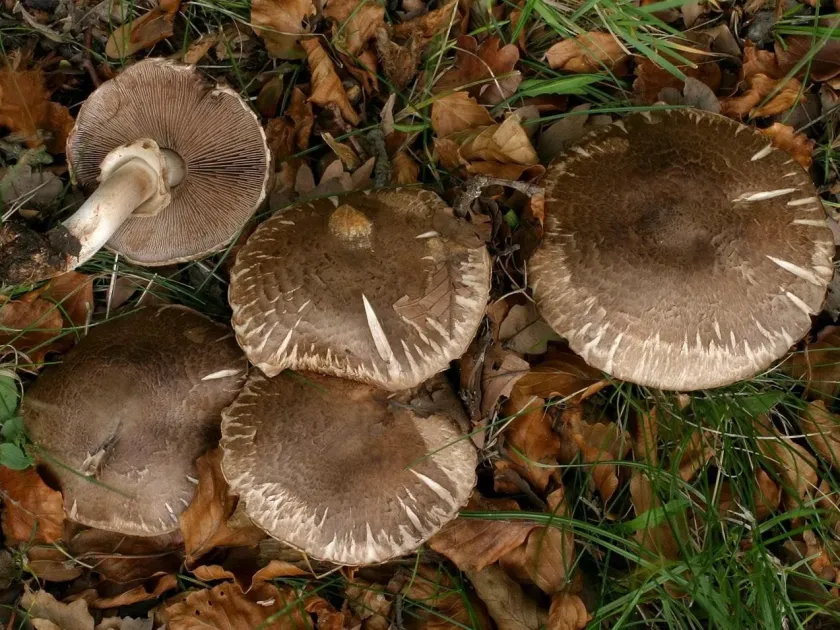
The fruit bodies of the wood mushroom have a cap 5 to 10 cm in diameter, which is initially egg-shaped and later becomes convex or flattened.
The cap surface is covered with numerous brownish scales on a tan or ochre background, which is a key diagnostic feature for identification.
The gills of young specimens are pinkish, but they turn dark brown or nearly black as the spores mature during the development cycle.
The stem is cylindrical, often slightly expanded at the base, and features a noticeable white membranous ring that may fade with age.
The flesh of the mushroom exhibits a characteristic reddish staining when cut or bruised, allowing for easy differentiation from other species.
Pathogen
The wood mushroom (Agaricus sylvaticus) is not a plant pathogen and does not cause diseases in agricultural or garden crops.
It is classified as a saprotrophic fungus that feeds on decaying organic matter, playing a vital role as a decomposer in forest ecosystems.
Biologically, it acts as a reducent, breaking down complex organic compounds in leaf litter and converting them into simpler mineral nutrients.
The mycelium develops in the upper layers of soil and organic debris, having no parasitic interaction with the roots of living trees.
In terms of agronomy, this organism is considered a beneficial part of the soil microflora rather than a phytopathogenic agent.
Conditions for development
The most favorable conditions for the development of the wood mushroom include coniferous and mixed forests with rich humus content.
It prefers moist areas and is frequently found in acidic soils that are abundant in decaying wood, needles, and forest floor debris.
The optimal temperature range for the growth of fruit bodies is between 15 and 22 degrees Celsius, provided there is stable humidity.
Fruiting typically occurs from July to October, with the intensity of appearance highly dependent on summer rainfall levels.
This species often grows in clusters or circular formations, indicating a well-established mycelial network in favorable habitats.
Why it matters
The wood mushroom does not harm agricultural crops because it lacks the necessary enzymes to degrade living plant tissues.
There is no economic harm associated with this fungus in agroecosystems, as its life cycle is restricted to the decomposition of dead biomass.
A potential health risk only exists if the mushrooms are harvested near contaminated industrial areas, where they may bioaccumulate heavy metals.
For agricultural practice, this fungus is completely neutral and does not warrant any phytosanitary measures or defensive actions.
The primary human interaction with this species is through foraging, as it is a well-regarded and safe edible mushroom when correctly identified.
Protection
As the wood mushroom is a beneficial natural decomposer, no control measures or anti-fungal treatments are recommended or implemented.
Maintaining natural fungal diversity in forest environments promotes soil health and accelerates nutrient cycling, which is beneficial to forestry.
The use of fungicides in areas where these mushrooms occur is discouraged, as it can disrupt the natural balance of soil microflora.
In landscaping or garden contexts, if the presence of the mushrooms is undesirable, they can be removed manually without chemical intervention.
No preventive measures are necessary, as Agaricus sylvaticus poses no threat to the growth or health of cultivated plants.
Discussion
No discussions yet — be the first.