
Reddish agaricus
Agaricus subrutilescens
Description
Symptoms
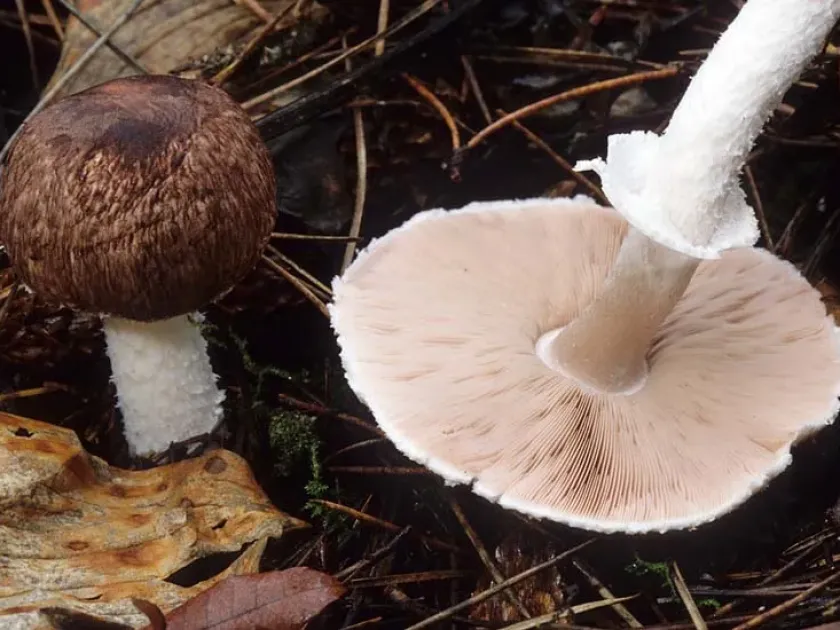
The most distinctive symptom of infection is the appearance of fruiting bodies with characteristic reddish-brown scales on the cap, which differ significantly in morphology from standard white button mushrooms.
In the early stages, one can observe dense, white mycelial patches or cords on the casing surface that do not align with the original inoculation points of the primary crop.
A noticeable decline in the growth of the target mushroom mycelium is often observed, as the competing fungus outcompetes it for space and nutrients, leading to patchy crop development.
The substrate may develop a specific, unpleasant odor, and the appearance of the soil surface changes, becoming either excessively dense or showing signs of mycelial overgrowth.
Widespread presence of these fruiting bodies is a clear indicator that the cultivation bed has been completely compromised and that the competitor fungus has taken over the biological niche.
Pathogen
Agaricus subrutilescens is a species of saprotrophic mushroom that can act as a serious competitor or contaminant in industrial mushroom production, affecting the yield of commercial strains.
The fungus is classified as a basidiomycete. In a controlled cultivation environment, its mycelium exhibits rapid growth rates, allowing it to colonize the substrate much faster than traditional Agaricus bisporus cultivars.
Biologically, it is highly efficient at breaking down organic matter, which makes it a formidable rival for the limited nutrient resources available within the mushroom casing and compost layers.
The fungus reproduces via airborne basidiospores, which are easily distributed throughout growing rooms via ventilation systems, workers, or tools, making it difficult to contain once established.
The mycelial network of this species possesses advanced enzymes that can alter the chemical composition of the substrate, rendering it unfavorable for the target crop's growth.
Conditions for development
The development of the fungus is often triggered by inadequate pasteurization of the compost, which allows survival of spores and resilient mycelium from the raw materials.
High humidity levels (exceeding 90%) combined with poor air circulation provide the necessary conditions for spore germination and rapid mycelial spread across the shelves.
Fluctuations in temperature within the growing chamber can stress the main crop while providing a competitive advantage to opportunistic species like Agaricus subrutilescens.
The use of unsterilized or poor-quality casing soil acts as a primary vector for the introduction of the competitor fungus into the production environment.
Failure to maintain strict hygiene protocols, such as using contaminated equipment or lack of disinfection between production cycles, facilitates the rapid spread of spores.
Why it matters
The primary damage caused by this fungus is direct competition for nutrients, resulting in significant yield loss or total crop failure in affected production beds.
The infestation leads to financial loss due to the need to discard entire batches of substrate and perform deep-cleaning procedures to eliminate the fungal contamination.
Product quality can be compromised, as the presence of foreign fungal material may contaminate harvested mushrooms, increasing the cost of sorting and quality control.
The fungus can persist in the infrastructure of the growing room, such as floor cracks and ventilation ducts, creating a chronic risk for all future mushroom cycles.
By disrupting the growth of the commercial variety, the competitor fungus creates an environment prone to further secondary infections, complicating the management of the mushroom farm.
Protection
Strict adherence to composting and pasteurization protocols is the most important measure, ensuring that all organic matter is free from viable competitor spores.
Implementation of rigorous farm sanitation, including the use of footbaths, specialized clothing, and regular disinfection of all tools, is essential for prevention.
The installation of high-efficiency particulate air (HEPA) filters in the ventilation system helps to exclude spores from entering the sterile growing rooms from the outside.
Early detection through daily inspection of beds is critical; any area showing symptoms should be immediately isolated and treated to prevent further spore release.
- Regular monitoring of compost pH and moisture levels.
- Strict control of all inputs, including straw and casing material.
- Scheduled deep cleaning and disinfection of growing rooms between cycles.
Discussion
No discussions yet — be the first.