
Almond mushroom
Agaricus subrufescens
Description
Symptoms
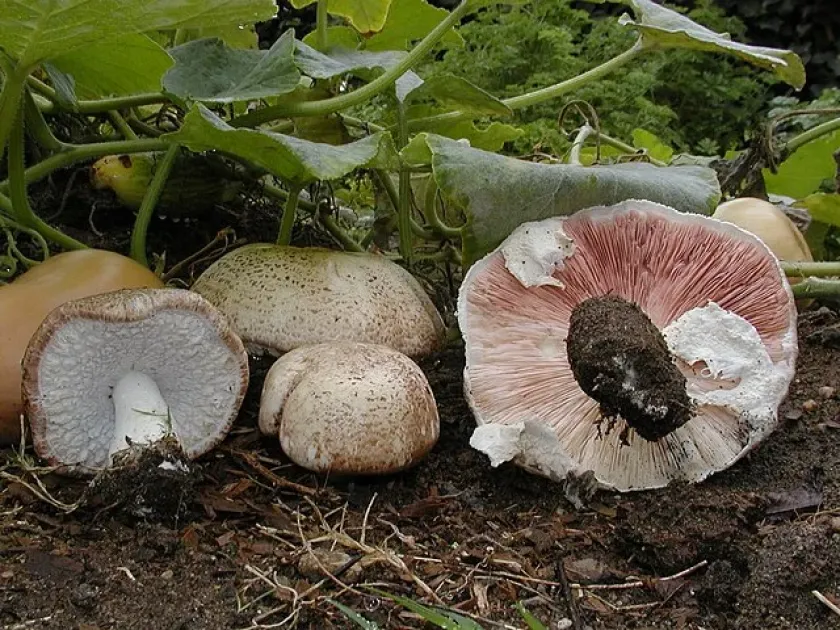
The most visible symptom is the appearance of mature fruiting bodies with a distinct reddish-brown, scaly cap that stands out from the white/off-white color of Agaricus bisporus.
A tell-tale sign is the reddening of the mushroom flesh immediately after it is cut or bruised, a reaction caused by oxidation of specific compounds.
The mycelium in the casing layer appears as a very aggressive, fluffy white growth that often moves faster than the target mushroom's mycelium.
A strong, distinct almond-like odor is typically associated with the presence of this species, becoming more pungent as the colony matures and begins to fruit.
In advanced stages, you will observe uniform clusters of these mushrooms replacing the expected yield across the cultivation trays.
Pathogen
Agaricus subrufescens (often called the Almond Mushroom) is a saprophytic fungus that, while edible and cultivated commercially, behaves as a parasitic competitor when it invades the production of the common button mushroom (Agaricus bisporus).
This species is characterized by its high metabolic rate, which allows it to outcompete standard mushroom varieties for nutrients and space within the compost substrate.
The fungus typically enters the production environment via contaminated casing soil or through incomplete pasteurization of the compost, where dormant spores survive.
Once established, the mycelium of Agaricus subrufescens spreads rapidly, creating a dense network that chokes the growth of the preferred mushroom crop.
It is taxonomically very close to the common button mushroom, which makes distinguishing it in the early mycelial phase difficult without laboratory analysis.
Conditions for development
Higher incubation temperatures within the mushroom house favor the development of Agaricus subrufescens, providing it with a competitive edge over the target species.
Excessive humidity in the casing layer and stagnant air circulation create the exact environment required for the rapid germination of its spores.
Faulty compost pasteurization, where the internal heat fails to reach the required temperature, is the primary reason for the survival of the pathogen.
Poor sanitation practices, such as using unsterilized equipment or neglecting air filter maintenance, allow for the cross-contamination of chambers.
The pH levels of the casing soil play a role, as a slightly acidic environment often encourages the proliferation of this species compared to more neutral soil conditions.
Why it matters
The primary economic harm is the substantial loss of crop yield, as the almond mushroom effectively displaces the intended marketable mushrooms.
Once a facility is infested, spores can easily become airborne and settle in ventilation ducts, making it extremely difficult to eradicate without a full shutdown.
The fungus compromises the quality of the surrounding environment, as the persistent almond odor can be absorbed by other mushrooms, affecting their market value.
Extensive infestations lead to the total loss of compost batches, requiring the entire farm to undergo a costly and time-consuming deep cleaning process.
It creates a chronic risk for future cycles, as the spores are highly resilient and can remain viable in hidden areas of the grow room for long periods.
Protection
Effective control depends on strict adherence to sanitation and pasteurization protocols during the composting and casing preparation stages.
- Ensure that the pasteurization process achieves sufficient duration and temperature to kill all competitive spores.
- Use high-quality, pre-tested, and sterilized casing soil to prevent the introduction of the pathogen.
- Practice early detection and physical removal of contaminated areas, carefully sealing the material to prevent spore dispersal.
- Maintain optimal environmental controls, specifically managing temperature and humidity to prevent conditions that favor competitive fungi.
- Perform a comprehensive post-crop steam-out of all chambers to sterilize the room before the next filling cycle.
Integrated pest management (IPM) is essential; chemical control options are very limited due to the biological similarity between the target crop and the competitor.
Discussion
No discussions yet — be the first.