
Agaricus semotus
Agaricus semotus
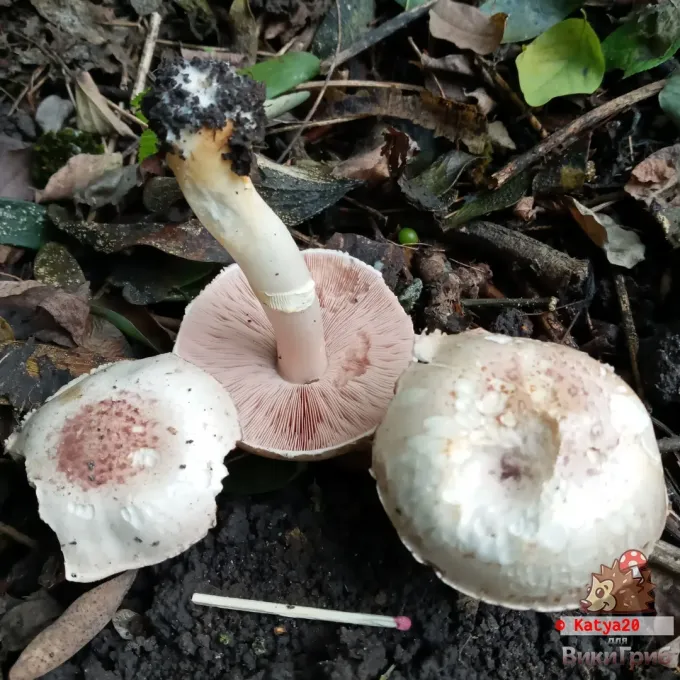
Description
Pathogen
Agaricus semotus, commonly known as the rosy wood mushroom, is a species of fungus in the family Agaricaceae. It is classified as a saprotroph, not a plant pathogen.
The organism feeds on decaying organic matter in the soil and leaf litter. It does not possess the mechanisms required to infect or damage living plant tissues.
There is no known disease associated with this mushroom in agricultural crops. Its life cycle is strictly limited to the decomposition of non-living biological material.
Agronomists often encounter this species in humus-rich environments, such as gardens, orchards, or greenhouse substrates, where it appears during favorable moisture conditions.
Identifying this species correctly is important to avoid confusion with pathogenic root-infecting fungi, which require entirely different management strategies.
Conditions for development
The fungus prefers habitats with high organic content, including coniferous and deciduous litter, garden soil, and compost heaps. It thrives in well-moistened environments.
Fruit bodies typically develop from mid-summer through late autumn, depending on local precipitation patterns and stable ambient temperatures.
Agaricus semotus requires balanced soil humidity to initiate mycelial growth and subsequent sporulation. It colonizes substrates that are undergoing natural decomposition processes.
The spread of this fungus occurs via spores, which are disseminated by wind, rain, or human activity. Once spores land on suitable organic matter, they germinate to form new colonies.
Its presence is often an indicator of high organic activity in the soil profile, which is generally beneficial for soil structure and nutrient recycling in agricultural ecosystems.
Why it matters
Agaricus semotus poses no direct threat to agricultural productivity. It does not cause root rot, vascular wilt, or leaf blights in commercial crops.
In highly specific environments, such as commercial mushroom farms, it may be considered a contaminant that competes with desired mushroom species for substrate nutrients.
Using fungicides to eradicate this species is not recommended, as it can disrupt the natural soil microbiota and negatively impact the health of crop root zones.
There is no scientific evidence suggesting that Agaricus semotus interferes with crop development, yield quality, or plant growth physiology.
Ingestion of this mushroom is generally discouraged due to the risk of misidentification, as many small species within the Agaricus genus can be toxic or have unverified edibility.
Protection
No chemical or biological control measures are needed against Agaricus semotus, as it is a beneficial decomposer and not a pest or disease vector.
If the appearance of fruit bodies is unwanted, cultural practices such as improving soil aeration and moisture management are the most effective preventive measures.
In greenhouses, maintaining proper hygiene, cleaning up old organic substrates, and preventing excessive humidity will naturally discourage the colonization of the fungus.
Integrated pest management (IPM) strategies do not include this mushroom, as it does not satisfy the criteria for a crop-damaging agent.
- Enhance soil drainage.
- Promote good air circulation.
- Remove excess decaying litter.
- Maintain optimal pH levels.
Discussion
No discussions yet — be the first.