
Agaricus rodmani
Agaricus rodmani
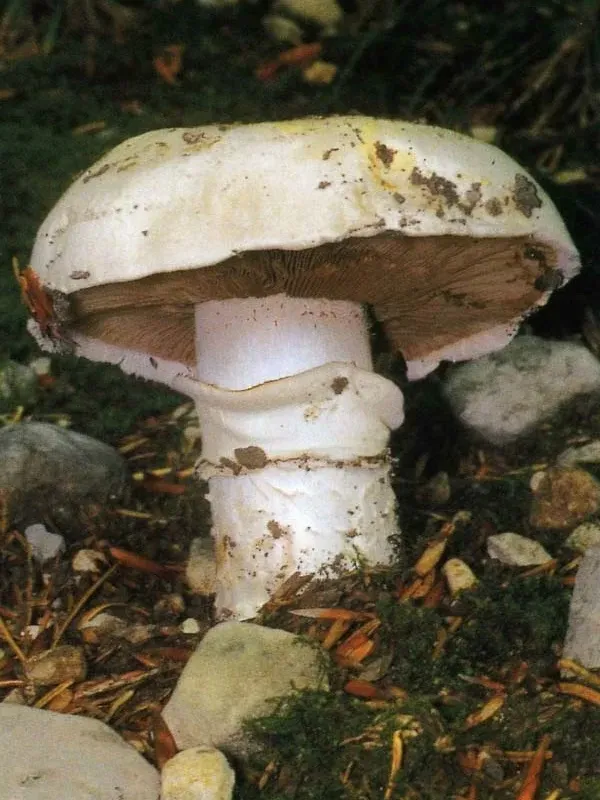
Description
Symptoms
The primary symptom of infestation is the emergence of mushrooms with distinct morphology, including short, thick stalks and very dense caps that differ from the target cultivar.
In the casing layer, the mycelium of Agaricus rodmani manifests as thick, white cords that appear significantly coarser and more robust than the standard mushroom mycelium.
Fruit bodies often grow in clusters and possess a characteristic double ring on the stem, which serves as a primary diagnostic trait for identifying this competitive species.
The substrate in infested areas becomes excessively dense and often changes to a darker or grayish color due to the intense development of the foreign hyphal network.
In advanced stages of the infestation, the commercial mushroom strain stops fruiting entirely, and the surface becomes colonized by the fruit bodies of the competing pathogen.
Pathogen
Agaricus rodmani (often treated as synonymous with Agaricus bitorquis) is a basidiomycete fungus within the Agaricaceae family. In professional mushroom farming, it is considered a competitive organism that poses a significant threat to cultivated mushroom crops.
The pathogen spreads via mycelium, which is highly aggressive and capable of rapidly colonizing the substrate, effectively choking out the cultivated mushroom mycelium.
A key biological feature of this species is its high thermal resistance, which allows it to thrive even at the elevated incubation temperatures often used in industrial farming.
The disease mechanism involves the competitive displacement of the primary crop mycelium from the nutrient substrate, leading to a complete halt in fruit body production of the commercial strain.
The danger is compounded by the pathogen's ability to penetrate deeply into the compost, making it nearly impossible to isolate the infestation without discarding the entire substrate batch.
Conditions for development
The development of this fungus is primarily driven by failures in the composting or pasteurization process, as the spores are highly resistant to heat treatment.
Optimal conditions for rapid spread include high moisture levels in the casing soil combined with high substrate temperatures, which promote the germination of spores.
The use of non-selective or contaminated spawn, as well as the presence of organic debris in the casing mix, creates an ideal environment for this species to gain a foothold.
The fungus spreads easily in facilities with poor ventilation, where pockets of stagnant, humid air facilitate rapid sporulation and dispersal.
Deviations in the pH levels of the casing layer can shift the competitive balance in favor of Agaricus rodmani, allowing it to outcompete the commercial strain.
Why it matters
The damage caused by Agaricus rodmani results in direct economic losses, with yield reductions ranging from 20% to 50% in affected areas of the farm.
The presence of this fungus degrades the market quality of the crop, as the fruit bodies of the competitor can mix with the cultivated harvest, leading to sorting issues.
Infested substrate becomes unusable, forcing farmers to dispose of entire batches prematurely, resulting in substantial financial loss regarding material and labor costs.
The resilience of the spores, which can survive on facility structures, poses a significant risk of recurrence in subsequent production cycles if not properly eradicated.
Overall, the costs associated with sanitizing infected chambers and potential downtime significantly increase the cost of goods sold for the producer.
Protection
The primary defense strategy is the strict adherence to composting and pasteurization protocols, ensuring the total elimination of heat-resistant competitive spores.
Routine sanitation of all facility areas and tools using approved fungicides during the inter-crop period is essential for maintaining a clean production environment.
It is vital to maintain precise temperature control during the incubation phase to prevent substrate overheating, which can inadvertently trigger the development of the pathogen.
Upon detecting the first signs of an outbreak, affected areas must be immediately removed along with a portion of the surrounding casing soil to contain the spread.
- Use only certified, high-quality mushroom spawn.
- Implement air filtration systems in growing chambers.
- Restrict access to production areas to authorized personnel.
- Follow strict moisture management guidelines for the casing layer.
Discussion
No discussions yet — be the first.