
Purple-scaled mushroom
Agaricus purpurellus
Description
Symptoms
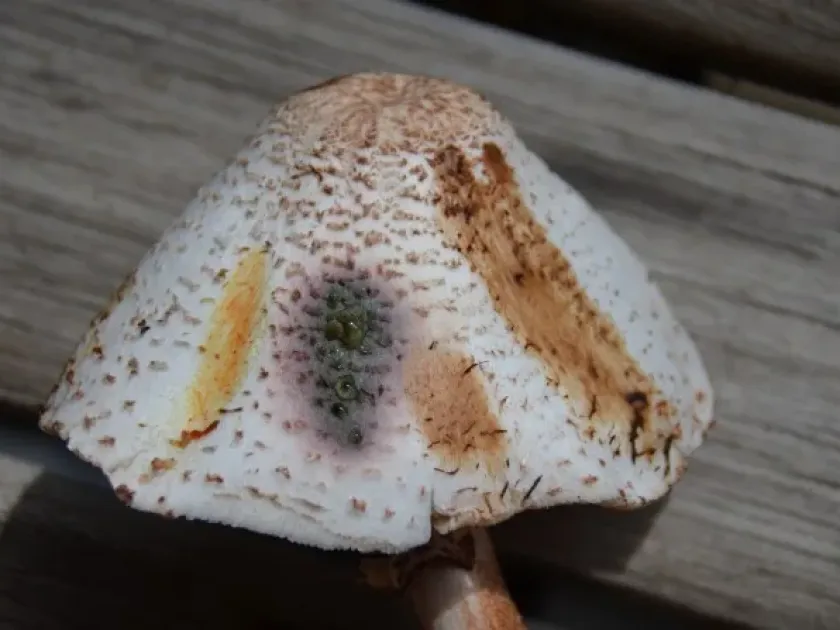
The primary symptom of infestation is the appearance of distinct purple or wine-brown scales on the surface of the mushroom caps.
Young fruiting bodies exhibit a vibrant purple hue, which gradually transitions to dull brownish shades as the mushroom matures and its spores are released.
The mycelium of this fungus appears as dense white to greyish strands that weave through the compost, effectively displacing the beneficial commercial mushroom mycelium.
The substrate often emits a distinct, slightly pungent mushroom aroma that differs significantly from the earthy, clean smell associated with healthy, pure spawn.
Fruiting bodies of this species are generally smaller than those of the cultivated variety and often demonstrate poor shelf life due to rapid water loss.
Pathogen
The purple-scaled mushroom (Agaricus purpurellus) is a fungal species that can act as a competitor in commercial mushroom production environments.
As a basidiomycete, it functions as a saprotroph that efficiently colonizes the nutrient-rich compost substrate, often outpacing the cultivated Agaricus bisporus.
Biological studies indicate that this fungus has a highly aggressive mycelial growth pattern, which allows it to dominate available substrates under specific favorable conditions.
The presence of this fungus within a controlled growing facility is typically a diagnostic indicator of compromised sterilization protocols or poor sanitation practices.
Although it is not a pathogen in the sense of attacking plant hosts, its role as a competitive organism significantly disrupts the success of commercial mushroom crops.
Conditions for development
High relative humidity levels, consistently maintained above 85 to 90 percent in growing rooms, are the primary triggers for the development of this fungus.
The species thrives at temperatures ranging from 20 to 25 degrees Celsius, matching the active growth phase required by the cultivated mushroom.
Insufficient ventilation and poor airflow in the growing chambers create pockets of stagnant air, which promote the spore germination of this competitive species.
Failure to properly pasteurize the substrate or inadequate heat treatment of the casing soil serves as the main gateway for contamination.
The use of improperly stored or non-sterile compost ingredients significantly increases the likelihood of colonization by Agaricus purpurellus.
Why it matters
The economic impact is primarily driven by the significant reduction in yield of the desired mushroom variety due to resource competition.
By consuming the nutrients within the compost, this fungus deprives the crop of the energy required for the formation of quality, large fruiting bodies.
Secondary metabolites produced by this fungus may have an inhibitory effect on the growth and metabolism of the commercial mushroom strain.
Presence of this fungus ruins the marketability of the entire harvest batch, as appearance standards are strictly enforced in the retail trade.
Severe infestations often require the complete disposal of the contaminated substrate and subsequent sterilization of the facility to prevent further spreading.
Protection
Rigorous adherence to pasteurization protocols, maintaining temperatures above 60 degrees Celsius for the appropriate duration, is the most effective preventative measure.
Regular sanitation of all growing equipment and structural surfaces using approved fungicides or high-grade disinfectants is highly recommended.
Implementation of strict environmental monitoring to manage humidity and airflow helps prevent the environmental conditions necessary for this fungus to bloom.
Quality control of the spawn and casing soil must be maintained, ensuring all inputs are screened for potential fungal contamination prior to use.
In the event of localized contamination, quick removal of the affected substrate and subsequent spot-treatment of the area is essential to contain the threat.
Discussion
No discussions yet — be the first.