
Purple-staining mushroom
Agaricus porphyrizon
Description
Symptoms
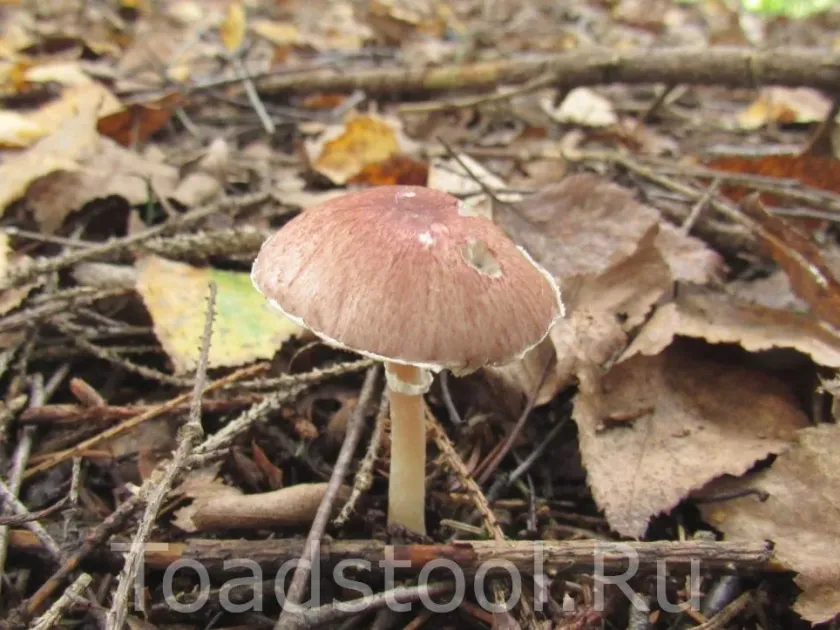
The purple-staining mushroom features a cap typically ranging from 3 to 8 cm in diameter, characterized by a purplish-brown or violet hue and a fibrous surface texture.
The gills are initially pale pink, but they turn dark brown or nearly black as the mushroom matures and the spores develop, serving as a key identification mark.
The stem is generally white, sturdy, and cylindrical, often showing a slight yellowish discoloration when handled or damaged, which is a distinctive trait of this species.
The odor is often described as having strong almond or anise-like notes, which is a common characteristic among many species within the Agaricus genus.
The spore print is dark brown. These mushrooms typically grow in small groups or clusters, particularly in deciduous woods or forest clearings with rich soil.
Pathogen
Agaricus porphyrizon, commonly known as the purple-staining mushroom, is a species of fungus in the family Agaricaceae. It is essential to note that it is not a plant pathogen.
This fungus is classified as a saprotroph, meaning it gains its nutrients from dead or decaying organic matter. It plays a vital role as a decomposer within its natural ecosystem.
The mushroom does not infect living plant tissue, roots, or fruits. Misidentifying this fungus as a plant disease is a misunderstanding of its biological function and role in the soil.
Its mycelium grows within leaf litter or humus-rich soils, breaking down complex organic materials into simpler substances that support nutrient cycling.
Because it lacks the ability to parasitize living plants, it does not pose any threat to agriculture or crop health, placing it outside the scope of plant pathology.
Conditions for development
This fungus thrives in fertile, humus-rich soils and is frequently found in areas with established deciduous trees, such as oak or beech, providing a stable supply of organic matter.
Optimal development occurs during the late summer and autumn months, when moisture levels in the soil and air are consistently high and temperatures are moderate.
The fungus is sensitive to drought and extreme temperature fluctuations, requiring a damp environment to initiate the production of its fruiting bodies.
Spores are dispersed by wind, landing on suitable substrates where they germinate to form new mycelial networks in organic debris-rich areas.
It prefers natural forest ecosystems rather than agricultural fields, as it relies on specific forest floor micro-conditions to sustain its growth cycle.
Why it matters
Agaricus porphyrizon does not cause harm to agricultural crops. It is not responsible for wilting, root rot, or any other form of plant damage or disease.
The presence of this fungus is actually a positive bio-indicator, suggesting high soil fertility and good organic matter content, which benefits surrounding vegetation.
From an agronomic perspective, the species causes no economic damage and does not compete with crop plants for resources, water, or nutrients.
As a non-pathogenic organism, it does not possess the enzymes necessary to infect healthy plant vascular systems or living plant tissues.
Therefore, it is considered a beneficial member of the soil microbiome rather than a harmful pest or pathogen requiring control measures.
Protection
There are no control measures designed for this species because it is not a plant pathogen. Chemical interventions are entirely unnecessary and discouraged.
If its presence is undesirable in a private garden or landscaped area, simple cultural practices like improving drainage or removing organic debris will naturally limit its growth.
Manual removal of fruiting bodies before they mature can prevent the further spread of spores if the goal is to reduce the density of the fungus.
Agronomists do not include this mushroom in pest management protocols as it does not negatively impact agricultural yield or profitability.
Preventative measures are generally not required, as the species is a harmless ecological component that functions in equilibrium with the surrounding soil environment.
Discussion
No discussions yet — be the first.