
Scaly wood mushroom
Agaricus phaeolepidotus
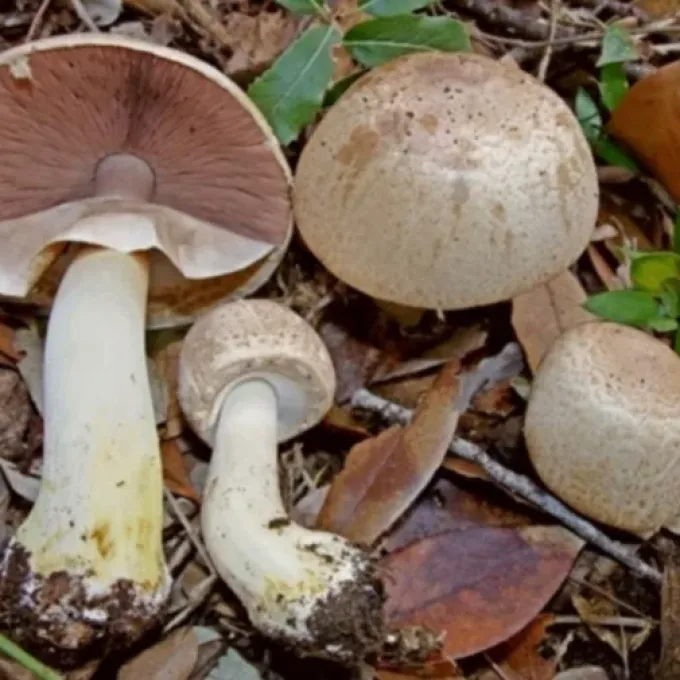
Description
Symptoms
The primary symptom of infection is the sudden appearance of fluffy, sprawling mycelial mats within the compost that do not match the structure of the cultivated mushroom.
Fruit bodies feature a cap covered with distinctive dark brownish scales, which is the most reliable macroscopic characteristic for identification.
The flesh of the fruiting bodies typically displays a yellowing effect upon bruising or slicing, a diagnostic feature helpful for farm sanitation teams.
A distinct phenolic or chemical smell is often detected in infected rooms, signaling the presence of this competitor long before fruiting begins.
- Reduced productivity and crop yield in colonized blocks.
- Discoloration of the casing layer.
- Stunted development of commercial mushroom pins.
- Patches of mycelial growth that differ in texture and density.
Pathogen
The causal agent is the fungus Agaricus phaeolepidotus, a member of the Agaricaceae family. While it is a natural saprotroph, in agricultural settings, it functions as an aggressive competitor for space and nutrients.
This organism excels in colonizing composted substrates intended for the button mushroom, outcompeting the commercial mycelium effectively.
Biological resilience allows this fungus to survive in suboptimal conditions, making it a persistent challenge in professional mushroom farming.
It produces specific metabolic by-products that inhibit the expansion of Agaricus bisporus, leading to a rapid takeover of the growth medium.
Microscopic spores of this fungus are highly mobile and can easily contaminate large areas of a production facility through air currents and human activity.
Conditions for development
The main factor enabling the growth of Agaricus phaeolepidotus is improper pasteurization of the compost, which fails to eliminate its hardy spores.
High humidity and warm environmental conditions (20–25°C) within the growing rooms create an optimal habitat for its rapid spread.
Poor ventilation management can facilitate the localized concentration of spores, leading to clusters of infections within the growing facility.
Inadequate sanitation protocols regarding equipment and worker clothing allow the pathogen to migrate between sterilized production rooms.
Fluctuations in the pH level of the casing soil or the underlying compost can create favorable conditions for this species to outgrow the primary crop.
Why it matters
The economic harm is severe as the fungus directly consumes the energy resources in the substrate, rendering the compost useless for commercial production.
Widespread contamination often necessitates the complete disposal of growing blocks, resulting in significant losses of capital and raw materials.
Product quality can be compromised, as the presence of competitors alters the micro-environment of the growing shelf, affecting the health of nearby mushrooms.
The costs associated with cleaning, disinfecting, and sterilizing infected facilities represent a significant burden on the farm's operating budget.
Loss of market trust may occur if contaminated produce is inadvertently harvested along with commercial crops, leading to rejection by buyers.
Protection
Rigorous adherence to compost pasteurization and conditioning protocols is the most effective way to eliminate the pathogen from the production cycle.
Implementing strict hygiene zones, including footbaths and equipment sterilization, is mandatory to prevent the movement of spores throughout the facility.
Early scouting and prompt removal of any detected infected spots can prevent an outbreak from becoming a total crop failure.
Using high-quality spawn and verified raw materials reduces the initial entry points for Agaricus phaeolepidotus into the growing environment.
Ongoing monitoring of climate variables, specifically humidity and temperature, is necessary to keep the environment less conducive to competitors.
Discussion
No discussions yet — be the first.