
Flat-top agaric
Agaricus moelleri
Description
Symptoms
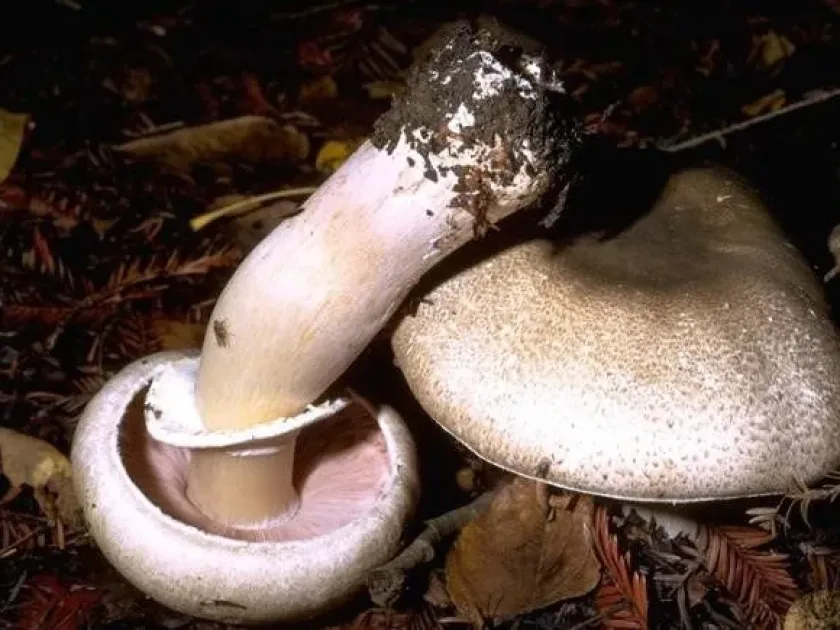
The most prominent sign of Agaricus moelleri is the appearance of fruiting bodies with caps ranging from 5 to 15 cm in diameter. The caps are covered with fine brown scales, which are typically more dense toward the center of the cap.
A definitive diagnostic feature is the immediate, intense yellow staining of the flesh when damaged or sliced. This physical change is often accompanied by a pungent, chemical odor, frequently described as carbolic or phenol-like.
The gills of young specimens are white, turning pink and eventually dark brown as the spores mature. The stem consistently features a well-defined ring, which becomes more apparent as the cap expands.
On infested sites, the fungus may form "fairy rings"—visible circular zones where the grass or other plants show signs of growth inhibition or yellowing. In some cases, the soil in these areas may appear darker and more compact.
Visual identification is essential for safety. Due to its toxicity, it is crucial to recognize these mushrooms early and distinguish them from edible varieties to prevent accidental ingestion or cross-contamination in the field.
Pathogen
The flat-top agaric (Agaricus moelleri) is a basidiomycete fungus belonging to the Agaricaceae family. In agronomy, it is identified as an unwanted fungal agent that colonizes fertile soils, including lawns, garden beds, and orchards.
This fungus acts as a saprotroph, actively utilizing organic matter in the soil. Its presence is generally considered detrimental in agricultural settings due to the competitive pressure it exerts on cultivated plants and beneficial soil microorganisms.
Biologically, it is often referred to as a "yellow-staining" mushroom, a characteristic that identifies it as a toxic species within the genus. Its high metabolic rate allows the mycelium to spread rapidly across nutrient-rich substrates.
Unlike cultivated mushrooms, Agaricus moelleri is not a crop but a weed-like fungus that can infiltrate arable land. Its spores are easily disseminated by wind and water, establishing new colonies in agricultural areas.
The fungus maintains its presence in the soil through extensive mycelial growth, which can persist for several seasons, creating a stable niche that competes with the root systems of agricultural crops for available moisture and essential nutrients.
Conditions for development
The development of the flat-top agaric is heavily promoted by high soil moisture levels and the presence of abundant, non-decomposed organic matter. The application of fresh, uncomposted manure is a primary catalyst for its expansion.
Optimal conditions for mycelial growth occur at temperatures between +15°C and +22°C. The fungus thrives in loose, well-aerated soils with a neutral to slightly alkaline pH, which facilitates deep mycelial penetration.
Fruiting typically peaks during wet periods in late summer and autumn. Increased nitrogen levels in the soil are known to stimulate both the density of the mycelium and the frequency of mushroom production.
The mycelium is highly resilient, capable of surviving diverse environmental stressors and winter frosts. This durability allows the fungus to remain dormant in the soil and reactivate as soon as favorable conditions return.
Spores are efficiently spread by wind currents and rainwater, ensuring rapid colonization of adjacent areas. Moisture accumulation on the soil surface significantly speeds up spore germination and the onset of new fruiting cycles.
Why it matters
The primary concern regarding Agaricus moelleri is its toxicity. It contains phenol-like compounds that cause severe gastrointestinal distress in humans and animals if consumed, posing a significant safety risk in agricultural environments.
From an agronomic perspective, the fungus competes with crops for water and nutrients. Its mycelium can physically obstruct soil pores, reducing oxygen availability to the roots of vegetables and ornamental plants, ultimately leading to stunted growth.
The development of "fairy rings" on lawns causes aesthetic damage and can kill turf, creating bare patches. In professional mushroom houses, it acts as a competitor to commercial crops, suppressing their growth and reducing yields.
Metabolites released by the fungus can alter the chemical composition of the root zone, negatively affecting the activity of beneficial mycorrhizal fungi and bacteria that are essential for plant health and nutrient uptake.
Its persistent growth cycle can degrade the soil's biological health, forcing farmers to take corrective actions to restore the balance of the soil microbiota and ensure the productivity of the affected land.
Protection
The foundation of effective control is proper agricultural management. Avoid applying fresh or improperly composted manure, as it provides an ideal food source for the fungus to establish itself.
Regular cultivation and deep tilling of the soil are effective ways to disrupt the mycelium and inhibit its spread. Mechanical disturbance during the active growth season significantly reduces the density of future mushroom flushes.
If fruiting bodies appear, they should be carefully removed, including the surrounding soil, and disposed of away from the fields before the spores mature. Always wear protective gloves when handling these toxic mushrooms.
Improving soil drainage and preventing waterlogging are critical measures to create an environment less favorable for the fungus. Managing moisture helps limit the spread of mycelium across the treated area.
In cases of severe infestation, the targeted use of broad-spectrum fungicides may be necessary. However, such interventions should be managed with caution to avoid disrupting the balance of beneficial soil organisms and to comply with safety standards for food crops.
Discussion
No discussions yet — be the first.