
Agaricus macrocarpus
Agaricus macrocarpus
Description
Symptoms
As this species is not a plant pathogen, it does not produce symptoms such as wilting, chlorosis, or necrosis on crops.
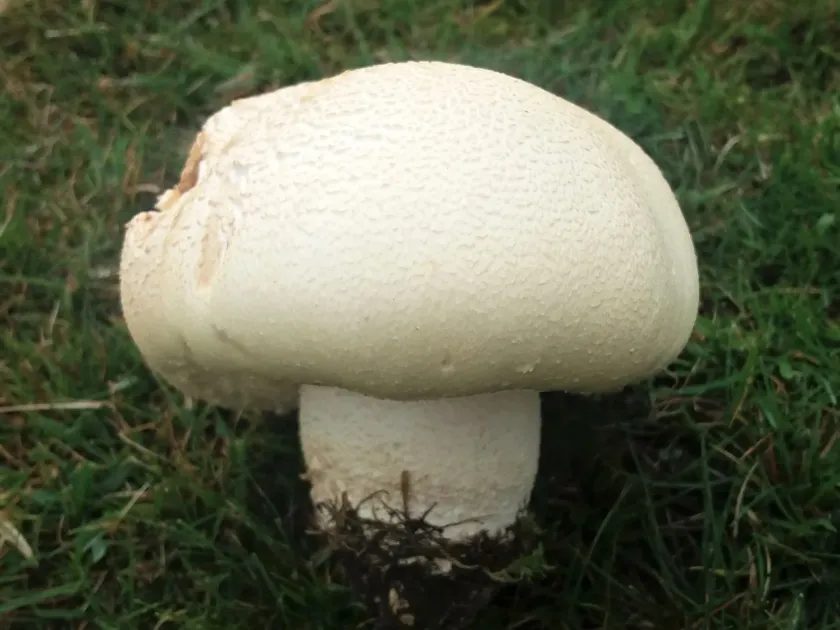
The mushroom itself is identified by a large, white cap that turns yellowish upon bruising, often emitting a distinct almond-like scent.
Visible presence in a field or garden is a sign of fertile, organic-rich soil, which is generally beneficial for crop growth rather than a warning of infection.
In mushroom farming, the appearance of uninvited Agaricus macrocarpus specimens is simply an indicator of substrate contamination by wild spores.
It should not be confused with true plant-pathogenic fungi that cause real damage to root systems or vascular tissues of plants.
Pathogen
It is essential to clarify that Agaricus macrocarpus is an edible mushroom species from the Agaricaceae family, not a plant disease or a pathogenic agent.
In agricultural settings, this fungus does not attack or infect crops. It is a saprotrophic organism that feeds on decomposing organic matter.
Confusion regarding its status as a "disease" often arises due to its occasional appearance in agricultural substrates where it competes with other fungal cultures.
Biologically, it plays a vital role in nutrient cycling by breaking down dead plant material into humus, which improves soil quality.
There is no evidence in mycological or phytopathological research that links this species to the destruction of plant tissues.
Conditions for development
Agaricus macrocarpus thrives in humus-rich, damp environments, frequently appearing on fertilized soil, garden beds, and composting sites.
It prefers high organic content and moderate temperatures, typically ranging from 18 to 25 degrees Celsius, alongside consistent moisture.
In commercial mushroom facilities, improper pasteurization of the compost allows spores to survive and germinate, leading to the growth of this wild species.
Nitrogen-rich fertilizers provide a conducive environment for the rapid expansion of its mycelium in soil.
High humidity and poor ventilation within growing structures create favorable conditions for the maturation of the fruiting bodies.
Why it matters
There is no direct harm caused by this fungus to agricultural crops. It lacks the enzymatic pathways required to damage living plant cells.
In the specific industry of mushroom cultivation, it acts as a competitor, stealing nutrients intended for the target crop, thereby potentially reducing yields.
The presence of this mushroom on farms is economically harmless unless it compromises the production cycle of other fungi.
From an ecological standpoint, it contributes positively to soil health and fertility, aiding in the decomposition of organic fertilizers.
Therefore, it should not be categorized as a harmful pest in general agricultural guidelines.
Protection
Control measures are only relevant in specialized mushroom production to ensure the purity of the commercial substrate.
- Ensuring thorough heat treatment (pasteurization) of the growth medium.
- Maintaining strict sanitary conditions in growing rooms.
- Removing wild fruiting bodies manually before they release spores.
- Using high-quality, screened soil cover for production cycles.
In open fields and home gardens, no control is necessary or recommended, as the fungus is a harmless participant in the soil ecosystem.
The application of fungicides is not recommended, as it is unnecessary and may harm beneficial soil microflora.
Discussion
No discussions yet — be the first.