
Scaly Wood Mushroom
Agaricus langei
Description
Symptoms
The Scaly Wood Mushroom (Agaricus langei) is a macrofungus that often causes confusion due to its presence in wooded areas.
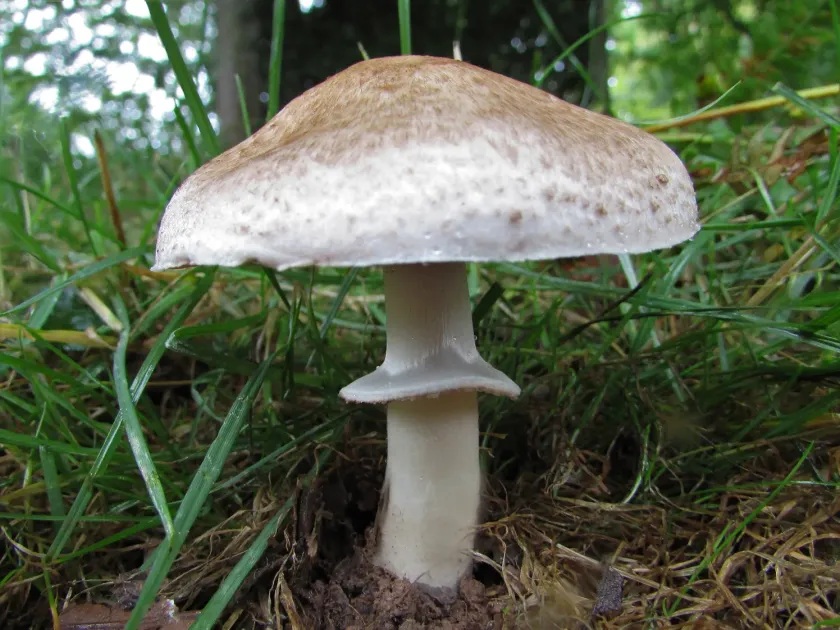
Its cap features distinct brownish scales on a paler background, which is a key morphological characteristic for identification.
The gills transition from a pale pinkish color in young specimens to a deep dark brown as the mushroom reaches maturity.
A notable reaction is the intense reddening of the flesh when cut or bruised, caused by the oxidation of specific chemical compounds.
These mushrooms typically grow in clusters within coniferous or mixed forests, where they thrive on decomposing forest floor organic matter.
Pathogen
Agaricus langei is not a plant pathogen; it is a saprotrophic organism that relies on dead organic material for its nutrition.
It does not possess the biological pathways required to attack or infect living plant tissues, roots, or vascular systems.
As a decomposer, its primary ecological function is to break down complex cellulose and lignin found in leaf litter and woody debris.
The classification of this species as a disease agent is scientifically incorrect and reflects a misunderstanding of its role in nature.
Consequently, it poses zero threat to crops, ornamental plants, or any other living vegetation in an agricultural setting.
Conditions for development
The development of the fungus is strictly dependent on moisture availability and the presence of abundant leaf litter or humus.
It prefers shaded environments where the soil remains cool and damp for extended periods during the late summer and autumn months.
Soil pH levels and the chemical composition of the substrate play a significant role in determining where the mycelium will colonize.
Stable temperatures between 15 and 20 degrees Celsius promote the rapid production of sporocarps following adequate rainfall.
Without sufficient organic carbon sources in the soil, the mycelium remains dormant or fails to produce visible fruit bodies.
Why it matters
There is absolutely no harm associated with Agaricus langei in agricultural or horticultural practices for any crop type.
It acts as a beneficial contributor to the ecosystem by recycling nutrients that are essential for future plant growth and development.
Labeling this species as a disease leads to unnecessary and potentially harmful applications of fungicides in the field.
The fungus does not cause wilting, spotting, or root rot, as it lacks the enzymes required to degrade healthy living plant cell walls.
Farmers can be confident that the presence of these mushrooms indicates high soil organic matter content rather than an infection.
Protection
No control or mitigation measures are required for this species, as it is a benign inhabitant of the forest and garden soil environment.
Efforts should be directed toward managing genuine plant pathogens rather than attempting to eradicate beneficial saprotrophic fungi.
Maintaining soil health through organic matter management is the best way to support a diverse and stable soil microbial community.
Proper identification training is essential for agricultural professionals to avoid the misdiagnosis of harmless fungi as pathogens.
Adopting sustainable agricultural practices involves recognizing the vital roles played by non-pathogenic fungi in nutrient cycling.
Discussion
No discussions yet — be the first.