
Agaricus gennadii
Agaricus gennadii
Description
Symptoms
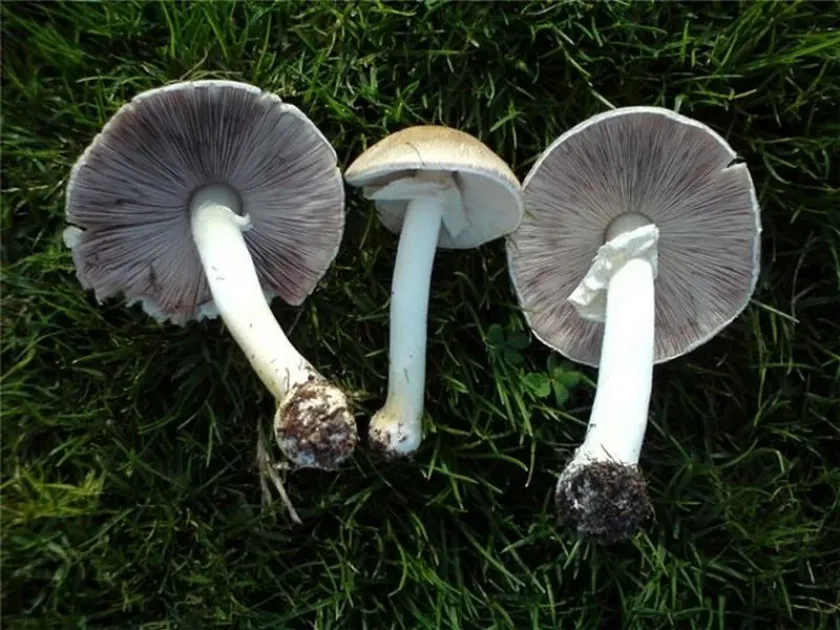
Symptoms of Agaricus gennadii infestation manifest primarily through the emergence of distinct fruiting bodies that differ significantly from cultivated Agaricus bisporus.
The fruiting bodies are characterized by a grayish-brown color and a distinct surface covered with dark, fibrous scales, which clearly distinguish them from the desired crop.
The pathogen's mycelium grows vigorously within the substrate, actively suppressing the growth of the cultivated mushroom and causing erratic harvest cycles.
Visual inspection of the substrate blocks often reveals changes in the consistency of the casing soil, which may become clumpy or show signs of mycelial overgrowth.
A noticeable, non-characteristic odor often accompanies the presence of this fungus, signaling competition for nutrients and the metabolic activity of the invasive species.
Pathogen
The causative agent of this condition is the fungus Agaricus gennadii, which acts as a persistent competitor or parasite within mushroom farms.
This macro-fungus is capable of invading sterilized substrates designed for commercial production, essentially hijacking the nutrient base meant for the main crop.
The type of infection can be classified as competitive displacement, where the pathogen dominates the ecological niche of the tray or bag.
The biological nature of the pathogen allows it to survive in various forms on production equipment, walls, and tools, posing a continuous threat to the facility.
Infection typically occurs due to deficiencies in the substrate pasteurization process or the use of inadequately treated casing materials.
Conditions for development
Favorable conditions for the fungus are created primarily by failures in the pasteurization stage, where improper temperature control allows spores to persist.
High relative humidity and poor ventilation create an environment that encourages the proliferation of Agaricus gennadii over the cultivated species.
Temperatures ranging from 20 to 25 degrees Celsius are highly conducive to the rapid spread of the mycelium of this pathogen.
Inadequate air exchange inside growing rooms leads to the accumulation of CO2 and moisture, which facilitates the dominance of competitive fungi.
The use of untreated or poorly sterilized casing soil remains the most frequent factor for introducing the disease into a clean production cycle.
Why it matters
The primary economic impact is a drastic reduction in commercial yield, which can lead to the total loss of individual growing blocks.
Once the substrate is colonized by this fungus, it becomes nutritionally exhausted, rendering it unsuitable for the subsequent waves of mushroom growth.
The presence of this species complicates the harvesting process, as workers must carefully sort produce to ensure that only the correct variety enters the market.
Severe infestations require costly remediation, including the total removal of contaminated substrate and intensive disinfection of the entire cultivation room.
If left unmanaged, the pathogen can persist in the infrastructure of the facility, threatening the quality and quantity of all future production cycles.
Protection
The first line of defense is strict adherence to industrial pasteurization protocols to ensure the total destruction of all fungal spores in the compost.
Routine sanitation of all hard surfaces, tools, and ventilation equipment using specialized antifungal agents is essential for facility hygiene.
It is vital to use only high-quality, pre-sterilized casing materials to prevent accidental introduction of Agaricus gennadii into the growing environment.
- Maintenance of optimal climate parameters.
- Immediate isolation and disposal of infested substrate blocks.
- Regular disinfection of all production equipment.
- Stringent quality control for all incoming raw materials.
Advanced monitoring of environmental conditions within the chambers allows for the early detection and containment of pathogen outbreaks.
Discussion
No discussions yet — be the first.