
Agaricus crocodilinus
Agaricus crocodilinus
Description
Symptoms
Agaricus crocodilinus is a large, distinctive mushroom species that is often mistaken for a plant pathogen by non-specialists due to its size and appearance.
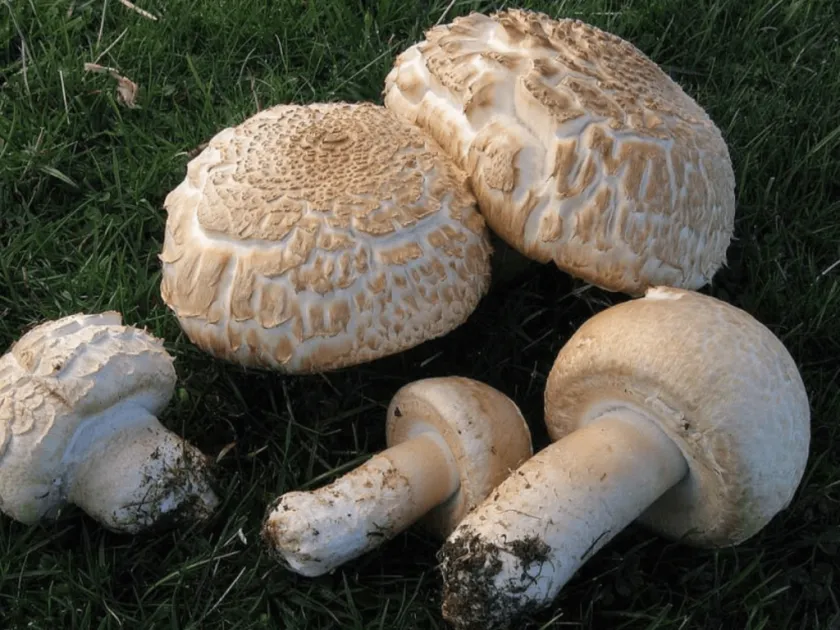
The mushroom has a white or cream-colored cap characterized by large, scaly patches that resemble the skin of a crocodile, giving it its common name.
The gills are white or pinkish when young, turning a dark, chocolate-brown color as the spores mature within the fruiting body.
The stem is robust and sturdy, typically featuring a ring that may disappear over time, leaving a faint mark on the stalk surface.
These features are purely reproductive structures of a soil-dwelling fungus and do not represent symptoms of plant diseases like blights or rusts.
Pathogen
It is crucial to clarify that Agaricus crocodilinus is not a plant pathogen; it does not cause diseases in agricultural or wild plants.
This fungus is a saprotroph, meaning it obtains its nutrients by breaking down dead organic matter like decaying leaves, wood, and humus in the soil.
Unlike parasitic fungi, it lacks the specialized structures required to penetrate living plant tissues and cause physiological damage.
The fungus plays an essential role in the soil food web by recycling nutrients and contributing to the formation of soil organic matter.
Labeling this fungus as a plant disease is a taxonomic and agricultural error that lacks any scientific basis in plant pathology.
Conditions for development
Agaricus crocodilinus thrives in nutrient-rich soils and is frequently found in pastures, orchards, and along forest edges where organic content is high.
The development of the mushroom depends on adequate soil moisture and moderate temperatures, typically occurring after heavy rain cycles.
The fungus does not need specific host interaction to develop, unlike obligate plant parasites that require a living plant host to survive.
Optimal growth conditions involve organic-rich substrates that are not necessarily associated with any specific crop or plant species.
Environmental factors like humidity and temperature are the main drivers for the rapid appearance of fruiting bodies on the ground surface.
Why it matters
There is no harm associated with the presence of Agaricus crocodilinus in agricultural fields or gardening environments as it does not affect crop health.
The fungus does not secrete toxins, inhibit germination, or compete with crops for vital resources such as sunlight or soil minerals.
Since it lives on dead matter, it actually benefits the environment by improving soil structure and nutrient bioavailability for plants.
Crop loss or agricultural damage is never attributed to this species, as it remains entirely distinct from pathogenic fungal communities.
Farmers do not need to worry about yield reduction or quality loss when this mushroom is detected in the field or greenhouse.
Protection
No chemical control measures are required or recommended for Agaricus crocodilinus, as it is a beneficial part of the soil ecosystem.
If physical removal is desired for aesthetic reasons, such as in lawns or high-maintenance gardens, simply picking the mushrooms is sufficient.
Preventative measures involve standard soil management practices, such as removing large woody debris and ensuring proper soil drainage.
The use of fungicides to eliminate this species is counterproductive, as it can damage beneficial soil microorganisms and disrupt ecosystem balance.
- Regular soil aeration.
- Avoid over-saturation of the soil surface.
- Proper waste management in fields.
Discussion
No discussions yet — be the first.