
Agaricus comtulus
Agaricus comtulus
Description
Symptoms
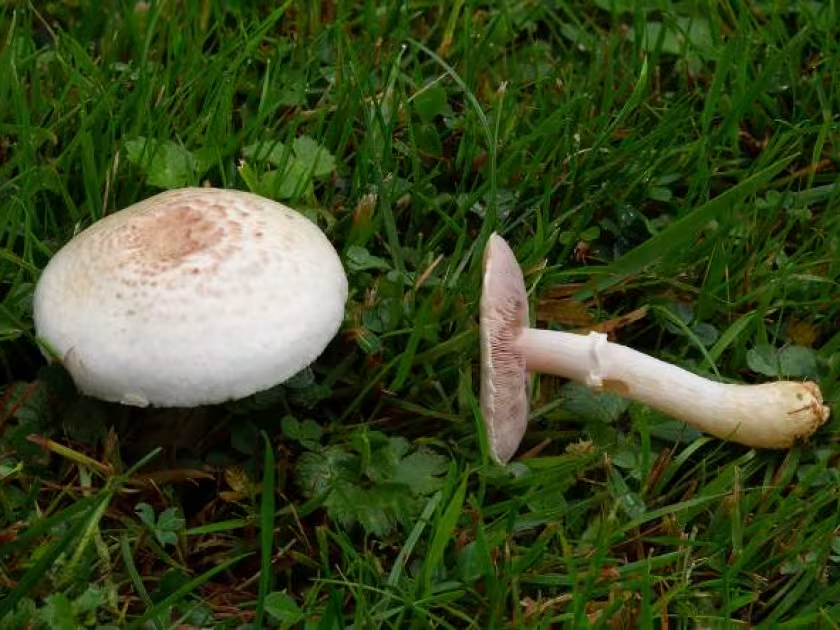
Agaricus comtulus, commonly known as the pygmy mushroom, features a small, convex cap that is typically white to creamy, often with a yellowing center as it matures.
The gills of young specimens are distinctly pink, a key visual indicator that helps differentiate this species from other related field mushrooms.
As the spores mature, the gills transition from pink to a rich chocolate-brown color, which is a standard characteristic within the Agaricus genus.
The stem is slender and often hollow, featuring a fragile, fleeting ring that may disappear shortly after the cap expands, making identification challenging.
Overall, the fruit bodies are small, usually standing no taller than 5-7 centimeters, appearing singly or in small, scattered groups across lawns and meadows.
Pathogen
Agaricus comtulus is not a plant pathogen; it is a saprotrophic fungus that derives its nutrients from decomposing organic matter in the soil.
It plays a beneficial role in the ecosystem as a decomposer, breaking down plant debris and contributing to nutrient cycling within the soil profile.
Because it does not attack living plant tissues, it does not cause diseases in crops, making it a harmless presence in most agricultural environments.
The mycelium network spreads through the humus layer, interacting with organic waste, and is essential for the natural decomposition process of dead leaves and grass clippings.
While it is biologically active, its classification as a disease agent is inaccurate, as it functions solely as an agent of decay for non-living biological materials.
Conditions for development
This species thrives in nutrient-rich, moist soils with a significant amount of organic debris, particularly in areas like managed lawns and gardens.
It prefers temperate climates and is most commonly observed during periods of alternating warmth and high humidity, often following significant rainfall.
The presence of well-fertilized soil, especially where organic mulch or compost has been applied, provides an ideal substrate for the development of its mycelium.
It is commonly found in open, sunny locations where the grass is kept short, as these environments allow the surface soil to retain moisture effectively.
In indoor agricultural settings, the sudden appearance of Agaricus comtulus is a strong indicator of poorly sterilized growing media or excessive humidity.
Why it matters
Agaricus comtulus does not cause any direct damage to agricultural crops or ornamental plants, as it lacks the physiological mechanisms to parasitize living hosts.
In some cases, it may be considered a nuisance in landscaping when it forms fairy rings, which can temporarily disrupt the uniform appearance of a lawn.
In mushroom cultivation, it can act as a weed competitor, occupying resources that should be utilized by the intended crop strain, thus affecting yield efficiency.
The harm is negligible and is often confined to aesthetic concerns or minor competition for space rather than any significant loss of crop health or quality.
It is generally considered a bio-indicator of rich, organic soil rather than a threat that requires aggressive or chemical intervention in the field.
Protection
The most effective management strategy involves maintaining proper soil hygiene by removing excessive organic debris, such as piles of leaves or grass clippings.
Improving soil aeration and ensuring proper drainage can significantly reduce the moisture levels required for the mushroom to fruit successfully.
In garden or landscape settings, simply raking the soil or applying a thin layer of sand can disturb the habitat and discourage the growth of fungal colonies.
Commercial growers should focus on the pasteurization of compost and growing substrates to eliminate any dormant spores or vegetative mycelium before planting.
Physical removal of the mushrooms before they release spores can help to contain their spread and prevent future colonization of the area.
Discussion
No discussions yet — be the first.