
Field mushroom
Agaricus campestris
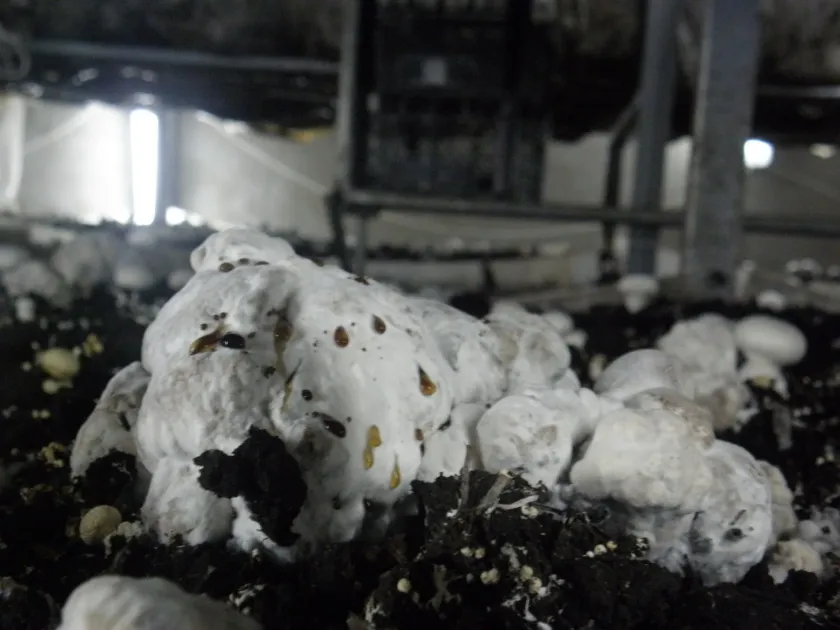
Description
Pathogen
Field mushroom (Agaricus campestris) is a saprotrophic fungus belonging to the Agaricaceae family. While it is commonly known as an edible species, in professional agronomy it is often treated as a soil-inhabiting competitor for resources.
The fungus relies on the decomposition of organic matter within the soil profile. Unlike pathogenic fungi, it does not directly attack or infect the living tissues of field crops.
However, the extensive mycelial mats produced by this fungus can physically dominate the upper soil layers. This dominance creates competition for space and nutrients between the mushroom and crop roots.
Propagation is primarily achieved through spores, which are disseminated by wind, water runoff, and standard farm machinery. This ensures the rapid spread of the species across fertilized fields.
Understanding the biology of Agaricus campestris is crucial for farmers, as its presence often serves as an indicator of excessive, non-decomposed organic matter in the soil.
Conditions for development
The development of the field mushroom is strongly correlated with high soil moisture and moderate temperatures, ideally between 15°C and 22°C. These conditions trigger the emergence of fruiting bodies.
An abundance of nitrogen-rich organic material, especially non-composted manure, provides the perfect substrate for rapid colonization. The fungus thrives in loose, humus-rich soil structures.
Periods of heavy rainfall followed by warm, humid weather are the primary environmental triggers for the appearance of mushroom clusters. Such conditions allow the established mycelium to initiate mass fruiting.
Good soil aeration is necessary for the mycelium to thrive, but it also benefits the crop. Therefore, managing soil structure is the key to preventing uncontrolled fungal expansion.
Low-disturbance farming systems or areas with accumulated plant debris are the most vulnerable to the colonization by Agaricus campestris.
Why it matters
The primary concern is the mechanical interference caused by dense mycelial networks. These mats can prevent water from reaching the root zone, leading to localized drought stress for the crops.
Competition for soil-available nutrients is a significant issue. As the fungus consumes decomposing materials, it may compete with developing seedlings, leading to reduced vigor and stunted plant growth.
In intensive agriculture, the physical presence of mushroom fruiting bodies can impede the operation of seeding or weeding equipment, causing clogging and delays during critical field operations.
Changes in the chemical environment of the soil, induced by fungal metabolic processes, may inadvertently alter the pH levels in the root zone, affecting nutrient uptake for certain sensitive crops.
While the crop is not infected, the increased competition for resources often leads to an uneven stand and a potential decrease in final yield quality.
Protection
The most effective strategy is the proper management of organic fertilization. All manure should be fully composted before application to ensure that fungal vegetative parts are effectively destroyed.
Deep plowing and regular soil cultivation are essential tools for disrupting the mycelial networks. Breaking the continuity of the mycelium significantly slows down its ability to spread.
Improving soil drainage is vital to eliminate stagnant moisture zones. A drier soil profile is inherently more resistant to the mass development of Agaricus campestris.
Early identification and removal of emerging fruiting bodies can prevent the release of billions of spores, thereby reducing the pressure for the following season.
- Proper composting of all organic inputs.
- Deep tillage to break mycelial structure.
- Maintenance of adequate field drainage.
- Physical removal of fruiting bodies to prevent spore dispersal.
Discussion
No discussions yet — be the first.