
Bresadola's Agaricus
Agaricus bresadolanus
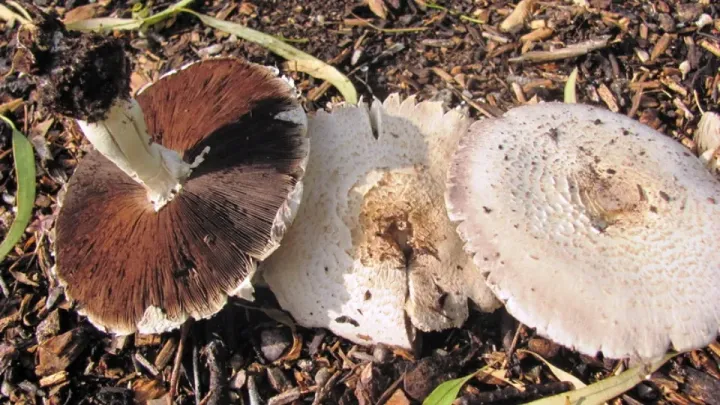
Description
Symptoms
The primary sign of its presence is the emergence of fruiting bodies from the soil. These mushrooms often appear in clusters, sometimes forming distinctive arcs or circles known as "fairy rings" on lawns.
The cap of a mature mushroom is typically grayish-brown with fine scales. A key diagnostic feature is the flesh's potential for slight discoloration when damaged, which helps distinguish it from other agarics.
The activity of the fungal mycelium can alter the soil texture in the immediate area. Soil may become more porous or airy due to the fungal breakdown of organic matter beneath the surface.
In lawns, the presence of the fungus can sometimes cause a "greening" effect on the grass due to the release of nitrogen from the decomposed organic matter, leading to irregular growth patterns.
- Presence of brown scales on a grayish-brown cap.
- Formation of mushroom clusters or rings on the ground.
- A distinct, sometimes chemical-like odor when the mushroom is crushed.
Pathogen
Bresadola's Agaricus (Agaricus bresadolanus) is a basidiomycete fungus belonging to the Agaricaceae family. It is essential to clarify that this fungus is not a plant pathogen and does not cause diseases in crops.
This species is a saprotroph, meaning it derives its nutrients from dead organic matter. It does not infect or feed on living plant tissue, and thus it lacks the biological characteristics of a plant disease agent.
The mycelium of this fungus typically inhabits soil rich in humus or decaying woody material. It plays an active role in the natural decomposition of plant debris, helping to recycle nutrients back into the soil ecosystem.
Unlike parasitic organisms, Agaricus bresadolanus does not produce toxins that could hinder the growth or development of garden plants. It is simply a natural component of the soil microflora.
It is classified as an inedible mushroom, and due to its appearance in suburban and garden areas, it is often misunderstood by gardeners who might label it as a pest or a disease.
Conditions for development
Development of this fungus is closely tied to the availability of decaying plant material in the soil. High moisture levels, particularly after periods of heavy rain, trigger the production of fruiting bodies.
The fungus thrives in warm weather, making it common during the spring and summer months. It shows a preference for moist, sheltered environments such as park lands, gardens, and near deciduous trees.
Accumulation of compost, mulch, or unraked lawn clippings provides an ideal substrate for the mycelium to spread. This is why it is often found in neglected garden corners or along paths.
Soil compaction and poor drainage are secondary factors that may favor the establishment of the fungal colony, as the fungus is quite adaptive to various soil conditions.
To prevent extensive colonization, it is recommended to manage the buildup of organic debris on the surface and ensure good air circulation within the garden or lawn area.
Why it matters
There is virtually no negative impact from Bresadola's Agaricus on agricultural or horticultural crops. Since it does not parasitize plants, it causes no physical damage to roots, stems, or foliage.
The primary "harm" is purely aesthetic. The development of fairy rings or mushroom clusters can interrupt the uniform look of a well-manicured lawn, which is a common concern for landscapers.
It is important to note that this mushroom is inedible and potentially toxic if ingested. Therefore, the main danger lies in the risk of accidental ingestion by children or pets roaming the garden.
The consumption of organic matter by the fungus is a natural process and does not negatively affect the nutrient availability for plants in any significant way.
Ultimately, this species should be viewed as a neutral inhabitant of the garden ecosystem rather than a threat to plant health.
Protection
Since this fungus is not a plant pathogen, there are no specific chemical treatments required for its control. Prevention is based on sound horticultural management practices.
Regular maintenance, such as frequent mowing of lawns and the prompt removal of grass clippings and fallen leaves, significantly reduces the food source available for the fungus.
Improving soil drainage is another effective preventative measure, as it limits the excess moisture required for the fungal mycelium to thrive and produce mushrooms.
Aerating the soil can help alter the microenvironment, making the soil surface less hospitable to fungal colonization. This practice also promotes healthier grass and plant growth.
Mechanical removal of the fruiting bodies as soon as they appear is the most recommended approach to keep the area clear and prevent the dispersion of spores.
Discussion
No discussions yet — be the first.