
Bohus' mushroom
Agaricus bohusii
Description
Symptoms
The macroscopic features of Agaricus bohusii are distinct, allowing for accurate identification within its natural habitat.
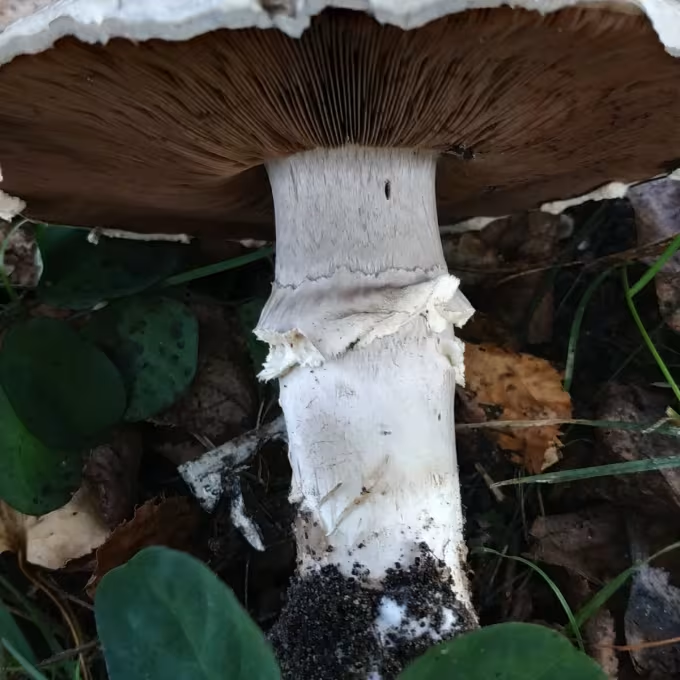
The cap is typically large, showing a surface covered with noticeable brownish scales that give it a unique texture.
The lamellae (gills) under the cap are pale or pinkish in younger specimens but turn deep brown as the spores mature.
The stem is robust and usually features a ring, which is a remnant of the veil that protects the gills during the early stages of growth.
The flesh may show subtle color changes when bruised or cut, which is a common characteristic for many species within the Agaricus genus.
Pathogen
Bohus' mushroom, scientifically known as Agaricus bohusii, is a fungus species that is not a plant pathogen or a disease agent.
As a saprotrophic organism, it obtains nutrients from decomposing organic matter rather than by infecting living plant tissues.
The fungus belongs to the family Agaricaceae and functions as a natural recycler of nutrients in forest ecosystems.
It cannot cause disease in agricultural crops because it lacks the biological mechanisms necessary to parasitize vascular plants.
Mycelium of this species thrives in humus-rich soils, where it contributes to the degradation of complex organic compounds into simpler minerals.
Conditions for development
The growth and development of Bohus' mushroom are strictly tied to specific environmental niches, primarily found in deciduous forests.
It requires soil that is moist and rich in organic detritus, such as decaying leaves and woody debris, to establish a healthy mycelial network.
Fruiting bodies are most frequently observed in the late summer and autumn seasons when humidity levels are higher and temperatures are mild.
Stability of the forest floor is crucial for the survival of the mycelium, as it protects the delicate structures from extreme heat and drought.
Environmental disturbances, such as soil compaction or heavy chemical use, can significantly impact the population density of this mushroom.
Why it matters
There is no record of Agaricus bohusii causing harm to crops, gardens, or any form of cultivated vegetation.
The mushroom performs a beneficial ecological function by breaking down leaf litter, thereby enriching the soil with essential nutrients.
It does not compete with crops for resources and does not create any symptoms of disease in plant roots, stems, or leaves.
Misidentifying this mushroom as a pathogen often stems from a lack of general mycological knowledge in agricultural management.
Users should be aware that while the mushroom is harmless to plants, foraging requires caution to prevent accidental ingestion of look-alike toxic species.
Protection
No control or preventive measures are required for Bohus' mushroom, as it poses no threat to agricultural productivity.
In many regions, this mushroom is considered a rare species that should be protected rather than eradicated.
Efforts to eliminate it from soil are unnecessary and counterproductive to maintaining soil health and biological diversity.
Agrotechnical practices should focus on managing actual pests and pathogens, while allowing beneficial saprotrophs to continue their ecological work.
Education regarding the distinction between harmless saprotrophic fungi and true plant pathogens is recommended for all agricultural professionals.
Discussion
No discussions yet — be the first.