
Bernard's mushroom
Agaricus bernardii
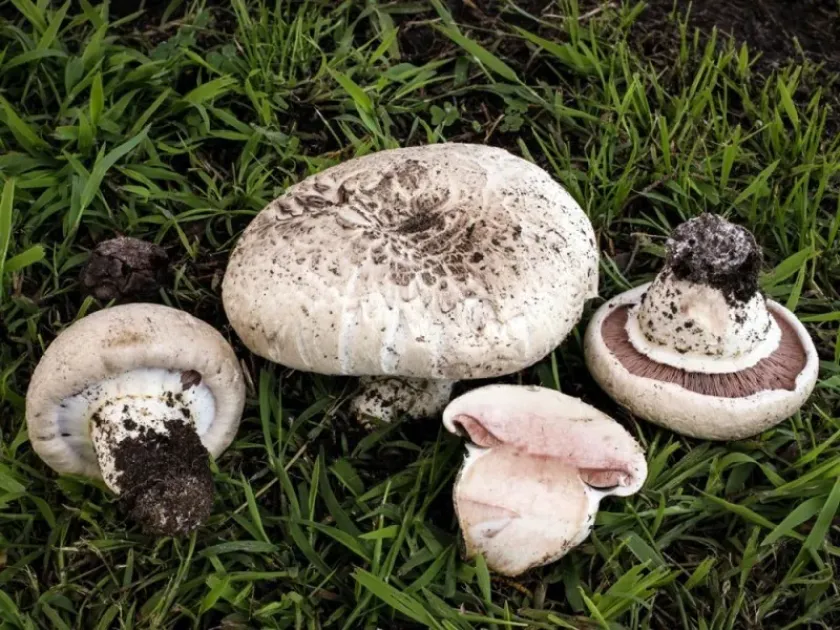
Description
Pathogen
Agaricus bernardii, commonly known as Bernard's mushroom, is a wild fungal species. It is crucial to clarify that it is not a plant pathogen and does not cause diseases in crops.
The fungus functions as a saprotroph, meaning it feeds on decaying organic matter rather than attacking living plant tissues. It plays a vital role in soil organic cycle decomposition.
Misidentifying this fungus as a plant disease is a common occurrence in agricultural fields, especially when growers notice clusters of mushrooms near or within their crop areas.
As a biological entity, Agaricus bernardii does not produce any toxins that could harm commercial vegetables, cereals, or fruits during their growth cycle.
The fungus is morphologically distinct due to its thick cap and the reddish discoloration that occurs when the flesh is bruised, which may look like a plant pathology symptom to an untrained observer.
Conditions for development
The natural habitat of Agaricus bernardii includes salt-affected soils. It is remarkably halotolerant, allowing it to thrive in environments where salt concentration inhibits other fungal species.
You will frequently find these mushrooms in maritime regions, near salt lakes, and on pastures or roadsides where high sodium content is present in the substrate.
The growth cycle is heavily dependent on specific soil moisture levels and warm temperatures. It often appears in nutrient-rich, alkaline soils with high organic decomposition activity.
As a non-pathogenic organism, it does not require specific environmental conditions to "infect" plants, as it has no parasitic relationship with any agricultural hosts.
Spore dispersal occurs primarily via wind currents. These spores are highly resilient, allowing the fungus to persist in soils with varying levels of salinity and fluctuating weather patterns.
Discussion
No discussions yet — be the first.