
The Prince
Agaricus augustus
Description
Symptoms
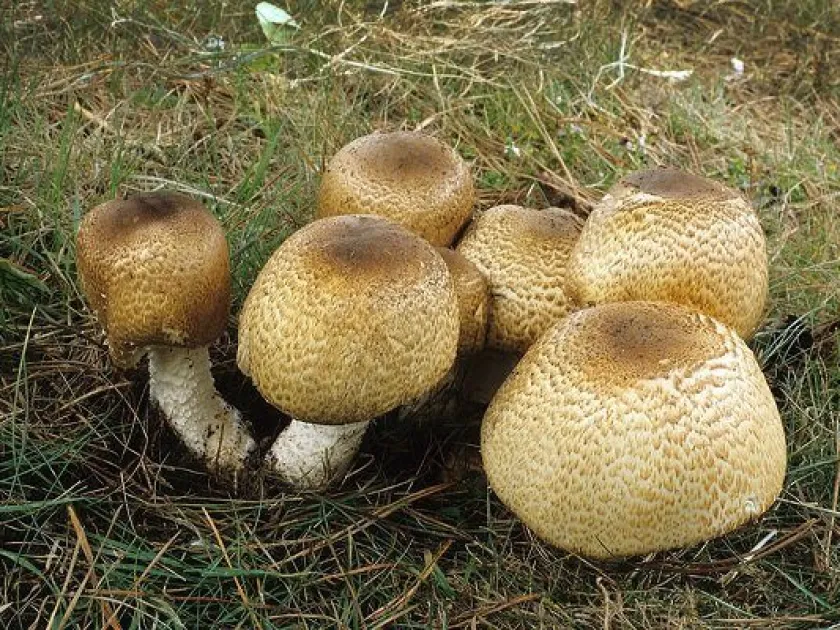
The most visible signs of its presence are large, scaly, brown-capped mushrooms that appear in clusters or rings in gardens and forests.
The young mycelium is visible as dense white filaments in the soil or decaying mulch, which are beneficial for breaking down organic debris.
A key diagnostic feature is the strong, pleasant scent of almond or aniseed emitted by the caps, especially when crushed.
The flesh of the mushroom stains yellow when damaged, which is a distinctive characteristic of this specific species.
The absence of plant tissue symptoms like chlorosis, necrosis, or wilting clearly distinguishes this fungus from true phytopathogens.
Pathogen
Agaricus augustus, commonly known as The Prince, is a basidiomycete fungus in the Agaricaceae family. It is crucial to note that this organism is not a plant disease.
As a saprotrophic species, it plays a vital role in decomposing organic matter, effectively recycling carbon and nutrients back into the soil ecosystem.
The fungus develops its mycelium within organic-rich substrates, such as decaying wood, compost, or humus-rich forest soil, and does not parasitize living plants.
The life cycle involves the expansion of underground hyphae followed by the production of large, fleshy fruiting bodies that typically emerge in late summer.
Because it lacks the mechanisms to infect or damage agricultural crops, it should never be classified as a plant pest or disease.
Conditions for development
Agaricus augustus thrives in soils that are rich in organic material, particularly in shaded or semi-shaded garden environments.
It requires consistent moisture and moderate temperatures, typically peaking in activity during the late summer months.
The presence of decomposing wood chips, compost, or leaf litter provides an ideal carbon source for its mycelial development.
Unlike parasitic fungi that need a host, this species relies on stable environmental humidity to produce its large fruiting bodies.
High soil fertility and organic content significantly boost the population of this fungus in areas where it is established.
Why it matters
This species poses no danger to crops, as it does not consume living plant tissue or interfere with plant physiological processes.
It does not produce any toxins that would inhibit the growth of surrounding agricultural or horticultural plants.
For gardeners and farmers, the presence of this fungus is an indicator of healthy, nutrient-rich soil rather than a problem.
It has no negative impact on yield or quality, making it a neutral or even beneficial biological component of the soil.
No agricultural damage is associated with this species, and it causes no economic loss in farming or gardening contexts.
Protection
There is no need for control measures against Agaricus augustus because it is not a harmful organism to agricultural plants.
If its fruiting bodies are considered a nuisance, simple physical removal is sufficient to clear the area without using chemicals.
The application of fungicides is strictly discouraged, as it disrupts the beneficial soil microbiome and harms non-target organisms.
Preventing its appearance involves reducing the accumulation of raw organic mulch or excessive moisture in specific zones of the garden.
Maintaining proper soil aeration and drainage will naturally limit the environment suitable for large fruiting body development.
Discussion
No discussions yet — be the first.